Category Archives: News

Zuma appoints first lesbian to cabinet

Brown

President Jacob Zuma, has appointed the country’s first openly gay cabinet minister, a move thought also to be a first in Africa and a symbolic step on a continent enduring a homophobic backlash.

Lynne Brown becomes the public enterprises minister in a cabinet that includes South Africa‘s first black minister of finance.

Brown, 52, who is coloured (of mixed race ancestry), was born in Cape Town and was premier of Western Cape until the African National Congress (ANC) lost control of the province to the opposition Democratic Alliance in 2009.

According to a 2008 profile of her by the South African Press Association, she began her career as a teacher and gained a certificate in gender planning methodology at University College London. “I can’t bear working in an environment where things don’t get done,” she was quoted as saying. “I’m not a flamboyant type of person; I get things done.”

Her personal interests were said to be playing golf, reading and “an admiration of arts and culture”.

She is not seen as a gay rights activist but her ascent to a cabinet post was described on Monday as a significant moment.

Eusebius McKaiser, a broadcaster and political author, who is gay, said: “It is, sadly, probably newsworthy, I guess, insofar as the social impact of openly gay people in high-profile public leadership positions cannot be discounted in a country like South Africa where levels of homophobia, including violence against black lesbian women, remain rife.

“The symbolism matters from an African perspective, too, given other countries around us are enacting and enforcing laws criminalising same-sex sex and lifestyles.”

Steven Friedman, director of the Centre for the Study of Democracy, said: “I think it’s worth drawing attention to. She’s not a gay rights campaigner – it’s not recognition in that sense – but the fact that under the most socially conservative president since 1994 there is the first openly gay minister in such a position is significant.”

South Africa was the first African country to legalise gay marriage but Zuma, a traditional Zulu polygamist, has been criticised for culturally fundamentalist remarks and failing to condemn anti-gay crackdowns in Nigeria and Uganda.

Asked by the Guardian in 2012 about his views on same-sex marriage, the president replied: “That does not necessarily require my view, it requires the views of South Africans. We have a constitution that is very clear that we all respect, which I respect. It has a view on that one, that gay marriage is a constitutionally accepted thing in South Africa. So, no matter what my views would be.”

Zuma, 72, who was inaugurated on Saturday for a second term, named Nhlanhla Nene as finance minister, the first black person to hold the position. Nene, 55, had served as deputy to the widely respected Pravin Gordhan, who is of Indian ancestry.

Nene, whose first name means “luck” in Zulu, is a former parliamentarian and chair of the finance portfolio committee. He spent 15 years at the insurance firm MetLife, where he was a regional administrative manager and where, during racial apartheid, he organised the country’s first strike in the financial sector. Razia Khan, Africa’s regional head of research for Standard Chartered Bank, said: “Nene is an old hand at the treasury. He will be seen to represent policy continuity.”

Cyril Ramaphosa, a former miners’ union leader turned billionaire businessman, becomes deputy president. But Friedman suggested he was far from certain to succeed Zuma. “That’s far more complicated. He doesn’t like taking political risks. The succession may revolve around some regional issues. KwaZulu-Natal is the biggest province and they’re pushing to choose the next president. I don’t think the other provinces will be keen on that.”

After a punishing five-month strike in the platinum mines, the mineral resources minister, Susan Shabangu, was removed.

The police minister, Nathi Mthethwa, who was in office during the killing of 34 striking miners at Marikana in 2012, was also shifted from his post.

By David Smith © Guardian News and Media 2014

Image – Lynne Brown (Gallo)

Source: http://women.mg.co.za/zuma-appoints-first-openly-gay-cabinet-minister/

African Voices Celebrate LGBT equality

Calls on state to act as MDG’s deadline nears

ICPD BOB Munyati CPD Post 2015 aids accountability International

Unemployment, maternal health and women inheritance are among challenges yet to be addressed as the deadline for attaining Millennium Development Goals lapses next year. 


In a bid to address such issues, members of G77 Team, an alliance of civil society organisations in Kenya working on areas of population and sexual reproductive health has called on the Government to take necessary measures before the lapse. The lobby has urged the Government to prioritise key services such as family planning, pre and post natal care, treatment of sexually transmitted infections including HIV and provision of quality services for the management of complications arising from abortion. 


The Commission on Population and Development has stressed the importance of integrating population and development into the Post 2015 Development Agenda. 


Health services 


The agenda was discussed during the International Conference on Population and Development (ICPD) that was adopted by consensus by the UN member states. 


It pointed out that there was need of inclusion of certain fundamental issues like equitable and universal access to quality integrated and comprehensive sexual and reproductive health services by including the rights of young people to get comprehensive education on human sexuality. 


Addressing journalists yesterday during a media briefing on the ICPD in Nairobi, programme officer at African Woman and Child Features Services Jane Godia said the media should play its role of creating awareness on population and development. 
“We need to address issues such as sexual reproduction among the youth as most of them engage in sexual activities, putting them at risk of unwanted pregnancies and sexually transmitted infections. This impends on development as they fail to be reproductive in terms of economic growth”, said Godia. 


She also emphasised on the need to assess if the MGD goals have been able to yield results.


By Maureen Abwao and Brigid Chemweno 
14 May 2014
Source: http://www.standardmedia.co.ke/?articleID=2000121212&story_title=calls-on-s
tate-to-act-as-mdgs-deadline-nears

Health experts call for integrated approach to HIV and TB in Zimbabwe

Story

Zimbabwe is facing challenges in eliminating tuberculosis (TB) say health experts, who are calling for much greater integration of HIV and TB programmes within the healthcare system.


Tremendous progress has been made in minimising the spread of HIV while TB programming is weak in comparison, according to Michael Bartos, UNAIDS country director for Zimbabwe.


Strengthening coordination systems

Bartos told a recent workshop for Zimbabwean civil society organisations that there was an urgent need to strengthen coordinating systems across HIV, TB and malaria. The workshop was run by AIDS Accountability International in partnership with Southern Africa AIDS Trust and Zimbabwe AIDS network.


“We need, as civil society, to enhance HIV mobilisation to support TB. There is weak mobilisation of communities where it matters. The issue of resources also needs to be addressed if we are to succeed in eliminating the spread of TB,” Bartos said.


Civil society priorities

At the workshop, representatives from various HIV groups created a priorities charter as an ‘advocacy road map’ for the Global Fund to fight AIDS, TB and malaria. The top priority was the need for a coordinating mechanism for HIV and TB, according to Dr Gemma Oberth, senior researcher at AIDS Accountability International.


“This is because HIV coordinating structures are disproportionately strong, compared with TB civil society networks,” Dr Oberth said.


Some of the priorities identified include prevention, treatment, advocacy, care and support, mitigation and stigma reduction.


Increase in new TB cases

Zimbabwe is ranked 17 among the 22 countries in the world worst affected by TB, according to a research project commissioned by the World Health Organisation.


Victoria James, director of New Dimension Consulting, which carried out the research, said: “The estimated incidence of new TB cases was 633 per 100,000 in 2010 compared to 97 per 100,000 in 1990, reflecting a growing trend. Seventy-five per cent of adult TB cases are reported to be HIV co-infected, while HIV testing in TB is 97 per cent. The treatment rate is very low and civil society needs to focus more on playing a role to address the issues.”


She also highlighted some concerns involving new TB diagnoses, which are reported to have increased from 35,340 in 2013 to 38,725 in 2012.


Lack of resources

According to Dr Charles Sandy, deputy director of AIDS and TB programmes at the Ministry of Health and Child Care, TB is managed through the routine health system. The government is faced with the challenge of a lack of resources, although it collaborates with local and international partners.


“We are dependent on the health delivery system for success of the TB programme. Although we have made some progress in trying to address TB, we are facing challenges of a demotivated health workforce and lack of optimum work performance,” Dr Sandy said.


He added that community awareness in addressing TB was low and more resources were needed to address the challenges. Sandy said the government worked with civil society organisations through the Country Coordinating Mechanism and invited them to make suggestions on how they could be more involved.


Image: Emmanuel Gasa, a young HIV/AIDS activist working within the civil society and attending workshop, Zimbabwe
© Wallace Mawire


Read the Zimbabwe Civil Society Priorities Charter


By Wallace Mawire

7 May 2014

Source: http://www.keycorrespondents.org/2014/05/07/health-experts-call-for-integrated-approach-to-hiv-and-tb-in-zimbabwe-2/

South Africa: Minister of Justice launches new programme to help stop anti-gay violence

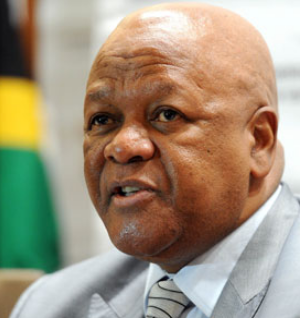
Jeff Rhadebe

The Minister of Justice and Constitutional Development in South Africa has launched a new programme to tackle violence against the country’s LGBT community.


According to News24, Jeff Radebe confirmed on Tuesday the introduction of the programme as part of an extension on South Africa’s equality clause, which he acknowledged had not stemmed anti-gay attacks.


He said: “Notwithstanding the comprehensive constitutional and legal framework and protection for LGBTI persons, we have sadly witnessed acts of discrimination and violent attacks being perpetrated against LGBTI persons.”


Over the past year, a national task team had developed an intervention strategy to deal with hate crime-related violence.


Mr Rabede said: “The purpose of the rapid response team is to urgently attend to the pending and reported cases in the criminal justice system where hate crimes have been committed against LGBTI persons.


“As a department we have finalised a policy framework with regards to the need for a specific legal framework for hate crimes.”


The Minister of Justice first confirmed his department had finalised the draft policy framework last year.


By Pink News

24 April 2014
Source: http://www.pinknews.co.uk/2014/04/29/south-africa-minister-of-justice-launches-new-programme-to-help-stop-anti-gay-violence

Discrimination without Distinction of Any Kind?

Snapshot of African civil society demands versus Addis Ababa Declaration

Addis Declaration

This paper is a snapshot comparative analysis of the Civil Society African Common Position on International Conference on Population and Development (ICPD) and the official Addis Ababa Declaration. It provides a brief examination of the differences and similarities between these two documents, which were both produced during the African ICPD review process. It also seeks to examine where the Addis Declaration fell short of CSO demands and then whether country positions on human rights commitments such as the Maputo Protocol affected their position on the Addis Declaration.  This paper seeks to provide a snapshot of some of the obvious gaps in human, sexual and LGBT rights and accountability between what civil society demanded and what the Addis outcome provided.  Discrimination without distinction of any kind Munyati and Tucker

Malawi to prioritise gender-based messages in response to HIV and TB.

phpThumb_generated_thumbnailjpg

In Malawi, a new civil society charter to tackle HIV and TB is prioritising gender-based messages to help change people’s behaviour.


Malawi is the third country to set up such a charter in response to the Global Fund’s new funding model.


Working with men


According to the Malawi Demographic and Health Survey, data shows that in 2013 men were disproportionately likely to report having more than one sexual partner (9.2%) compared to women (0.7%).


To address this, non-governmental organisations well placed to promote community dialogue and carry out activities involving theatre for development, role models, and working with families, schools and churches.


The primary target group for such activities is men, but there will also be a focus on raising awareness of the risks of having multiple sexual partners with girls and young women.


Civil society intends to measure the impact of this activity through an increased number of men testing for HIV, men who seek circumcision, couples testing together and men using condoms.


Empowerment of women and girls


Poverty greatly affects the ability of young women to make choices about their behaviour. The charter prioritizes a two-pronged strategy to support young women through access to information and economic empowerment.


This means combatting issues of early child marriage, gender-based violence and transactional sex, which are all shown to be related to poverty and the economic circumstances of young women. Civil society organisations supporting the charter intend to scale up activities relating to village savings and loans associations for women.


This work will focus on young women aged 15 to 24. The charter has identified border towns and some lakeshore towns as hot spots where support for affected communities are needed and where impact will be greatest.


The impact of this activity will be measured in the short-term through the number of women engaged in village savings and loans schemes and fewer child marriages, and in the longer term through bylaws restricting child marriages.


Condom promotion


In Malawi, 80% of new HIV infections occur among partners in stable relationships (National AIDS Commission, 2012). This can be explained, in part, by negative perceptions about condom use within long-term relationships.


Work to address this issue will focus on rural women, as the issue of gender norms and power imbalances make it difficult for women to negotiate or introduce condom use within their relationship, especially the female condom.


The charter recommends the activities to be carried out in remote rural areas, as a three year programme from May 2014 – May 2017 with gathering people to sensitize on condom promotion, media reporting, education and communication campaigns, peer education as some of the activities.


One of the ways in which civil society will measure impact of this intervention will be through monitoring the number of rural women using the female condom.


Availability and accessibility


Condom use is higher in urban areas than it is in rural regions of Malawi and this can be partially explained by the fact that health centres and hospitals are some of the only places where condoms can be accessed in rural areas, yet evidence shows bottle stores are much more popular places to get condoms, especially among groups most at risk of HIV such as sex workers (FPAM & UNFPA, 2011).


Civil society intends to increase condom distribution points and lobby different community and religious leaders around accepting use of condoms. It will also pair access to condoms with lubricants, particularly for key populations such as men who have sex with men. A three year programme is expected to start from 2014 up to 2017, with focus on marginalised people such as rural women and people with disabilities.


Key populations


There is a need to scale up existing programmes targeting groups most at risk of HIV. Creating demand for health services among such populations is a high priority because data shows HIV prevalence among sex workers in Malawi is 70.7% (National AIDS Commission, 2012) and 15.4% among men who have sex with men (“HIV among men who have sex with men in Malawi” Wirtz et al., 2013).


Civil society is best placed to access people most at risk of HIV through peer education and outreach work. The target group will be primarily men who have sex with men and sex workers, though prisoners are also identified as a key population in this context, especially in connection to their vulnerability to TB. People with disabilities and refugees were also identified.


The outcome will be measured by reductions in HIV prevalence and increases in health seeking behaviour among key populations.


CLICK HERE to view the Malawi Civil society Priorities Charter


Image: Members of the market theatre group perform an HIV awareness drama to village members, Chipemberemchere, Malawi
© Nell Freeman for International HIV/AIDS Alliance
By Owen Nyaka
April 23. 2014

Source: http://www.keycorrespondents.org/2014/04/23/malawi-to-prioritise-gender-based-messages-in-response-to-hiv-and-tb/

US and EU push Africans once more on abortion and homosexuality.


UN AIDS Accountability InternationalNEW YORK, April 11, 2014 (C-FAM.org) – Africans are crying foul after wealthy Western countries ambushed them with a draft resolution that re-opens the troublesome issues of abortion and homosexuality in UN negotiations.


“You have set a precedent here that will not be forgotten,” said a representative from Cameroon at a briefing three weeks ago. Western countries have proposed a resolution for the annual UN Commission on Population and Development that surreptitiously endorses abortion and homosexuality, even though Africans asked to avoid those controversies.


The U.S., European and some Latin countries are increasingly insistent on homosexuality and abortion ahead of negotiations over a new UN development agenda in September, desperate to include homosexuality and abortion in future development efforts.
Africans for their part don’t want to be pressured on these issues, and have repeatedly stated that these are matters best left to countries individually.


When powerful western governments made their intentions for the resolution known, the Africans on the commission were furious.


The resolution includes references to regional agreements that touch on abortion and sexual orientation and gender identity—contentious issues that do not enjoy universal support at the United Nations. It was prepared by Uruguay, which is chairing the commission this year.


During negotiations this week the Africans repeated their position.


They don’t want a resolution to touch on substantive issues. They would rather have a resolution that defers to the UN General Assembly with regards to abortion and homosexuality in UN development policies.


In 2010 the General Assembly re-committed countries to the development policies agreed to at the 1994 Cairo Conference on Population and Development, and clearly announced that it would not re-negotiate those policies. This year marks the 20thanniversary of the seminal development scheme that made sexual and reproductive health a UN development issue.

The Cairo conference dealt with sexual and reproductive health, but did not include homosexual rights or a right to abortion.
African countries and other developing nations are adamant, now as in 2010, that the Cairo policies should not be re-negotiated or re-interpreted to include abortion and homosexuality.


They are worried about re-opening sensitive issues like sexual rights, abortion and homosexuality. The Cairo policies could not have been adopted had they included such rights, and the issues are still controversial 20 years later.


In fact, no UN treaty or political document recognizes homosexuality or abortion as rights. The General Assembly has been conspicuously silent on these issues because so many countries still have laws that prohibit and restrict abortion as well as laws that punish sodomy.


Together with key allies in Asia and Latin America, Western countries insist that the UN framework must recognize homosexuality and abortion. It is a human rights issue to them.


The commission comes on the heels of another UN conference where Western countries had to twist arms in order to get their way with the Africans. It remains to be seen how far they are willing to go this time around.


All indications are that Western governments have invested heavily in this meeting. Several of the UN officials and government officials that negotiated the Cairo agreement 20 years ago are at UN headquarters. Abortion groups and UN agencies are also out in force raising the issue of abortion and homosexuality at every turn.


By Stefano Gennarini, J.D.
10 April 2014
Source: http://www.lifesitenews.com/news/us-and-eu-push-africans-once-more-on-abortion-and-homosexuality/


Global Fund And Tiered Medicines Pricing Under Debate.


Global Fund AIDS Accountability International CCM Gemma OberthThe Global Fund to Fight AIDS, Tuberculosis and Malaria has launched an initiative with other agencies aimed at expanding global access to health products such as medicines. But the Fund has had some explaining to do about the initiative, which some say could encompass a plan to allow different prices based on national income levels.


The issue dates back to late 2013, when Global Fund Executive Director Mark Dybul’s report to the 30th Board Meeting [pdf] of the Fund (7-8 November) mentioned tiered pricing as a means to expand access.


A paragraph of the report entitled “tiered pricing to expand access,” stipulated that “As part of our [Global Fund] move to better accommodate and adjust our business model according to the different states of the development continuum, we have developed a new multi-agency initiative to help expand access to essential health commodities through a multi-tiered pricing framework.” The initiative, it said, is geared towards middle-income countries. The paragraph said the initiative is co-sponsored by the World Bank, the United Nations Development Programme (UNDP), UNICEF, UNITAID, and the GAVI Alliance. It adds that the Global Fund will also be actively collaborating with the World Health Organization.


The initiative would “create a blue-ribbon Task Force of leading multidisciplinary experts, which will develop a framework for multiple pricing – and royalty tiers for health commodities to help ensure a sustainable marketplace and maximize availability across countries of all income levels.”


On 7-8 April, UNITAID and the WHO are hosting an invite-only “2014 HIV Market Forum” in Geneva, in which one one of the subjects is tiered pricing. Attendees include key players in the discussion, such as Dybul and representatives of advocacy groups, academics and others.


Global Fund Denies Tiered Pricing Focus, Others Silent


Seth Faison, head of communications for the Global Fund, told Intellectual Property Watch that, “The Global Fund does not have and will not have a tiered pricing scheme. But we are looking at a broader review of all elements that contribute to access for countries that are transitioning to middle income status.”


Contacted about their involvement in the process, potential partners remained silent. Nobody at UNDP was available to comment, and a spokesperson for GAVI said it did not have anything to say on the subject. At press time, UNICEF and the World Bank had not answered.


An official from India, meanwhile, told Intellectual Property Watch that the country “has serious concerns as tiered pricing is not an appropriate solution for ensuring access to affordable medicines.” He also said it was worrisome that governments had not been included in the process.


Draft Documents


A 6-page draft document [pdf] from the initiative, thought to be from February, analysed the current access situation, detailed a strategy for equitable access in middle-income countries (MICs), and plans to engage a task force of experts to develop a global access framework. It also included an action plan, desired outcomes, project milestones, and parameters for choosing the experts for the task force.


An apparent second version, dated 18 March, has appeared in an annex to an academic analysis.


Knowledge Ecology International (KEI) released the February draft of the document. It was titled, “Equitable Access to Essential Medicines and Vaccines: Developing a Framework for Success,” which they attributed to the Global Fund. KEI posted an analysis entitled, “Resurrecting the Ghost of Høsbjør Past: Global Fund seeks to establish global framework on tiered pricing enforced by WTO rules.”


The Global Fund confirmed to Intellectual Property Watch that what is thought to be the February version was a draft document that has been circulated with partners for discussion purposes and it includes writing from several parties.


The second draft was released by Brook Baker, a professor at Northeastern University School of Law (US) and policy analyst for Health Gap. Baker published it in the annex of his academic analysis, and the text has not been confirmed by the Global Fund.


The later version has the title is “Equitable Access to Basic Medicines, Vaccines and Diagnostics: Towards a Framework for Success [3/18/14].” In this version, the title added the word “Basic.” The paragraph on tiered pricing is entitled, “No systematic global framework on tiered pricing for essential health commodities to respond to the access dilemma.” This version drops the reference to MICs in the title, but still refers to MICs in the paragraph.


Civil Society Concerns


Members of civil society have raised concern that the text favours tiered pricing, and contains other worrisome language.


In particular, the February version of the text included a paragraph indicating that the framework “will have lasting influence and will be considered by the G20 [20 top economies], the World Trade Organization (WTO), or other relevant institutions….” Some observers noted the absence of a mention of the WHO or other global health agencies. The document further hints at an enforcement mechanism for the framework, mentioning the WTO.


The version released by Baker no longer included that mention. It just mentioned that the task force will conduct formal outreach towards institutions such as the G20 and the WTO “that may have interest in the ultimate framework proposed.”


In his analysis, Baker notes that the objectives of the task force to be established by the Global Fund are “less tiered-pricing centric, but tiered pricing is still hard-wired in as the single solution that the proponents continue to champion.” This view is shared by several civil society sources.


Several strategies are being considered in the draft documents.


The summary of the version released by Baker mentions that, “Based on economic and development analysis, as well as on a principle of tradeoffs – such a framework would identify and consider a range of access strategies acceptable to Development Partners, Multilateral Institutions, Bilateral donors, the Governments of affected countries, Civil Society and Industry.”


It goes on to say that strategies that might be considered “include licensing, technology transfers, royalties, Advanced Market Commitments, creating conditions for both innovator and generic competition, and a framework for tiered pricing; all buoyed by a firm understanding of each relevant market, policy and regulatory processes, and country environments.”


“Therefore,” it says, “a number of Development Partners (GAVI12, GFATM13, The World Bank, UNDP14, UNICEF and UNITAID) are engaging a Task Force of leading experts from the public, private and NGO sectors, to respond to the access challenge in MICs”


Support for Tiered Pricing


A WHO definition on “Differential pricing (sometimes also called tiered pricing),” states: “The sale of the same good to different buyers at different prices, with the aim of improving the affordability of drugs while generating revenue for the pharmaceutical industry. Differential pricing has reduced the cost of many anti-retroviral HIV/AIDS therapies by up to 90% in low-income countries, although they continue to be sold at market price in developed countries. There are concerns that differential pricing will result in product diversion, with cheaper drugs leaking back into wealthy countries.”


The same WHO page adds that “The terms “differential”, “tiered”, “preferential”, “discounted pricing”, and “market segmentation” are also used to describe the practice of charging lower prices in different markets. “They do not necessarily result in affordability or equitable access to a product.”


According to a paper by PharmTech, an information source from a group called Pharmaceutical Technology and Pharmaceutical Technology Europe, “Many companies use tiered pricing models, also known as differential pricing, for the distribution of their pharmaceutical products.” The paper says that the strategy of differential pricing “largely took off in 2000 with the launch of the Accelerating Access Initiative (AAI), a collaboration of global regulatory bodies, United Nations (UN) agencies, and the pharmaceutical industry.”


According to a website called Global Health Progress, the agencies participating in the AAI in 2000 were: UNAIDS, WHO, UNICEF, the UN Population Fund (UNFPA), the World Bank and seven research-based pharmaceutical companies (Abbott, Boehringer Ingelheim, Bristol-Myers Squibb, Merck & Co., Inc., Roche, Tibotec (an affiliate of Johnson & Johnson) and ViiV Healthcare, which combines the HIV medicines operations of GlaxoSmithKline and Pfizer.


Mario Ottiglio, director for public affairs and global health policy at the International Federation of Pharmaceutical Manufacturers and Associations (IFPMA), told Intellectual Property Watch that “tiered pricing is one effective and sustainable way in which pharmaceutical companies, independently from each other, help improve access to medicines and vaccines.”


“Our members opted for tiered pricing in several cases, particularly for antiretroviral treatments for HIV/AIDS and vaccines,” Ottiglio said. “To be successful, these approaches need to thrive in strengthened health systems where funding, demand and infrastructure are reliable.”


Doubts about Tiered Pricing


However, tiered pricing has been called into question by public health advocates.


After Dybul’s report to the 30th Board Meeting of the Global Fund, civil society reacted strongly against the initiative (IPW, Public Health, 10 December 2013). Médecins Sans Frontières (MSF, Doctors without Borders) published a paper on 2 December. And Suerie Moon (research director and co-chair of the Forum on Global Governance for Health, Harvard Global Health Institute and Harvard School of Public Health) wrote a blog warning against “a potential retreat from the time-tested pro-generic policies.”


Another example was a 2011 study [pdf] co-authored by Moon, Elodie Jambert (MSF), Michelle Childs (MSF), and Tido von Schoen-Angerer (MSF) entitled, “A win-win solution?: A critical analysis of tiered pricing to improve access to medicines in developing countries,” and posted as a resource on a WHO resource webpage.


The study found that although tiered pricing had received widespread support from industry, policymakers, civil society and academics, “evidence and experience suggest that, in practice, tiered pricing has a number of significant drawbacks.” In particular, the study said, “tiered pricing does not necessarily imply that a price is equitable or affordable; rather, it simply means that different prices are charged to different segments of the market for the same product.”


“The business case for tiered pricing is strong,” the authors said. “When markets can be separated, adapting the product price to the consumer’s willingness or ability to pay is a profit-maximizing strategy.”


“In comparison, when markets are sufficiently large and multiple sources of production exist, robust competition has consistently proven across different therapeutic areas to result in lower prices,” they said. “Second, no clear international norm has been established for setting price tiers, nor is there a simple or satisfactory way to allocate payment for R&D costs across various developing countries.”


“Tiered pricing policies give too little decision-making power to governments,” the authors said. “Rather, tiered pricing leaves this important issue almost entirely in thehands of private companies over which populations have few means to demand accountability.”


They concluded that tiered pricing should be considered as a temporary solution in markets with very small volumes or “highly uncertain,” such as drug-resistant tuberculosis, and multisource production capacity is lacking.


MSF Takes Stance on Potential Framework


“MSF has several issues with both the process of the initiative, and the content of the proposed framework,” an MSF source told Intellectual Property Watch recently.


“The discussion on how to increase access to medicines and vaccines for patients living in middle-income countries is long overdue and very important for MSF,” she said. “However, the discussions should be lead by member states, be open to public input and take place in institutions with a wider mandate like the WHO.”


“The concern is that the framework imagined by the Global Fund favours tiered-pricing as the main solution. The framework should be looking at a broad variety of different tools,” she pointed out. It is “completely inappropriate” that global health agencies join in an industry effort to promote tiered pricing, she said, “rather than trying to ensure that all options options to facilitate affordable prices for all are on the table for governments and patients to use.”


Middle-income country patients are increasingly faced with a double burden of disease and high prices, she said, as they are affected by communicable as well as non-communicable diseases. They also are losing funding support from traditional global health donors. Those countries are now increasingly requested to contribute as donors, she said.


Competition is a much better tool than tiered pricing, she said, as it also invigorates a much-needed innovation to better respond to the needs of patients. Tiered pricing does not address the barrier that the current IP system creates to develop fixed-dose paediatric drug combinations and other innovation needs, the MSF source said.


By Catherine Saez, Intellectual Property Watch

7 April 2014

http://www.ip-watch.org/2014/04/07/global-fund-and-tiered-medicines-pricing-under-debate/

African Leaders Challenged to Address Key Populations

AIDS Accountability Chissano ICPD

JOHANNESBURG, (SAfAIDS Media Desk) – Former Mozambique President Joaquim Chissano has challenged African Leaders to ensure that their citizens access information and services that reflect  their sexual and reproductive health needs. He said this while giving a Keynote Address at aTweet@able Regional Policy Dialogue on Integrated  Sexual and Reproductive Health and HIV Services for Key Populations in East and Southern Africa in Johannesburg today.


In his opening address Former President Chissano emphasised the importance of guaranteeing Sexual and Reproductive Health and Rights for key populations in the post 2015 development agenda. He highlighted the need for leaders in various spectrums to join him in championing the rights of minority groups across the continent to access SRHR services.


President Chissano said that strategic plans of multiple countries in Africa include prioritizing key populations in the fight against HIV and AIDS and ensuring equal and easy access to SRHR services. The involvement of leaders, the community and individuals in policy suggestions will ensure that 2015 development goals are met.


The dialogue is providing  a platform for discussions on the increasing numbers of contraction and transmission of HIV within minority groups and key populations. The leaders explored how they can work together with organisations and individuals to reduce negative attitudes and encourage those in power to take charge of the protection of the rights of minority groups.


Participants to the dialogues include representatives from the South African Health ministry, MP’s from Malawi, Swaziland, Zambia and Zimbabwe,  the AU, UNAIDS, SADC, funding partners among others.


The key message being advocated for is Leadership is Protecting All. President Chissano ended his address with the words ‘’Leadership is Protecting All. Protecting All is Leadership”.


The tweetable dialogue offered a chance for participants outside the venue to join in the panel discussions on SRHR and interact with policy makers. The dialogues also provided an opportunity for minority persons to get connected with organisations and leaders; they could also learn how the others across the continent are dealing with healing, HIV/AIDS and sexual health.


Join the conversations on twitter by following us @SAfAIDS and tag us on #SRHR4kepops. Have your say.


Contact SAfAIDS Media Desk
Email: media@safaids.net