Category Archives: News

Pressure on SA to host talks to end gay persecution

download (1)

Rights groups are putting pressure on SA to hold an Africa-wide seminar on discrimination and violence that has been postponed several times.


The department of international relations and co-operation says it still plans to host an Africa-wide seminar on violence against people because of their sexual orientation and gender identity, even though the meeting has been postponed several times since it was first mooted more than a year ago.


Altogether 38 African countries have laws that criminalise homosexuality and in Mauritania, Sudan and Nigeria it is punishable by death. The issue has lately become a political tool for some African heads of state, such as Uganda’s President Yoweri Museveni. Last week, the Ugandan Constitutional Court rejected a new anti-gay law that would have imposed even more stringent regulations against homosexuality than those already in place.


Rights groups across the continent now accuse South Africa of stalling on the crucial meeting to follow up on a United Nations report titled Discriminatory Laws and Practices and Acts of Violence Against Individuals Based on Their Sexual Orientation and Gender Identity.


“It is essential for policymakers and gatekeepers to have a dialogue with civil society on this issue,” says Tendai Thondhlana, spokesperson for African Men for Sexual Health and Rights (Amsher), based in Johannesburg. “In some countries, governments say violence against sexual minorities doesn’t exist. It is up to us to show them the evidence.”


South Africa, together with Brazil and Norway, was instrumental in passing a resolution at the UN Human Rights Council in June 2011 that led to the report on the issue.


Regional seminars were then held all over the world that fed into the International Conference on Human Rights and Sexual Orientation and Gender Identity in Oslo in April 2013. But none were held in Africa.


No meeting

In March this year, South Africa’s minister of international relations and co-operation, Maite Nkoana-Mashabane, told the UN Human Rights Council that the meeting would be held before the end of June this year, but this has not happened.


The international relations and co-operation department’s spokesperson, Nelson Kgwete, responding to written questions from the Mail & Guardian, says: “South Africa is planning to hold the African regional seminar focusing on finding practical solutions for violence and discrimination against persons based on sexual orientation and gender identity.


“The objective thereof will be to facilitate an open and constructive dialogue on the issue of discrimination and acts of violence against individuals … and generate greater understanding on the root causes of these challenges. It is key to note that the objective of the seminar is not to create new or special rights.”


Kgwete denies that South Africa is succumbing to pressure from other African countries where anti-homosexual laws are in place.


“South Africa remains a sovereign and democratic state, founded on values of, among others, human dignity, the achievement of equality and the advancement of human rights and freedoms, nonracialism and nonsexism.


“South Africa conceived and initiated the idea of the regional seminar without pressure from any country, both inside and outside of the African continent,” says Kgwete.


Pepe Julien Onziema, programme director at Sexual Minorities Uganda, told the M&G telephonically that organisations on the continent understand that, in the current climate, there is a lot of pressure on South Africa in the UN Human Rights Council and in the African Union. South Africa also wants to play an important role in issues of trade and security on the continent, he said, but it needs to stick to its prior commitments.


“South Africa at this point needs to take a stand because it has for many years now had laws protecting sexual minorities and has led the process in the past,” he said.


Rights organisation Amsher, together with the Coalition for African Lesbians, said in a statement that, even if not all African states attend the planned seminar, it should go ahead: “The worsening hostility and increasing violence against persons on the basis of their sexual orientation and gender identity and expression demands accountability,” they said.


In April this year, the African Commission on Human and Peoples’ Rights – an organ of the African Union – passed a resolution on ending violence against Africans based on their sexual orientation and gender identity, which was seen as a step in the right direction by human rights groups.


By Liesl Louw-Vaudran

8 august 2014

http://mg.co.za/article/2014-08-07-pressure-on-sa-to-host-talks-to-end-gay-persecution/

Young people demand sexual and reproductive health rights

Young-people_feature-634x252

The first time Alfred went to a HIV voluntary testing centre, the healthcare provider did not treat him well. As a gay man, his story is not so rare.

“He [healthcare worker] asked me are you a man or a woman? I answered I am a man. Then he asked me about my parents,” said Alfred, who lives on the Caribbean island of Saint Lucia.

“He just looked at me and treated me as if I was a disgrace to my parents. I decided not to go to the health centre after that. Because I do not want to go to a place where I am judged based on my sexual orientation. I am gay and I have sex. So what? ”

Challenges for youth to accessing sexual and reproductive health

Key populations in the HIV epidemic, such as men who have sex with men, sex workers and transgender people, have the same sexual and reproductive health rights as anyone else— the right to have sexual relations free from coercion, to have children and to protect themselves from infection.

Last week’s International AIDS Conference in Melbourne, Australia was an opportunity for young people, especially youth from key populations, including young people living with HIV, to discuss the barriers and challenges they face in accessing sexual and reproductive health services.

During a session moderated by the Athena Network and the International HIV/AIDS Alliance, one young panelist Violet Lindiwe, 23, from Malawi, said: “In my community, when you attend HIV testing and family planning, healthcare professionals are likely to judge you because they think you misbehaved and that’s why you are there.”

Myo Minn Htet, a young man from Indonesia, added: “Culture and religious beliefs make it very difficult to talk about sex and to go to sexual and reproductive health services. Moreover discrimination against young key populations make their access to these services more difficult.”

The legal age to attend health centres is also one of the barriers identified by young people. Annie Zamina from Malawi said: “In my country though the legal age to have sex is 16, you cannot go a clinic and ask for contraceptive pills without your parents’ approval. It seems that while the law says you’re old enough to have sex, you are still too young to use contraception or to protect yourself from HIV.”

young-people_inpost

Young people vulnerable to HIV infection and unwanted pregnancies

According to the UN, globally young people account for 40% of all new HIV infections. Each day, more than 2,400 young people become infected with HIV, and some 5 million young people aged 15–24 live with HIV.

Apart from HIV infection, poor access to sexual and reproductive health and sex education opens the door to many other consequences, such as unintended pregnancies and dropping out of school.

Violet said: “When you listen to me, you may think I have a PhD but in fact, I stopped school when I became pregnant. I have to care for me and my son now. And this is what happens to young women in my community when they get pregnant when still students.”

Integrated services

According to the World Health Organization, linking sexual and reproductive health with HIV services is an approach that has the potential to increase universal access to prevention, treatment, and care services.

This is what Link Up— a programme to improve the sexual and reproductive health and rights of young people—is trying to achieve. The project works with young people living with and affected by HIV in Bangladesh, Burundi, Ethiopia, Myanmar, and Uganda and is implemented by a consortium of organisations, including the International HIV/Aids Alliance, Global Youth Coalition against Aids, and the Athena Network.

Sexual and reproductive health rights

Reproductive rights only become tangible when reproductive health services that offer a high quality of care are made widely available. Availability includes both affordability and easy access, which also implies a range of services under one roof.

Like Alfred, Rebeccah, a young woman living with HIV from Zimbabwe, was also treated badly the first time she went to a clinic to receive counselling about contraception. She said: “The nurse said she was surprised I was still having sex considering my ‘condition’. And she told me I should abstain from sex since I am HIV positive. I cried a lot in her office and decided not to go to that clinic anymore.”

But Rebeccah, like many other young people, is now getting to grips with her rights. “As a young woman living with HIV, I am sexually active and I have the right to go a clinic for family planning services,” she said. “My status should not be an argument to be denied this service. And I really hope people should not use our status, our sexual orientation or sex work as argument to deny access to healthcare because we need, no, we demand access to comprehensive sexual and reproductive health services.”

Nina Benedicte Kouassi is a member of the Key Correspondents network, which focuses on marginalised groups affected by HIV to report the health and human rights stories that matter to them. The network is supported by the International HIV/AIDS Alliance.

Feature image credit: Sheikh Rajibul Islam/International HIV/AIDS Alliance

In-post image credit: Julie Mellin/GYCA

By Nina B. Kouassi

30 July 2014

Source: http://stayingalivefoundation.org/blog/2014/07/young-people-demand-their-sexual-and-reproductive-health-rights/

Fears that schoolgirls kidnapped by Boko Haram are being used as suicide bombers after ten-year-old girl wearing explosives is rescued by police

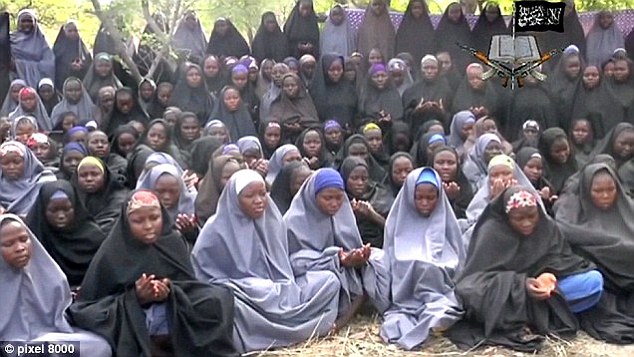
About 250 schoolgirls were kidnapped in April by members of the militant group Boko Haram

Fears have been raised that the schoolgirls kidnapped by Boko Haram militants earlier this year are being used as suicide bombers.


The speculation has arisen after a number of female suicide bombings in Nigeria's biggest city of Kano, while a ten-year-old girl wearing explosives was also discovered in Katsina state.


The latest attack came on Wednesday when a female suicide bomber blew herself up at a college in Kano, killing six people. According to reports, the bomber was a female teenager.


It was the fourth suicide bombing carried out by a female in the city in the past week.


There was no immediate claim of responsibility, although militant group Boko Haram, which is fighting for an Islamic state in religiously-mixed Nigeria, has repeatedly bombed Kano as it radiates attacks outwards from its northeast heartlands.


Government spokesman Mike Omeria said security forces arrested three Boko Haram suspects in Katsina state, two of them female, on Tuesday.


One was a 10-year-old girl who had an explosive belt strapped to her by the others, he said.


Using female suicide bombers in the city appears to be a new tactic of Boko Haram, although they have used them on occasion for years in the northeast.


Two female suicide bombers blew themselves up at a trade show and a petrol station in Kano on Monday, killing one other person and injuring at least six others.


On Sunday, a female suicide bomber killed herself but no one else while trying to target police officers.


Concerns have now been raised the militant group is using the schoolgirls kidnapped earlier this year in Chibok in the suicide bombings.


Former education minister Oby Ezekwesili has warned the kidnapped girls may be 'indoctrinated or coerced into being used as suicide bombers', according to the International Business Times.


On Sunday Ms Ezekwesili tweeted: 'This new trend&serial pattern of "FEMALE SUICIDE BOMBERS" surely should PARTICULARLY worry us. It worries me stiff cos of our #ChibokGirls.'


The following day she wrote: 'Kano again and again. Female suicide bombers again and again – becoming trend. Our #ChibokGirls still in the enemy den. Are we THINKING?'


Meanwhile, the Human Rights Writers Association of Nigeria has urged the government to investigate the identity of the suicide bombers, the International Business Times reported.


In a statement, it said: 'In the event that these female suicide bombers are identified to have been the same kidnapped girls then the government should immediately deploy all resources and strategies to bring to an end, once and for all, this shameful scenario since the military have repeatedly stated that they are aware of the whereabouts of the kidnapped Chibok girls.'


In a separate incident on Tuesday, two suicide bombers killed 13 people in attacks on two mosques in the town of Potiskum, in Yobe state in the northeast, medical official Bala Afuwa, who received the bodies at a local hospital, told Reuters by telephone on Wednesday.


'Two of my uncles were killed,' said resident Mohammed Abubakar, whose family home is next to one of the mosques that were attacked. 'They had just returned from the mosque.'


President Goodluck Jonathan, who has come under heavy criticism for failing to end the five-year-old rebellion, pledged $500 million on Wednesday towards Nigerians living in states that are worst affected by Boko Haram violence.


Earlier this month kidnapped Nigerian schoolgirls who managed to escape from their Islamic extremist captors were reunited with the president.


He heard tales from some of the 57 who escaped after their abduction on April 15 before assuring them of his determination that those still in captivity ‘are brought out alive’.


Around 57 students managed to flee shortly after they were captured, but a committee investigating their disappearance said 219 of the girls are still missing.


According to a mediator working with Boko Haram two of the girls have died of snake bites while around 20 have fallen ill.


Boko Haram is demanding a swap for detained fighters in exchange for the girls.


Most of the schoolgirls are still believed to be held in the Sambisa Forest – a wildlife reserve that includes a mixture of thick jungle and open savannah.


The forest borders on sand dunes marking the edge of the Sahara Desert.


Sightings of the girls and their captors have been reported in neighboring Cameroon and Chad.


Chibok and nearby villages are targets because they are enclaves of staunch Christians in predominantly Muslim north Nigeria.


By James Rush

1 August 2014

Source: http://www.dailymail.co.uk/news/article-2713322/Fears-schoolgirls-kidnapped-Boko-Haram-used-suicide-bombers-ten-year-old-girl-wearing-explosives-rescued-police.html#ixzz39Vdj9GZn 

Uganda anti-gay law declared ‘null and void’ by constitutional court

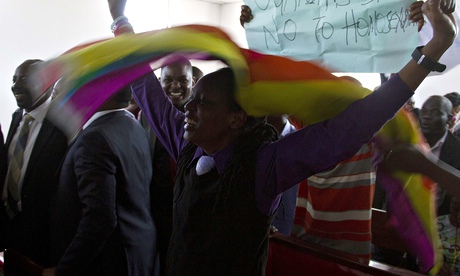
Members of Uganda's gay community reacts as the anti-gay law is declared null and void

Judges strike down legislation on a technicality, but activists say homosexuality remains criminal offence under colonial-era laws.


Gay rights campaigners in Uganda and around the world are celebrating a decision by the country's constitutional court to strike down a widely condemned anti-gay law on a legal technicality.


Activists in the courtroom cheered after a panel of five judges ruled on Friday that the speaker of parliament acted illegally when she allowed a vote on the measure despite at least three objections that not enough MPs were in attendance.


"The speaker was obliged to ensure that there was quorum," the court said in its ruling. "We come to the conclusion that she acted illegally."


While celebrating the ruling, activists warned that homosexuality remained a criminal offence in the east African country under colonial-era laws.


The fiercely controversial statute represented a dramatic toughening of the penalties. It banned the "promotion of homosexuality" and enabled life sentences to be imposed for various same-sex acts, including touching in public or living in a same-sex marriage. Activists also warned the state could appeal against the ruling in the supreme court and legislators might try to reintroduce new anti-gay measures.


President Barack Obama described the legislation as "a step backward for all Ugandans", and several donors suspended aid. But Uganda's president, Yoweri Museveni, signed it into law in February, watched by cheering crowds. Asked about homosexuality on CNN, Museveni said: "They're disgusting. What sort of people are they? I never knew what they were doing. I've been told recently that what they do is terrible. Disgusting."


The challenge to the law was brought by 10 petitioners, including academics, journalists, both ruling party and opposition MPs, human rights activists and rights groups. They claimed that it violated the constitutional right to privacy and dignity, as well as the right to be free from discrimination and cruel, inhuman and degrading treatment.


Friday's ruling was made in a courtroom packed with opponents and supporters of the measure. Among those present was Frank Mugisha, director of Sexual Minorities Uganda, who said: "We welcome this ruling and Uganda's lesbian, gay, bisexual and transgender community can celebrate a small victory against oppression.


"However, we are disappointed that the case was not heard on its true merits. The truth is that not only is the anti-homosexuality act persecutory, it is also unconstitutional and illegitimate. This law has no place in our society, which values dignity, privacy and equality for all our citizens. Until the act has been dismissed on the substance of our arguments, we cannot rest easy."


Ugandan lawyer Ladislaus Rwakafuuzi, a lawyer representing the activists, said the ruling "upholds the rule of law and constitutionalism in Uganda".


Homophobia is widespread in the socially conservative country, where American evangelical Christian groups have been accused of fuelling prejudice. The legislation was seen as a political ploy by Museveni to shore up support before elections in 2016, which will be his 30th year in power.


The court's intervention allows him to blame others for its defeat while also placating western donors, who were reluctant to punish a military ally.


Outspoken anti-gay preacher Martin Ssempa had suggested that the petition was being pushed to mend Uganda's international reputation before Museveni travels to Washington next week to meet Obama at a landmark US-Africa summit. "There are efforts … to drum up a legal precedent to try to show [Washington] that, 'Hey, we are not that bad on homosexuality,'" Ssempa told Agence France-Presse this week.


The US last month froze some aid programmes, as well as cancelling military air exercises and barring entry to the US for specific Ugandan officials involved in "human rights abuses", including against the gay community.


Rights groups claimed that the law had led to a sharp increase in arrests and assaults on members of the gay and lesbian community. Its annulment was welcomed by the Human Dignity Trust, an organisation of international human rights lawyers challenging anti-gay laws across the world.


Jonathan Cooper, its chief executive, said: "It's a fantastic victory for the rule of law. That Uganda's gay and lesbian community has won a reprieve today from the oppression of the loathsome anti-homosexuality act, we can only celebrate.


"The brilliance and determination of the activists who have pursued this challenge serve as an inspiration to us all. It is also heartening to know that the rule of law has prevailed and politicians are shown not to be above the procedures that govern them.


"However, this is but a temporary fix; the fight is far from over. The international community must seize this opportunity to support Ugandan's gay and lesbian citizens in their battle for the basic freedom from persecution. Now the act has gone, we must do all we can to stop it coming back. Uganda's constitution – which protects citizens' rights to privacy and dignity – must be for all Ugandans."


Dr Paul Semugoma, a Ugandan gay rights activist based in South Africa, said: "I am over the moon. Very happy. But we have had legal victories before. It was struck down on a technicality. It may return.


"In Uganda, homophobia is such an inherent part of culture now that opportunistic politicians are likely to bring it back. They would pass it."


Sarah Jackson, deputy regional director of Amnesty International, said: "Even though Uganda's abominable anti-homosexuality act was scrapped on the basis of a technicality, it is a significant victory for Ugandan activists who have campaigned against this law.


"Since it was first being floated in 2009, these activists have often put their safety on the line to ensure that Ugandan law upholds human rights principles.


"We now hope that this step forward translates into real improvements in the lives of lesbian, gay, bisexual, transgender and intersex people in Uganda, who have been trapped in a vicious circle of discrimination, threats, abuse and injustice for too long."


Kosiya Kasibayo, a state attorney, said that a decision had not been made on whether to appeal against the ruling in the supreme court.


By David Smith

1 August 2014

Source: http://www.theguardian.com/world/2014/aug/01/uganda-anti-gay-law-null-and-void

Uganda: Anti-Gay Petition – Court Rules Today

00261261-cb611a0892454e768b0d4599a05e187c-arc614x376-w290-us1

The Constitutional court is today expected to rule whether to strike down or uphold the Anti-Homosexuality Act, derided by the West but hugely popular in Uganda.


The petitioners include Prof Joe Oloka-Onyango, MP Fox Odoi-Oywelowo, Andrew Mujuni Mwenda, Prof Morris Ogenga Latigo, Dr Paul Nsubuga Semugooma, Jacqueline Kasha Nabagesera, Julian Pepe Onzimema, Frank Mugisha and the Human Rights Awareness and Promotion Forum. In their March 2014 petition, they claim the anti-homosexuality law, passed by Parliament on December 20, 2013, is "draconian" and "unconstitutional."


On Wednesday, the petition came up for hearing before Justices Steven Kavuma, Solomy Balungi Bossa, Augustine Nshimye, Eldad Mwangusya, and Rubby Opio Aweri.


No quorum?

Nicholas Opiyo, one of the petitioners' lawyers, said the law was illegal because Parliament passed it without quorum. He argued that passing a law without quorum contravened rule 23 of the parliamentary rules of procedure, and Articles 2(1) & (2), 88 and 94(1) of the Constitution.


Opiyo said on the day the Anti-Homosexuality Act was passed, Prime Minister Amama Mbabazi warned Speaker of Parliament Rebecca Kadaga about the lack of quorum.


"The rules of Parliament provide that once it's brought to the attention of the speaker that there is no quorum, he/she should stand over the session such that a count is done and if it's found that indeed there's no quorum the session is adjourned. But the speaker did none of the above," he said.


Caleb Alaka, another lawyer for the petitioners, said on the day the law was passed, Hatwib Katoto, the Katerera MP, asked Mbabazi why he was opposing the law's passage yet many laws had been passed without quorum.


"My lord, here is a member of Parliament saying that it's normal for the Parliament of Uganda to pass laws illegally. The Hansard will bear us out on this one," Alaka said.


No evidence:

In reply, Principal State Attorney Patricia Mutesi asked court to dismiss the petition. Mutesi contended that the petitioners had failed to adduce evidence that there was no quorum when the act was passed."It's very clear that this is a matter of fact; so, it requires evidence. When an allegation of fact is made, it requires evidence to support it, which has not been done," she said. Mutesi agreed with petitioners that Kadaga did not ascertain if there was quorum but she insisted that it could not be a ground to nullify the act.


"In the circumstances, it would be unfair for this honourable court to find that there was no quorum since it has not been proved that there was no quorum. What has been produced is just a Hansard which doesn't show how many MPs were in the session that day…They should have produced a register," she said.


Mutesi contended that the court could not interpret Articles 21, 22, 88 and 94, as requested by the petitioners, in the absence of evidence to prove the alleged lack of quorum.


"We conclude that, for this court to come to the conclusion that there was no quorum, it would be speculation. Even failure to ascertain whether there was no quorum cannot imply that there was no quorum," she concluded.


However, Alaka maintained that the act should be nullified since Kadaga flouted rule 23 of parliamentary rules and procedure. The rule requires that before the speaker puts an issue to a vote, she must first ascertain whether there's quorum or not.


When President Museveni assented to the act in February, angry donors withdrew their aid, citing a violation of individuals' rights.


By Derrick Kiyonga

1 August 2014

Source: http://allafrica.com/stories/201408010223.html

New Technique Cuts HIV Out Of Infected Cells DNA

Researchers have managed to remove HIV from cultured human cells for the first time. The team's approach looks promising for a potential permanent cure as well as providing protection against HIV.

88F72DB09783282743947C5C772FB2

According to the U.S Centers for Disease Control and Prevention more than 33 million people have HIV, the HIV-1 virus being the most prevelant. Although effective treatment has been available for the last 15 years, it requires a lifetime of vigilance as one missed day could allow the virus to flare up, leading to AIDS. Eliminating the virus completely is the best possible solution and researchers at the Temple University have achieved this result in cultured human cells for the first time. The team's approach looks promising for a potential permanent cure as well as provide protection against HIV.


In the study, published by the Proceedings of the National Academy of Sciences, Kamel Khalili, the lead researcher of the project said, "This is one important step on the path toward a permanent cure for AIDS. It's an exciting discovery, but it's not yet ready to go into the clinic. It's a proof of concept that we're moving in the right direction."


The reason HIV-1 is so difficult to control is because it inserts itself permanently into the victims DNA. The team at Temple University School of Medicine have found a way to cut the HIV-1 virus out of the infected genes permanently. The newly developed method uses molecular tools to delete the HIV-1 DNA. Together, a combination of a DNA-snipping enzyme called a nuclease and a targeting strand of RNA called a guide RNA hunt down the genome of the virus and remove the HIV-1 DNA. The cell then takes over naturally and repairs the missing link, resulting in a virus free cell.


"Since HIV-1 is never cleared by the immune system, removal of the virus is required in order to cure the disease," says Khalili, whose research focuses on the neuropathogenesis of viral infections. The same technique could theoretically be used against a variety of viruses, he says.


Aside from showing promise of a cure, the research also holds promise of utilising the molecular tools as a vaccine by creating cells that are impervious to HIV infection. The process was succesful in several different cell types that typically harbor the HIV virus, the most notable of these cells are T-lymphocytes which are essential to the immune system.


"T-cells and monocytic cells are the main cell types infected by HIV-1, so they are the most important targets for this technology," Khalili says.


The eventual eradication of the HIV virus using this technique still faces several challenges before it will be ready for use in humans. The team needs to create a method of delivery that will ensure success in every infected cell in the body as well as account for mutations of the virus itself.


"We are working on a number of strategies so we can take the construct into preclinical studies," Khalili says, "We want to eradicate every single copy of HIV-1 from the patient. That will cure AIDS.


30 July 214

By Rowan Larkin

Source: http://motoring.howzit.msn.com/innovation/personal/new-technique-cuts-hiv-out-of-infected-cells-dna

Boko Haram attacks hometown of missing girls

Eleven parents of abducted Nigerian schoolgirls have died since daughters went missing, as Chibok remains under siege. At least eleven of the parents of the more than 200 Nigerian schoolgirls kidnapped 100 days ago have died, as their hometown of Chibok is under siege, residents have reported.


Seven fathers of kidnapped girls were among 51 bodies brought to Chibok hospital after an attack on the nearby village of Kautakari this month, a health worker told AP news agency on Tuesday.


The worker asked for anonymity for fear of reprisals by Boko Haram, an Islamic armed group that claimed responsibility for the mass abduction of the girls.


At least four more parents have died of heart failure, high blood pressure and other illnesses that the community blames on trauma due to the abductions, said community leader Pogu Bitrus.


"One father of two of the girls kidnapped just went into a kind of coma and kept repeating the names of his daughters, until life left him," Bitrus told AP.


No end in sight: Boko Haram's bloody legacy

Chibok is cut off because of frequent attacks on the roads that are studded with burned out vehicles.


Commercial flights no longer go into the troubled area and the government has halted charter flights.


Boko Haram is closing in on Chibok, attacking villages closer to the town, and villagers who survive the attacks are seeking refuge in the town, heightening food and water shortages.


Some of the young women who escaped are recovering, with girls who at first refused to discuss their experience, now talking about it and others thinking of returning to school.


Counselling is being offered to families of those abducted and to some of the 57 students who managed to get away from the kidnappers in the first few days, said a health worker.


A presidential committee investigating the kidnappings said 219 girls still were missing. But the community says there are more because some parents refused to give the committee their daughters' names, fearing the stigma involved.


'Conversion'


Following the mass abduction in April, Boko Haram released a video in which they threatened to sell the students into slavery and as child brides.


It also showed a couple of the girls describing their "conversion" from Christianity to Islam.


Residents and parents have criticised the Nigerian government's efforts to recover the girls, but President Goodluck Jonathan insists his government and military are doing everything possible to ensure their release.


The Defence Ministry says it knows where they are but fears any military campaign could lead to their deaths.


Boko Haram leader Abubakar Shekau in a new video released this week repeated his demands that Jonathan release detained members in exchange for the girls, an offer Jonathan has so far refused.


Source AP

Global Fund: Learning from Concept Notes

The first ten concept notes in the new funding model were reviewed by the Technical Review Panel in June, an independent assessment of the viability of each funding application.


The panel – composed of experts in HIV, tuberculosis and malaria and in cross-cutting development issues – found some excellent applications, and others that needed more work. Some applicants were asked to make specific improvements and changes, and then submit another iteration of their application, in order to meet the standard for approval.


One of the advantages in the new funding model is the scope for feedback and revision, so that an application deemed not yet ready can be revised, and not rejected. In its first year of full implementation, the new funding model is not perfect, and will require openness on all sides to learn along the way.


As other applicants prepare their own concept notes, they may benefit from considering highlights and suggestions made by the panel, commonly known as the TRP, about what they are looking for in a concept note. An official report is scheduled for mid-July, but here is an advance summary of key recommendations made by the TRP:


One: Priority-setting

Above all, the TRP looks for a clear explanation of priorities in each concept note. Strategic choices, based on evidence and national plans, are also strengthened when they draw on sub-national and sub-population epidemiological data.


Focus on interventions in specific regions and among specific populations, with funding aimed at reaching key populations or regions with highest prevalence, incidence or population at risk, is also important.


Two: Requests above allocation

Requests for funding that reach above a country’s allocation amount will be more effective when described separately in a concept note. A central element of the new funding model is moving to an allocation model where each country is informed of an amount of potential available funding.


Those countries that want to apply for an amount above the allocation should justify the request for additional interventions beyond the minimum level, such as expanding geographic coverage or expanding services. It should also rank choices with corresponding budgets and expected impact.

Special cases can be considered. It is possible that funding for those activities may be done through incentive funding, if the country is eligible, or through the register of unfunded quality demand.  


Three: Health Systems Strengthening

The TRP strongly encourages applicants to commit to and weave efforts to boost health systems strengthening into their concept notes.

Ideally, Country Coordinating Mechanisms should use cross-cutting HSS interventions in more than one of the diseases to help maximize impact and they should make that connection clear in the concept note. Eligible countries are encouraged to set aside funding during the program split discussion for cross-cutting HSS, if the country has that need.


Four: Learning from previous Global Fund investments

Concept notes are stronger when applicants include an explanation of the impact of previous programs, and – most important – how lessons learned from those programs were used to reshape future investments.


Five: Concept notes should cover the period to the end of 2017

The current allocation period lasts from 2014 through 2016. However, since many concept notes will lead to grants that do not begin until 2015, many grants will last three years, from 2015 through the end of 2017.


In some cases, a CCM can discuss and get approval for a shortened grant duration of between two and three years. In those cases, the concept note should explain where funding will come from to cover the period until the end of 2017.


There are advantages to flexibility in timing, since conditions vary from country to country and disease to disease. Yet making exceptions to a three-year grant structure may require extra justification and planning.


Source: Global Fund News Flash Issue: 44

Date: 3 July 2014


AIDS conference attendees remember 6 who died on MH17

AUSTRALIA-MALAYSIA-AIRLINES-PLANE-CRASH

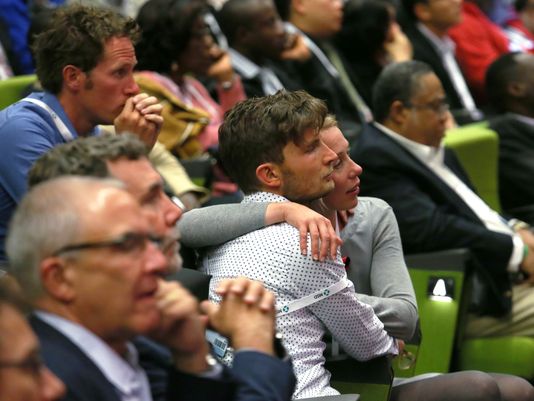
MELBOURNE, Australia — Organizers and attendees at the world's largest AIDS conference said six colleagues who died in the downing of Malaysia Airlines Flight 17 would want them to continue the fight against this deadly disease.


The six delegates, who died Thursday, were to attend the 20th International AIDS Conference here. Noted AIDS researcher Joep Lange, an internist and professor of infectious diseases at the University of Amsterdam, was among those who died. They were remembered during the opening ceremony Sunday.


"This is not a time for silence," said Michael Kirby, former judge of the High Court of Australia. "They would expect us to pick up our shattered spirits. They would demand that we renew and redouble our efforts."


Kirby spoke of his friends and noted he had left Amsterdam only days earlier on another flight. He delivered the Jonathan Mann Memorial Lecture, named after the first director of the Global Program on AIDS of the World Health Organization, who was killed in a plane crash in 1998 en route to another AIDS conference.


Hundreds gathered for the opening ceremony on a cold night in Melbourne prior to the official opening Monday morning. Twelve thousand delegates from 200 nations make up the week-long conference, the largest AIDS conference in the world.


The conference paid tribute with a minute of silence and a number of speeches, including a video from Australian Prime Minister Tony Abbott. Dutch ambassador for HIV/AIDS, Lambert Grijns, also made a speech, noting that five of the six dead delegates were Dutch nationals.


Several of those speaking, such as International AIDS Society president Francoise Barré-Sinoussi, became emotional as they spoke of their lost colleagues and friends. However despite the sadness many obviously felt, organizers said it was important that the event was a tribute to those lost and that if anything their fight against AIDS would be redoubled in light of tragedy.


At a press conference prior to the opening ceremony, International AIDS Society president-elect (who will take over the presidency from Barré-Sinoussi at the end of the conference) Chris Beyrer said it had been a "long and very emotional 48 hours … (We are) ready and determined to make it a success."


United Nations AIDS Executive Director Michel Sidibé pledged that the world would, with work, have conquered the AIDS epidemic by 2030 and noted that there had been "extraordinary progress since Washington (conference in 2012). More has been done in the last three years than the last 25 years … 5.6 million more are receiving treatment."


By Helen Clark

20 July 2014

Source:http://www.usatoday.com/story/news/world/2014/07/20/20th-international-aids-conference-six-researchers-died-mh17/12911929/

AAI Offers Condolences.

AAI wishes to offer our deepest condolences to the families, friends and colleagues of our fellow HIV and AIDS activists, whom we lost on flight MH 17.


“Never doubt that a small group of thoughtful, committed, citizens can change the world.

Indeed, it is the only thing that ever has.” ― Margaret Mead


Zuma Press