Category Archives: News

Leaving no one behind in the post-2015 development agenda: young marginalized people claim their space

missionbrazil_632The sexual and reproductive health rights of young marginalized populations are often neglected and their collective voice in this critical area not always heard. To try to redress this imbalance young people from marginalized communities and key populations in Bangladesh, Ethiopia, Puerto Rico and Uganda met in New York this week to discuss how to put these rights issues firmly on the post-2015 development agenda, leaving no one behind. 


Taking place on 25 September, the General Assembly side event which took the form of a panel discussion, examined the vital role of community engagement, advocacy and service delivery in protecting the rights and meeting the needs of young key populations. These include men who have sex with men, sex workers and young people living with HIV.   


Young speakers, who were peer educators, directors of national and regional NGOs, actors and community leaders, argued that universal access to HIV services and health coverage could not be achieved without prioritizing the needs of the most marginalized. They also noted the contribution of comprehensive sexuality education to improving young people’s health and the role that communities can play in both promoting rights and challenging stigma and discrimination.


The event was hosted by the Government of Brazil and organized by the International HIV/AIDS Alliance, GESTOS, the Global Youth Coalition on AIDS, ATHENA, ICASO, International Civil Society Support, STOP AIDS NOW!, Stop AIDS Alliance, the HIV Young Leaders Fund, the African Services Committee, and the Global Forum on MSM and HIV, in collaboration with UNAIDS.


Quotes

"Setting goals is only part of the story. Where we should look for change is the way that we will implement the goals. We need to change the way we are doing business and craft the space for civil society in the new post-2015 agenda."

Luiz Loures, UNAIDS Deputy Executive Director


“We are talking about development here and sexual and reproductive rights are development."

Pablo Aguilera, HIV Young Leaders Fund


By UNAIDS

26 September 2014

Source: http://www.unaids.org/en/resources/presscentre/featurestories/2014/september/20140925csyoungpops/

AAI Forms New Partnerships to Promote Global Fund Accountability in East Africa

CCM Uganda AAIPriorities Charters

For the last three years, AIDS Accountability International’s (AAI) work to stimulate greater accountability from funding partners – particularly the Global Fund – has focused on countries in Southern Africa. Based on the impact and successes of that work and its publication as good practice (Oberth, 2013; Oberth, 2014), AAI has partnered with vested stakeholders in Kenya, Tanzania (Mainland and Zanzibar) and Uganda to scale up our work to East Africa and ensure that the Global Fund is accountable to women, young girls and LGBT communities there.


In August 2014, Daniel Molokele (Deputy Executive Director) and Gemma Oberth (Senior Researcher) represented AAI in three different national and regional forums to promote greater transparency around Global Fund country dialogue.


The AAI team started in Kenya where we were brought in as technical partners to facilitate civil society country dialogue for Kenya’s upcoming HIV/TB concept note to the Global Fund (to be submitted 15 January 2015). As impartial and unbiased facilitators, AAI is able to draw out key priorities from various marginalized groups, including MSM, sex workers, people with disabilities, the TB community and other civil society representatives. The workshop was a national level training for civil society focusing on the Global Fund and the use of data in planning for the New Funding Model. The training workshop was held from 20-22 August at Maanzoni Hotel, just outside Nairobi, and hosted by Aidspan, in partnership with various partners such as International HIV Alliance, EANNASO, KANCO, LVCT Health and KENAAM. The outcome of the workshop will be The Kenya Civil Society Priorities Charter, produced by AAI as part of an initiative we have led in eight African countries, in partnership with the Ford Foundation.


After supporting civil society in Kenya to set priorities for the Global Fund New Funding Model, AAI travelled to Zanzibar where we facilitated a multi-stakeholder Priorities Charter development workshop. AAI’s technical support was requested by the Secretariat of the Zanzibar Global Fund Country Coordinating Mechanism (ZGFCCM), based on our previous work supporting civil society and key populations dialogues (in partnership with the International HIV/AIDS Alliance) and developing the Zanzibar Civil Society Priorities Charter, an initiative led by AAI.


The multi stakeholder consultation in Zanzibar was held on 25 August 2014 and was attended by representatives from diverse sectors in Zanzibar that included government departments, civil society, key populations, development partners, academia and private sector. The outcome of this workshop will be the Zanzibar Key Stakeholder Priorities Charter, which AAI will produce based on the priorities set at the meeting. The Charter is intended to guide the concept note development process in Zanzibar for both their HIV/TB concept note and Malaria concept note (both to be submitted on 15 October 2015). Some of the top priorities among the key stakeholders were on issues around treatment, care and support, behaviour change and also on health systems strengthening, among others.


Lastly, from 26-28 August 2014, AAI travelled to Dar es Salaam, Tanzania to participate in a regional civil society meeting that was hosted by EANNASO. The meeting was attended by civil society members of CCMs across several countries in East Africa, including Kenya, Tanzania (Mainland and Zanzibar), Burundi, Rwanda, Uganda and Ethiopia. The participants shared their experiences and lessons learnt from their active participation on CCMs, particularly focusing on civil society engagement in the concept note development process for the Global Fund New Funding Model. At the meeting, AAI conducted a session on Accountability Literacy, building the capacity of the delegates to hold other CCM members accountable through greater transparency, dialogue and action. A key outcome of the meeting was the launch of a regional civil society CCM forum and also the election of steering Committee.


The AAI team was impressed with the level of commitment and support from the various partners across East Africa and now looks forward to developing more opportunities for programme partnerships in the region.

AIDS Accountability International's work on CCMs and GFATM are kindly funded by funding partner Ford Foundation, South Africa Office.

Ebola: Where is all the development money?

Truthout.org, CC BY-NC-SA

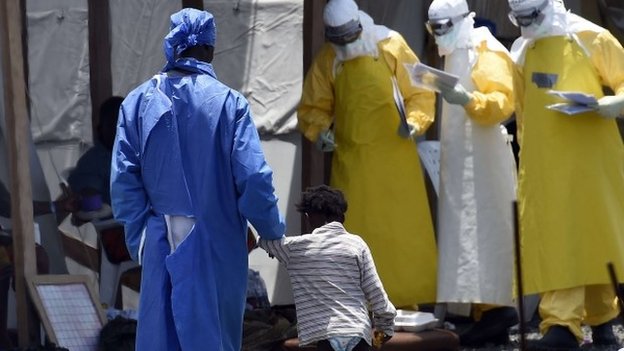
With each week that passes, the Ebola crisis in West Africa deepens. And amid the horror, the fear and a public health response described by Medicine Sans Frontières as “lethally inadequate”, public health systems face total collapse.


While the inadequate international response has loomed large, it is the region’s chronically weak and desperately resourced health infrastructure which is the critical factor. This was underlined by Bruce Ribner, an infectious disease specialist at Emory University Hospital in the US who led the successful treatment of two aid workers who contracted Ebola while working in West Africa.


Testing we take for granted


According to Ribner: “They [West African Doctors] suffer from a terrible lack of infrastructure and the sort of testing that everyone in our society takes for granted, such as the ability to do a complete blood count – measuring your red blood cells, your white blood cells and your platelets – which is done as part of any standard checkup here. The facility in Liberia where our two patients were didn’t even have this simple thing, which everyone assumes is done as part of your annual physical.”


Health systems encompass hospitals, clinics, procurements structures, research programmes, community health workers and training provision, and are the first line of defence in the face of outbreaks such as Ebola. When that bulwark is breached so easily, as it was in Sierra Leone and throughout the region, it raises urgent and uncomfortable questions about the focus of our development priorities.


In fact, this crisis exposes the great fallacy of the West’s global development agenda. While the international health and development community obsesses about technocratic development goals, targets, and indicators; the basic building blocks of health provision in poor countries have been desperately neglected.


Where’s the swell of money?


There is a contradiction here. Isn’t it recognised that global health has done well out of the last 15 years of development spending?


Three of the Millennium Development Goals(MDGs) are health related, new philanthropic actors such as the Bill and Melinda Gates Foundation have prioritised global health as an area of concern, and new financing mechanisms to support vaccinations and HIV/AIDS responses such as the Global Fund to Fight AIDS, Tuberculosis and Malaria were created.


The result: a swell of new money, big name endorsements, and targeted action in critical but singular areas.


This tide of resources, expertise and good will has led to a pre-occupation with “vertical interventions” – programmes that prioritise specific diseases such as malaria. This is of course, not a bad thing in itself. Malaria is a scourge on the health and lives of Africans, and programmes to mitigate its transmission and effects are both vital and badly needed. I’m not proposing that we cut off support for disease-specific programmes nor that development is a zero-sum game – but our limited resources can’t ignore the less glamorous but no less urgent areas of clinics, hospitals and systems.


The singular focus on specific diseases, to the detriment of health systems in general, is a major reason why we are where we are in West Africa. The failure of the healthcare infrastructure to cope with Ebola should not be a surprise; it is certainly not for those living and working in the region, many of whom have spent decades decrying the ramshackle state of hospitals, clinics and systems.


Will this shift priorities?


The WHO has stressed the importance of health systems, and the World Bank began to make them the focus of its regional efforts a few years ago. Yet, the idea that health systems should be a key feature of the new Millennium Development Goal process is gaining little traction in international development circles. In short, without a radical focus on health systems; the future is bleak.


The struggle to contain Ebola shows how strongly equipped and fully-functioning health systems are fundamental to the management of health emergencies as well as the everyday health and well-being of people in vulnerable, poorer regions.


The stubborn focus on goals and specific diseases over the last 15 years has led to a chronic and senseless neglect of health systems in developing countries. This focus has contributed to a catastrophic public health emergency. If we are to salvage anything from this human and regional tragedy, it should include a commitment to invest money and expertise in regional health infrastructure. That requires an urgent and radical shift in our accepted model of global health and development.


Source: http://theconversation.com/ebola-crisis-in-west-africa-where-did-all-the-development-money-go-31544

SA Minister Underscores Reproductive Justice

amandla-375x250

It is rare that you can see something you’ve helped to create change the behavior of a government thousands of miles away. So imagine my surprise when I opened my email this morning to read the speech about reproductive justice (RJ) made by South Africa’s Minister of Social Development Bathabile Dlamini in front of the United Nations General Assembly on September 19. She didn’t speak in general language that could be interpreted to suggest reproductive justice; she actually used the specific term, acknowledging the role African-American women played in gifting this theory and framework to the world.

 
In addition to discussing sexual rights, reproductive health issues, and economic justice, she used the speech to explicitly embrace LGBTQ rights. As a representative of an African government that supports gay, lesbian, trans, bi, and intersex rights, her remarks act as an important backstop against the rampant anti-gay hysteria around the continent fomented by the evangelical religious right in Uganda and elsewhere. Yet it was her use of the reproductive justice language that started my heart pounding Tuesday morning.
 
It is no longer surprising that RJ has caught on in the United States among thousands of activists eager to move beyond the paralyzing pro-choice/anti-choice stalemate. It is very simple to embrace RJ as both a theoretical paradigm shift and a model for ideal practices because it’s easy to understand and, in a few words, can state the sum of our expectations. As I’ve written in other places, it comes with its own “elevator pitch:”
 
RJ is about three interconnected sets of human rights: 1) the right to have children; 2) the right not have children; and 3) the right to parent the children we have in safe and healthy environments.
 
As bell hooks says, “Any theory that cannot be shared in everyday conversation cannot be used to educate the public.”
 
Reproductive justice does not privilege the production of babies as the only goal of women’s biology; instead, it is based on the human right to make personal decisions about one’s life, and the obligation of government and society to ensure that the conditions are suitable for implementing one’s decisions. Although the SisterSong Women of Color Reproductive Justice Collective publicized the concept of RJ, it does not only apply to women of color. Human rights are what everyone deserves, and so everyone is included in the RJ framework. In particular, reproductive justice draws attention to the lack of physical, reproductive, and cultural safety that affects our “choices.” Reproductive justice focuses on oppression—the structures of injustice and inequality.
 
In 1994, when 12 Black women sat in a hotel room in Chicago and envisioned the concept of reproductive justice as a way to create new avenues of resistance and strategies for change, we had no idea that 20 years later, we’d be discussing how RJ has changed the pro-choice movement in the United States in addition to being used by activists around the world. I’ve been invited to speak about reproductive justice in Ireland, South Africa, China, and Brazil. Activists in these countries told me that using the RJ framework has opened up political spaces to talk about sexual rights and reproductive health issues in a way that moves the lens from centering only on abortion; instead, it enfolds abortion in a larger conversation about people’s lives and human rights. As in the United States, this paradigm shift has brought new allies into the conversation and has thwarted opponents who only want to focus on fetuses instead of the full spectrum of our lived experiences.
 
In the United States, some adopters of the RJ framework have only focused on the inherent concept of intersectionality, based on the works of Kimberlé Crenshaw. Intersectionality, according to her, “mediates the tension between assertions of multiple identities and the ongoing necessity of group politics,” while at the same time providing a “basis for reconceptualizing” a single identity as coalition, such as “race as a coalition between men and women of color.” Intersectionality is certainly a process that the RJ framework uses as a pathway toward understanding our multiple identities. But it is just that: a process, not a goal. The goal is the full achievement of human rights for everyone.
 
To get there, we need a legal regime that pushes beyond the limited U.S. Constitution and the tenuous interpretation of “privacy” to protect women’s rights. Incidentally, this is also why Crenshaw conceptualized intersectionality as a lawyer in 1989, when she analyzed the inability of U.S. laws to deal with the compounding of race and gender in cases involving Black women plaintiffs.
 
In fact, to not reference “human rights” as an international set of laws and standards in discussions and applications of reproductive justice is to divest RJ of its power to challenge the U.S. government to live up to the obligation to protect our people. When RJ is stripped of its most radical potential, we have to ask ourselves, whose interests does that serve?
 
Nonetheless, back to South Africa. It was wonderful for me that Minister Dlamini referenced the 1994 International Conference on Population and Development (ICPD) in Cairo in her speech. That was where things crystallized for me, 20 years ago: that the ability of any woman to manage her own fertility is directly dependent on the circumstances of the community in which she is embedded. To promote contraceptives in a community that lacks basic health-care infrastructure is a form of population control, not a sincere understanding of the needs of women or their communities. This was the message—in other words, the African philosophical concept of Ubuntu—that global feminists agreed upon at the ICPD, and we pushed it together to ensure that it was included in RJ’s Plan of Action.
 
On Friday, Dlamini called upon all African countries to improve their human rights commitments for everyone and to stop limiting protections by invoking the phrase “in accordance with national laws and policies.” This mealy-mouthed half-stepping basically admits that existing national laws that violate human rights, such as Uganda’s “kill the gays” law, will not be changed. This is a salutary lesson for the United States. The primary reason we have not ratified the majority of the available human rights treaties—including the Convention on the Elimination of All Forms of Discrimination Against Women (CEDAW)—is because of Congress’ reluctance to bring U.S. laws into harmony with international human rights laws.
 
So I celebrate this morning in company with my co-creators Toni Bond Leonard, “Able” Mable Thomas, Cynthia Newbille, Rev. Alma Crawford, Evelyn Field, and seven others who were with us in that hotel room. We’ll have our SisterSong-organized reunion in Chicago from November 7 to 9, but we’ll arrive there celebrating the fact that, in the words of South African women, the stone we tossed in 1994 “dislodged a boulder.” Amandla!
 
By Loretta Ross
23 September 2014
Source: http://rhrealitycheck.org/article/2014/09/23/amandla-south-african-minister-underscores-reproductive-justice-global-framework/

We Can’t Have a Post-2015 Agenda Without SRHR

In 2000, the creators of the Millennium Development Goals (MDGs) completely overlooked sexual and reproductive health and rights (SRHR), a mistake that, if repeated, would cripple the dreams of millions of young girls and women for years and generations to come.


Access to SRHR enables individuals to choose whether, when, and with whom to engage in sexual activity; to choose whether and when to have children; and to access the information and means to do so. To some, these rights may be considered an everyday reality. However, that is not the case for millions of young people in the world – particularly girls and women.


On Tuesday night, I had the fantastic opportunity to listen to some of the foremost global leaders speak on behalf of ensuring access to sexual and reproductive health and rights in the post-2015 agenda. The benefits of ensuring SRHR are society wide and inevitably translate into improved education, economic growth, health, gender equality, and even environment.

15151254527_adb1d98efd_k

Education


“At my high school, you would be expelled if found with a condom.” – Samuel Kissi, former President, Curious Minds Ghana


When girls are healthy and their rights are fulfilled, they have the opportunity to attend school, learn life skills, and grow into empowered young women. Wherever girls’ SRHR are ignored, major educational barriers follow. Child marriage and early pregnancy are major contributors to school dropout rates. In South Asia and Sub-Saharan Africa, girls are married before age 18 at an alarming 50 percent and 40 percent respectively. And in Sub-Saharan Africa, where 90 percent of adolescent pregnancies occur in marriage, it is safe to assume that not all those sexual acts were consensual and not all those pregnancies were planned.


Economic Benefits


“Initially I used to oppose family planning, but now I fully support. I support it because my wife has more time to work and earn money.” – The Honorable Dr. Tedros Adhanom Ghebreyesus, Minster of Foreign Affairs for the Federal Democratic Republic of Ethiopia, sharing the story of an Ethiopian man’s changed opinion regarding the importance of SRHR


Protecting SRHR not only saves lives and empowers people, but it also leads to significant economic gains for individuals and for the community as a whole. As previously stated, ensuring SRHR helps to decrease school dropout rates and, as a result, leads to a more productive and healthy workforce as each additional year of schooling for girls increases their employment opportunities and future earnings by nearly 10 percent.


Broader Health Agenda


“We cannot eliminate new HIV infections without providing SRHR services to women so they can make informed decisions to protect themselves and their children in the future. Yes, we will end the AIDS epidemic, but first we need to respect the dignity and the equality of women and young girls.” – Dr. Luiz Loures, Deputy Executive Director, UNAIDS


Access to SRHR guarantees quality family planning services, counseling and health information. These services are critical, particularly because women are often victims of gender-based violence and sexual assault and thereby face greater risks for sexually transmitted diseases like HIV/AIDS. Failing to secure and uphold SRHR dooms women and girls with an increased risk of unsafe, non-consensual sex and maternal mortality.


Gender Equality


“How can you control your life if you cannot control your fertility?” – Helen Clark, UNDP Administrator


When a woman can easily plan her family, she is more equipped to participate in the economy alongside her male colleagues. When the sexual rights of a woman or girl are fulfilled, she will experience decreased rates of sexual violence and enjoy a healthy relationship with a respectful partner. When a woman or girl does not fall victim to child marriage and early pregnancy, she can stay in school and achieve anything she puts her mind to.


Environment


“The woman continues to bring life, to bring up the next generation, to stand before you and say, ‘I am ready to embrace my rights and to deliver a better planet to humanity.’” – Joy Phumaphi, former Minister of Health, Botswana; Chair, Global Leaders Council for Reproductive Health

15151200248_776fc50801_k

A 2012 study found that community water and sanitation projects designed and run by women are more sustainable and effective than those that are not. Similarly, women produce 60 to 80 percent of food in developing countries and, with the economic and educational gains that coincide with secured SRHR, a woman is better equipped to effectively manage her land.


The post-2015 Sustainable Development Goals will not happen without SRHR being addressed. So far, the world has failed to recognize that SRHR are equally as fundamental to global development as finance and trade. We can no longer afford to view SRHR as a taboo or promiscuous topic. When 90% of first births in low-income countries are to girls under 18; when the leading cause of death among adolescent girls aged 15 to 19 is pregnancy and childbirth; when two-thirds of new HIV infections in sub-Saharan Africa are among adolescent girls; and when 200 million women want to use family planning methods but lack access, the young girls and women of the world do not have a promiscuity problem – they have a human rights problem.


By Elisabeth Epstein

25 September 2014

Source: http://girlsglobe.org/2014/09/25/we-cant-have-a-post-2015-agenda-without-srhr/

Quarantine works against Ebola but over-use risks disaster

LIBERIA HEALTH EBOLA

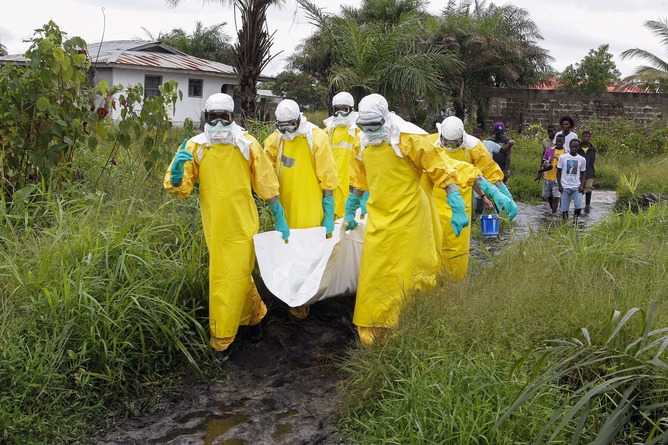
A man in the United States has become the first known international traveller to be infected in the West Africa Ebola epidemic and carry the virus abroad. He is thought to have been infected in Liberia and developed symptoms six or seven days after arriving in the United States to visit family. He’s being treated in isolation in Dallas, Texas.


Quarantine, in the form of isolation, is an important component of the response to Ebola infection. As people are infectious only once they develop symptoms, isolating them and having health-care workers use personal protective equipment significantly reduces the risk of onward transmission.


The director of the US Centers for Disease Control and Prevention (CDC) says the man will continue to be treated in isolation. In a process known as contact tracing, everyone he has come in contact with since he became symptomatic on September 24 will be located and monitored for 21 days (the maximum incubation period of the virus). Anyone who shows symptoms will also be isolated and treated.


The Ebola virus is unlikely to spread further in the United States because these measures are known to be effective. Indeed, their absence has contributed significantly to the spread of the virus in resource-poor nations of West Africa.


The benefits of quarantine


Countries have been practising this measure against infectious diseases well before we understood what caused and transmitted infections. The earliest mention of isolating people in this way is in the books of the Old Testament, for leprosy and other skin diseases.


The word “quarantine” comes from the Italian “quaranta giorni” which simply means “40 days”. It refers to the 40-day isolation period imposed by the Great Council of the City of Ragusa (modern day Dubrovnik, Croatia) in 1377 on any visitors from areas where the Black Death was endemic. In its most basic form, quarantine is the isolation of people with a disease from unaffected people.


The measure has clear benefits; it was effective during the 2003 pandemic of SARS-coronavirus when the isolation of cases and their contacts for ten days was arguably one of the most significant interventions for containing the outbreak in only five months.


And it has frequently been used to control Ebola outbreaks. Since the virus' first and most severe outbreak in 2000, Uganda has used quarantine measures to good effect, isolating contacts of cases for up to the 21 days of the viral incubation period.


Surveillance, a more Ebola-educated populace and targeted quarantine measures have meant Uganda had only 149 cases with 37 deaths, one case and death, and 31 cases with 21 deaths in subsequent outbreaks in 2007, 2011 and 2012.


Nigeria has also demonstrated the efficacy of a contact tracing and isolation approach. Despite being one of the most populous countries in Africa and having cases introduced into Lagos, a city of 21 million people, its last case was seen on September 5.


Removing infected and potentially infectious people from the community clearly helps reduce the spread of disease, but it still requires a place for people to be isolated and treated. That’s what’s missing in countries still in the midst of the epidemic, and also what continues to drive it.


Too much of a good thing


While quarantine is an important weapon in our arsenal against Ebola, indiscriminate isolation is counterproductive.


The World Health Organisation has warned that closing country borders and banning the movement of people is detrimental to the affected countries, pushing them closer to an impending humanitarian catastrophe. Stopping international flights to the affected countries, for instance, has led to a shortage of essential medical supplies.


Still, this didn’t stop Sierra Leone from imposing a stay-at-home curfew for all of its 6.2 million citizens for three days from September 19 to 21. Results from this unprecedented lockdown are unverified, with reports of between 130 and 350 new suspect cases being identified and 265 corpses found. But in a country where the majority of people live from hand to mouth with no reserves of food, the true hardship of the measure is difficult to quantify.


In addition to the three-day lockdown, two eastern districts have been in indefinite quarantine since the beginning of August. On September 26, Sierra Leone’s president, Ernest Bai Koroma, announced that the two northern districts of Port Loko and Bombali, together with the southern district of Moyamba, will also be sealed off. This means more than a third of the country’s population will be unable to move at will.


Sierra Leone’s excessive quarantine measures are having a significant impact on the movement of food and other resources around the country, as well as on mining operations in Port Loko that are critical for the economy.


The country had one of Africa’s fastest-growing economies before the outbreak, with the IMF predicting growth of 14%. The World Bank estimates the outbreak will cost 3.3% of its GDP this year, with an additional loss of 1.2% to 8.9% next year.


Rice and maize harvests are due to take place between October and December. There’s a significant risk that the ongoing quarantines will have a significant impact on food production.


Quarantine is an excellent measure for containing infectious disease outbreaks but its indiscriminate and widespread use will compound this epidemic with another humanitarian disaster.


Source: http://theconversation.com/quarantine-works-against-ebola-but-over-use-risks-disaster-32112

Unthought of Impacts: Orphans as a result of Ebola deaths

Ebola Children being orphaned

At least 3,700 children in Guinea, Liberia and Sierra Leone who have lost one or both parents to Ebola this year face being shunned, the UN has said.


Carers were urgently needed for these orphans, Unicef said. A basic human reaction like comforting a sick child has been turned “into a potential death sentence”, it added. The World Health Organization (WHO) says more than 3,000 people have died of Ebola in West Africa – the world’s most deadly outbreak of the virus. The fear surrounding Ebola is becoming stronger than family ties” Manuel Fontaine Unicef.


The figure on the number of Ebola orphans follows a two-week assessment mission by the UN children’s agency to the three countries worst-affected by the outbreak. An earlier version of this story said that 4,900 children had lost parents but the correct figure is 3,700. It found that children as young as three or four years old were being orphaned by the disease.


Children were discovered alone in the hospitals where their parents had died, or back in their communities where, if they were lucky, they were being fed by neighbours – but all other contact with them was being avoided. “Thousands of children are living through the deaths of their mother, father or family members from Ebola,” Unicef’s Manuel Fontaine said in statement about his two-week visit to the region.


“These children urgently need special attention and support; yet many of them feel unwanted and even abandoned,” he said.


Source: http://africajournalismtheworld.com/tag/ebola-west-africa/

The UNHRC Votes Yes! for Sexual Orientation and Gender Identity

African civil society celebrates the continued recognition of sexual orientation and gender identity at the United Nations Human Rights Council


For Immediate Release


29 September 2014


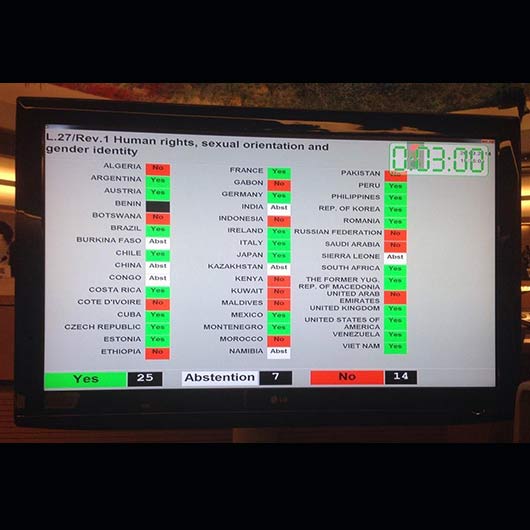
African Men for Sexual Health and Rights [AMSHeR], the Coalition of African Lesbians [CAL], and the Demand Accountability SA Campaign* recognise the adoption of a resolution, led by Chile, Uruguay, Columbia and Brazil – on “Human Rights, Sexual Orientation and Gender Identity” Resolution L27 –at the United Nations Human Rights Council in Geneva. 25 States, including South Africa, voted in favour of the resolution, 14 States voted against it, and 7 States abstained from voting. One State was absent during the vote. 


In 2011 South Africa, with co-sponsorship from Brazil and Norway, led a Resolution [17/19] on Human Rights, Sexual Orientation and Gender Identity which was adopted at the Council in June 2011. Its adoption led to the first official United Nations report (A/HRC/19/41) titled Report of the HC – Study documenting discriminatory laws and practices and acts of violence against individuals based on their sexual orientation and gender identity by the Office of the High Commissioner for Human Rights). This Resolution was voted for by 23 to 19 States, with three abstentions, indicating their recognition of sexual orientation and gender identity as a human rights issue and denouncing violence and discrimination on these grounds. 


More than three years after Resolution 17/19, the oppression of people of non-conforming sexual orientation and gender identity and expression has worsened all over world. In Africa, intolerance against people who engage in same sex relations, those who are gender non-conforming, intersex people and those who identify as lesbian, gay, bisexual and trans-diverse has manifested in the form of retrogressive legislation that seeks to limit the rights and freedoms of many African people. Such legislation has been introduced in Nigeria and Uganda and moves are underway in Gambia and Chad to do the same. 


Phillipa Tucker of AIDS Accountability International asserted that states have an obligation to protect human rights for all and cannot allow violence and discrimination against anyone to be justified and excused.  Other activists slated the use of religion and tradition to deny all people the right to peace and safety. “We will not accept states imposing their own religious beliefs on others. We insist on the rights of everyone to freedom of belief and religion and at the same time will not sit back and watch states impose the religious beliefs on those who hold opposing beliefs”, according to  Ingrid Lynch from Triangle Project. 


Kene Esom of African Men for Sexual Health and Rights stated that “The levels of violence and discrimination in Africa are of particular concern to our organisations and African states must fulfil their obligations to stop all forms of violence and this includes violence based on real or perceived sexual orientation and gender identity and expression. In April this year, the African Commission on Human and Peoples Rights adopted the first ever Resolution focussed on sexual orientation and gender identity within the African human rights system calling on states to end the violence. This Resolution and the Resolution adopted today at the Human Rights Council all contribute to a shift in the culture of impunity when it comes to the human rights of people who are non-conforming in terms of sexual orientation and gender identity”. 


The vote by African states included a yes vote from South Africa, four abstentions from Burkina Faso, Congo, Namibia and Sierra Leone; with Algeria, Botswana, Cote D’Ivoire, Ethiopia, Gabon and Kenya all voting against the Resolution.  In a not unexpected backlash, the Organization of Islamic Conference (OIC), represented by Pakistan, as well as Bahrain, Congo, Djibouti, Egypt, Malaysia, Namibia, Sierra Leone, South Sudan and the United Arab Emirates, proposed amendments to the Resolution, intended to weaken the provisions of the Resolution and to remove direct reference to sexual orientation and gender identity. Namibia withdrew their co-sponsorship of these troubling proposed amendments before they came to the vote. The amendments were all defeated.  “Collectively, the defeat of the proposed amendments, the growing number of abstentions since June 2011 and the explanation of the vote by Botswana are all seen as small steps forward. These shifts are understood to come out of strengthening behind the scenes and more public dialogue emerging from, as an example, the Universal Periodic Review [UPR] of all state as well as strong and effective campaigning by civil society in these countries and in intergovernmental spaces” was the view of Sally Shackleton from Sex Workers Education and Advocacy Taskforce [SWEAT]. “We must collectively now invest more heavily and responsibly in national level organising and building civil society capability to step up and sustain the work at the national level, even as we intensify our work within the international human rights system” was the position of Shacketon.


Activists in Africa now look forward to the South African government, through the Department of International Relations and Cooperation [DIRCO], hosting the long awaited seminar ‘Ending Violence based on Sexual Orientation and Gender Identity and Expression in Africa’. This Regional Seminar is a critical step in creating space for dialogue on rights related to sexual orientation and gender identity in the African region. South Africa must fulfil its commitment in this regard. 


*Members of the Demand Accountability Campaign: 
 
1.    AIDS Accountability International
2.    Access Chapter 2
3.    African Men for Sexual and Reproductive Health and Rights
4.    African Sex Workers Association
5.    Coalition of African Lesbians
6.    Durban Gay and Lesbian Centre
7.    Forum for the Empowerment of Women
8.    Gay and Lesbian Memory in Action
9.    One in Nine Campaign
10.    People Opposing Women Abuse
11.    Sex Workers Education and Advocacy Taskforce
12.    Sonke Gender Justice
13.    South African National AIDS Council – Civil Society Forum
14.    Triangle Project


For comments please contact: 
 
•    Dawn Cavanagh
Coalition of African Lesbians [CAL]
Email: dawn@cal.org.za 
Tel: +27 71 104 1718


•    Kene Esom
African Men for Sexual Health & Rights [AMSHeR]
Email: kene@amsher.net 
Tel: +2711 242 6801 [Direct] or +2711 482 9201


UN Human Rights Council votes to support LGBT rights

L27 UNHRC Ntsoaki Nhlapo

The UN Human Rights Council ( UNHRC) voted on Friday to pass a resolution supporting LGBT rights around the world, condemning discrimination based on sexual orientation and gender identity. India abstained from voting on the resolution.


The Human Rights Council resolution—led by Brazil, Chile, Colombia, and Uruguay—followed a resolution in 2011 on the same topic led by South Africa and asks the UN Office of the High Commissioner of Human Rights to gather and publish information on how best to overcome discrimination and violence.


Opponents of the resolution employed procedural tactics to defeat the text, by presenting a total of 7 amendments that would have eliminated all reference to sexual orientation and gender identity from the text, and made it applicable only to countries who proactively declare support for sexual diversity and rights. These amendments were defeated by vote.


The resolution passed by 25 votes in favor, 14 against, and 7 abstentions. India abstained from voting, and so did Burkina Faso, China, Congo, Kazakhstan, Namibia and Sierra Leone. Pakistan, Indonesia, Russia and Saudi Arabia were the notable ones among 14 to oppose.


LGBT activists and allies from around the world have advocated strongly to bring about a resolution that would ensure regular attention at the Human Rights Council to violations based on real or perceived sexual orientation or gender identity.


An earlier version of the resolution had reflected more of that vision, requiring the OHCHR to report biannually. The regular reporting requirement was stricken from the text during negotiations. On Friday, while some expressed disappointment with the limitations of the resolution, activists from across the world celebrated its symbolic value.


27 September 2014

Source: http://www.dnaindia.com/world/report-un-human-rights-council-votes-to-support-lgbt-rights-india-abstains-from-voting-2021923

SIGN ON CALL FOR SOUTH AFRICA TO TAKE LEADERSHIP IN SAFEGUARDING SOGI RIGHTS AT THE HUMAN RIGHTS COUNCIL

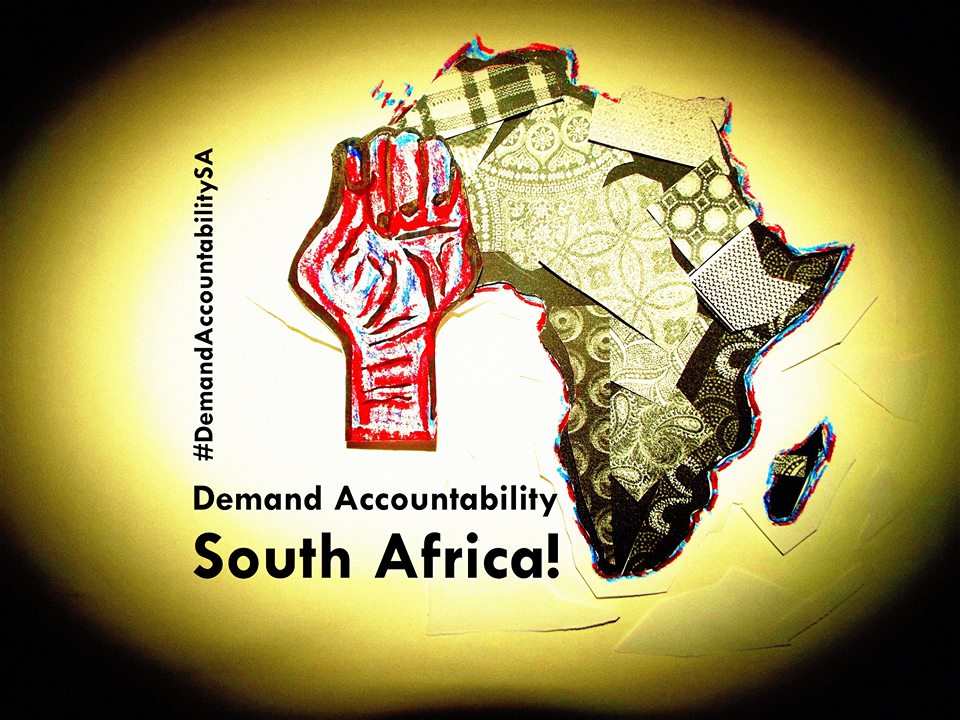
Demand Accountability Profile Image Ntsoaki

As you may know this is the last week of the 27th ordinary session of the United Nations Human Rights Council (UNHRC)for 2014 taking place in Geneva, Switzerland.


This is an important session and with huge implications for SOGI work and SOGI activists. Chile, Uruguay, Colombia and Brazil have tabled a follow up SOGI Resolution 27/L27 to Resolution 17/19 of 2011. This resolution seeks to affirm state’s commitments to safeguarding the rights and freedoms of African people with non-conforming sexualities and gender identities and expressions.


This week, some states seek to amend the language in this resolution, which will attempt to remove all language directly referencing issues of Sexual Orientation and Gender Identity, and replace SOGI language with language equal or roughly equal to “race, colour, sex, language, religion or other opinion, national or social origin, property, birth or other status”. Other states altogether seek to vote against the new and proposed SOGI resolution.


Our work, as civil society and human rights defenders is to ensure that instruments such as the United Nations Human Rights Council work to uphold the rights of ALL people, including gender non-conforming and trans-identifying African women and men.


CAL along with other civil society organisations are calling upon South Africa to ensure that the SOGI language is maintained and that the follow up resolution protecting SOGI rights is passed. We are requesting that South Africa show leadership, as they have in the past, and vote YES for the follow up SOGI resolution.


It is for this purpose that we are calling on our members, feminist allies and friends, as organisations and individuals to sign onto the attached letter which we will be sending the Minister of Foreign Affairs to South Africa, Hon. Maite Nkoana.


This is an URGENT and extremely IMPORTANT action, and we kindly ask that your organisation signs onto this letter before or by 18h00 today-Tuesday 23 September 2014.


We look forward to your solidarity and your quick action on this issue.


What can you do?

  1. Sign on to the letter that SA votes YES!: email your name, organisation and country to signon@aidsaccountability.org.
  2. Change your profile pic and cover photo on facebook and twitter. See example here.
  3. Post your selfie message of support on Facebook.
  4. Follow @DemandAccountabilitySA on twitter.
  5. Sign the Petition to still set the date for the regional meeting.
  6. Forward this email to colleagues.