Category Archives: Infectious Disease Control

South Africa: The Benefits of Family Testing – Living With Aids # 535

Home-based HIV testing offers families the opportunity to understand and face the virus together. This is a new phenomenon in South Africa, having first been introduced in certain districts of the Mpumalanga and Free State provinces.

Before home-based HIV testing came to the mining community of eMalahleni, in Mpumalanga, David Mncwarhane was always concerned about the wellness of his family. It was his desire that everyone in his family may test for HIV infection.

“If you don’t know your status, you will have problems. You may already be having HIV and refusing to go get tested while you’re still strong. By so doing, you weaken your system and you will get sick not knowing what’s eating you up. When you eventually seek help, it might be too late as the infection would have taken hold. So, it’s important to know your status while you’re still healthy. Don’t waste time”, says Mncwarhane.

He saw an opportunity when New Start, an HIV prevention programme, introduced home-based HIV testing in his area of Hlalanikahle Extension 1, in the mining town of eMalahleni. Trained counsellors go to people’s homes to counsel and offer them free HIV testing. After an initial visit by New Start counsellors, Mncwarhane sat down with his wife and children who range from the age of 39 to 13 and urged them to take the HIV test together as a family. He also requested everyone to disclose their HIV status to other members of the family. Five out of the seven members of the family proceeded to take the HIV test. Only the youngest child, who is 13 years-old, and another who was away on a trip did not take the test.

“As the head of this family, I don’t want uncertainty. I always advise my family to get tested. I want to know your status. I also want you to know my status because I don’t want to be a burden. If I’m positive, I want to know that early. We must know one another’s status as a family. According to me, if my wife tests positive and I test negative, there’s nothing I can do about it. I just have to accept it and move forward. Fighting will not solve anything”, Mncwarhane says.

His request got the understanding and support of his wife, Martha, who believes that “if you keep your status secret, it might harm you emotionally, which might result in illness. So, it’s better to discuss our statuses as a family and know what to do thereafter. The ones that don’t have HIV must do everything to ensure that they don’t get HIV”.

The children also understood.

“It’s important to disclose your status. I can test with the family and not tell them my true status. If I’m positive, they’ll see me showing symptoms of HIV after a while – maybe, coughing, and other conditions and not getting better. Much later on when I’ve badly deteriorated, they’ll find out my status. So, it’s the right thing to do to disclose one’s status”, says 39-year old Esther, the eldest of the five Mncwarhane siblings.

But testing wasn’t easy for Esther who had never had an HIV test her entire life. She says upon testing, she promised herself that “no matter what results I would get, I will accept them. If I find myself to be having HIV, I will take medication and go on with life”.

Her result came back negative. Only one of the siblings tested positive for HIV. New Start’s home-based HIV testing programme has tested over 100 families in the small township of Hlalanikahle since it started one month ago. While the community has welcomed the programme, it’s not every family that appreciates the service. Edith Nqakuvane is the manager of the programme in the area.

“There were families that said to us: ‘Why do you say we’ve got HIV? We know where to go and test! Why are you coming into our homes?’,” says Edith Nqakuvane, the manager of the programme in the area.

“But, it was about two families”, she adds.

According to Nkanyiso Ndlovu, manager of the HIV Counselling and Testing programme at the Society for Family Health, which manages New Start, people should consider home-based HIV testing for the following reasons:

“It saves time for the people that we test because we actually come to them. They don’t have to go anywhere. It saves them money. They don’t have to pay to get on a taxi. They are all in their home everybody is there, so they encourage each other. Those that need support, find support within their immediate family. So, it’s much easier and much more beneficial to test in your house because you’ve got all your family members with you. And if you need to disclose, you don’t have to stress a lot about who you’re going to disclose to because everybody in the home is already informed about what’s happening. So, it’s easier to disclose and get support”.

He adds: “We do encourage it (disclosure), but it’s not something that we force people to do”.

Home-based HIV testing is already practiced in countries such as Zimbabwe and Uganda.


By Khopotso Bodibe

01 October 2012

http://allafrica.com/stories/201210011015.html
South Africa: Public Servants Get Tested for HIV

Pretoria — More than 900 public servants from all government departments will get an opportunity to test themselves for HIV and be screened for other diseases when the Public Service HIV Testing and Counselling (HCT) Intensification Campaign is launched today.

The campaign – aimed at the public sector – will be launched at the Union Buildings and forms part of the Public Service Month programme of activities.

The initiative is aimed at improving the morale of public servants and also offers improved management of support services to employees in need of HIV and TB treatment, care and support.

HCT is a government-led prevention and HIV testing promotion campaign that is central to the National Strategic Plan on HIV and AIDS, Sexual Transmitted Infections (STIs) and TB.

The Deputy President, Kgalema Motlanthe as the Chairperson of SANAC, together with the Departments of Public Service and Administration and Health, will launch the campaign.

The programme will include the “Launch of the HCT Intensification and Employee Health and Wellness (EHW) Guidelines” by the DPSA, followed by the Deputy President’s keynote address on “Mainstreaming of HIV and AIDS into Core Business of Government Departments”.

During the event, a large number of Directors-General are expected to pledge their commitment to the eight principles of mainstreaming HIV and AIDS in the public service.

HCT services for public servants will include comprehensive health screening of body mass index, blood pressure, glucose and cholesterol levels as well as HIV counselling and testing and TB screening, amongst others.

No HIV and TB treatment will be initiated on site, but clients meeting the qualifying criteria will be referred to the nearest health facility.


By allAfrica

27 September 2012

http://allafrica.com/stories/201209271108.html

Namibian minister calls for greater investment in African health!

A government official in Namibia has called for investment in the healthcare sector in Africa to be stepped up.

According to Dr Richard Kamwi, the country’s health and social services minister, many nations are falling short on meeting previous pledges regarding healthcare investment, New Era reports.

Women’s health and reproductive rights was flagged up as a particular priority.

Indeed, Dr Kamwi said governments must collaborate in a more “proactive and progressive manner” in order to tackle problems relating to this area.

“It is time for Africa to take ownership of priority programmes related to health,” he insisted.

Dr Kamwi stated that positive action by governments would encourage its development partners to take similar steps to improve health outcomes across the continent.

The minister was speaking during the Fifth Africa Conference of Sexual Health and Rights, which was attended by representatives of 60 different countries in Africa.

According to figures from the World Health Organization, Namibia spends about 5.9 per cent of its gross domestic product on health.


By David Smith

24 September 2012

http://www.figo.org/news/namibian-minister-calls-greater-investment-african-health-0010452

Sexual rights are crucial: 5th African Conference on Sexual Health and Rights

Significant that the Fifth Africa Conference on Sexual Health and Rights that ends today (Friday) clearly signifies the umbilical importance that our government attaches to this important subject.

What makes this conference so critical is the fact it is being attended by 200 youths from 40 African countries and it has the blessing of President Hifikepunye Pohamba and the First Lady Madam Penehupifo Pohamba, in her capacity as the patron of the Namibia Planned Parenthood Association (NAPPA) that initiated the gathering.
Other conference guests are the First Lady of Zambia, Dr Christine Kaseba-Sata and Lucien Kouakou, the Africa Regional Director for the International Planned Parenthood Association (IPPA).

A complex web of factors, ranging from sexual behaviour and attitudes and societal factors to biological risk and generic predisposition, influences our sexual health and rights.  Among others, it encompasses the problems of HIV/AIDS and a raft of other sexually transmitted diseases too numerous to mention, and sexual dysfunction.
Others are unintended pregnancy and the resultant abortions, infertility and cancer as a direct consequence of sexually transmitted infections. Sexual health can also be influenced by mental health, acute and chronic illnesses and even domestic violence that is so common.
Addressing sexual health at the individual, family, community or health system level requires integrated interventions by trained nurses and doctors and a well functioning referral system that our country is blessed with.  It also requires a legal, policy and regulatory environment where the sexual rights of all people are upheld.

This universal requirement supported by the World Health Organisation (WHO) is in synch with our Constitution that prohibits discrimination against any citizen on the grounds of sex, race, ethnic, social or even economic status. Simply put, our constitution says all are equal. Addressing sexual health requires a full comprehension and understanding of sexuality, gender roles and power in designing and providing services. Understanding sexuality and its impact on practices, partners, reproduction and pleasure presents a number of challenges as well as opportunities for improving sexual and reproductive health care and interventions.
Sexuality research must go beyond concerns related to behaviour, numbers of partners and practices, to the underlying social, cultural and economic factors that make individuals vulnerable to risks and affect the ways in which sex is sought, desired and/or refused by women, men and young people.  In our case, we still have a disturbingly high rate of baby dumping and the recent case in which a woman dumped her newly born baby is a classic example of this societal malaise.

Women are not entirely to blame for this malaise that continues to haunt our national conscious because on the other hand we have “fathers” who deny paternity simply because they do not want to support their offspring.
The other factors that play a role in this sad saga is some women are too “ashamed” of what their parents and peers would say of a baby born out of wedlock, while others feel they are “too young” to become single parents.

Poverty undoubtedly plays a role but society is equally to blame because it would rather shame these women and call them names, while families are unsupportive and are highly intolerant towards “fatherless” children.
Other women end up having unwanted babies because in the first place they conceived a baby apparently to spite their rivals, while others end up having unprotected sex and in the process become pregnant.

In rural areas – where women have an equally high number of backstreet abortions and at times involving quack midwives – some rural women are not informed about contraceptives that are freely available at state hospitals. Data on sexual health and rights is grim because between 1990 and 2010 the number of women who died from pregnancy-related causes stood at around 165 000 and it is believed Africa carries the lion’s share of this data. But the dangers posed by unprotected sex is the omnipresent danger in the form of sexually transmitted diseases and worse the danger posed by HIV, a disease that has killed millions and for which there is no known cure.

President Pohamba in his address rightly expressed great concern that Africa remains the worst affected by the HIV/AIDS pandemic. He made an impassioned plea to his peers on the continent to “pay urgent attention” to the promotion of safer conditions for sexual health and reproductive rights for all African women.

President Pohamba is so concerned about maternal deaths that a few months ago he instituted a commission of inquiry that will, among others, interrogate and put under the microscope the causes of maternal deaths.
It is against this background that NAPPA and the Namibian Government should be commended for hosting a highly successful conference on sexual health and rights that will go a long way in benefiting women.

Story by The Editor Of New Era Newspaper

21 September 2012

http://www.newera.com.na/articles/47856/Sexual-rights-are-crucial

Namibia: Sexual Health and Rights Come to Town


The Namibia Planned Parenthood Association (NAPPA), an affiliate member of the International Planned Parenthood Federations (IPPF) under the auspices of the African Federation for Sexual Health and Rights will host the 5th Africa Conference on Sexual Reproductive Health and Rights from 19 to 22 September in Windhoek.

The conference is hosted every second year. This year, the theme is “Sexual Health and Rights in Africa: Where are We?” and is expected to attract over 450 participants from all over the world including policy makers, development activists, sexual health and rights advocates as well as civil society organisations, academics and educators.

The conference offers a unique opportunity to further seek ways of mobilising actions for improved understanding of sexuality and promotion of sexual health and well-being of all people on the African continent.

Delegates will investigate the status of sexual health and rights in Africa and in particular focus on women, girls, adolescents and youth. Efforts will be made to ensure that many constituent groups and stakeholders engage in learning exchange around policy and programme management including financing for sexual health.

The objectives of the conference is to take stock of responses to sexual health and rights on the continent since the International Conference on Population and Development Further discussion will explore sexual health and rights of all women, from young to mature.

The presentations, papers and posters will explore the conference theme and sub-themes relating to “Sexual and Reproductive Rights.” Under discussion will be legal aspects, policy issues and programme implementation issues. As part of the broader context of female sexuality, delegates will be asked to give their views on, among others, disability, adolescent sexual conduct, HIV/Aids, sexual orientation, and gender identity. The financing of approriate programmes will be analysed, taking the scope through to capacity building, awareness, education, and finally, protection.

The desired outcome of the conference is to build alliances, enhance capacity and learning exchange for improved Policy, Legal and Programme management on sexual and reproductive rights, to disseminate relevant international declarations, charters and guidelines to civil society organisations to enhance their role in promoting sexual and reproductive rights and to produce a conference technical report that can be publicised for use by various institutions working in the field of sexual and reproductive rights.


By Lorato Khobetsi,

24 August 2012

http://allafrica.com/stories/201208240906.html

HEALTH: Global Fund boosts essential services

US$420 million for essential services


JOHANNESBURG, 4 September 2012 (PlusNews) – The Global Fund to Fight AIDS, Tuberculosis (TB) and Malaria has announced that it has approved almost US$420 million to support essential services as part of its stop-gap Transitional Funding Mechanism (TFM), which was introduced late last year.

In November 2011, due to a lack of donations, the Global Fund was forced to cancel its Round 11 of funding. The TFM was introduced to prevent interruptions in essential prevention, treatment and care services.

Last week, the Fund announced that 45 new grant applications, from countries such as Burundi, Malawi and Swaziland, have been approved under the TFM. A further 11 proposals, which include one multi-country proposal from the Western Pacific region, are set to be revised and resubmitted.

If approved, these 11 proposals could represent up to $91.2 million in additional allocations, meaning that up to $511 million could be awarded under the bridging mechanism.

Emphasis on TB

Almost 25 percent of this combined total will go towards TB, which represents a significant increase from the average 16 percent of funds allocated for TB since the Global Fund was created in 2002, according to a StopTB Partnership statement released in response to this week’s announcement.

TB proposals also received better marks from the Fund’s Technical Review Panel than those under malaria or HIV, according to the StopTB partnership.

“We are deeply gratified that support to applicants by the WHO [World Health Organization] Stop TB Department, the Stop TB Partnership Secretariat, and partners under the umbrella of TBTEAM [The TB Technical Assistance Mechanism] helped produce these excellent results,” said Lucica Ditiu, Executive Secretary of the Stop TB Partnership.

Unlike regular grants, which can run for up to five years, those awarded under the TFM will be limited to two years, by which time the Fund is expected to have launched its new funding model.

Five proposals denied

At the time of the TFM’s creation in late 2011, G20 upper-middle income countries with less than an extreme disease burden – such as Russia, Mexico and China – were ineligible to apply for grants of the TFM. Even eligible countries had to demonstrate that there were not alternative funders for the programmes in their proposals, and that these programmes would therefore be vulnerable to disruption between 1 January 2012 and 31 March 2014.

But following the financial difficulties of 2011, the Fund has seen a number of new donor commitments. Most recently, the Spanish government announced in July 2012 that it would contribute about $12 million to the Fund; Spain made no contributions to the Global Fund in 2011.

The Fund also saw a windfall in additional resources freed up by China this year. A decision to exclude upper-middle income countries from funding has made the country ineligible for funding after its current Phase 1 grants expire. This decision revoked roughly $1 billion of previously approved but not yet committed Phase 2 funding for China, freeing up this money to be redistributed to other funding recipients, according to the Global Fund.

China has additionally agreed to forgo at least $300 million in Global Fund money that had previously been awarded to it, making further resources available for other countries.


11 September 2012

By PlusNews

http://www.plusnews.org/Report/96238/HEALTH-Global-Fund-boosts-essential-services

Zambia! New Working Paper From AIDS Accountability International!

Methodology

In AIDS Accountability International’s Community Consultation in Lusaka, Zambia, 11 interviews were conducted from the 18-20 April 2012. Nine of the respondents are CCM members, or alternate members, and the remaining two are civil society sub-sub recipients of a Global Fund grant (*). Some respondents wished to be recognized by name while others elected to remain anonymous.

Introduction

The CCM in Zambia is operating in a very tough climate. Following misappropriation of GFATM funds by both the Ministry of Health and the Zambian National AIDS Network (ZNAN), both have been suspended as principal recipients (PR). ZNAN has since ceased operations. The only two PRs remaining are the Christian Health Association of Zambia (CHAZ) and the Ministry of Finance. The current CCM is also quite new, with many members having joined in the last several months.

Effective Mechanisms

While the rationale behind this community consultation was primarily to identify areas for improving the participation of women, girls and sexual minorities on the CCM, it is equally important to note what respondents feel is working well. Overall, respondents felt that three elements of the CCM were working quite effectively: (1) Civil Society Participation, (2) Advocacy for Women and Girls, and (3) Accountability and Transparency.
READ MORE: http://aidsaccountability.org/wp-content/uploads/2008/11/AAI-GF-CCM-Community-Consultation-Working-Paper-10-July-2010.pdf


The Online Survey. The New Working Paper From AIDS Accountability International.

The AIDS Accountability International online survey began in April 2012 and captured responses from twenty respondents in the following two months. Interestingly we had an additional ten respondents from beyond SADC which may inform our future work, if this indicates a need in regions beyond SADC.
The survey contained thirty-five questions overall but most were targeted based on the CCM membership status of the respondents so respondents on average answered only nineteen questions. The survey was designed to interrogate the level of involvement of marginalized people in the Global Fund Country Coordinating Mechanisms in the SADC region. Although the number of respondents is small, AAI suggests that this information, in conjunction with the in-depth interviews, is reflective of the current challenges being faced with regard to participation and representation of women, girls and LGBT people on Southern African CCMs.

HIV, TB or Malaria

Although all of the respondents were from the HIV/AIDS area of work (n=20), twelve respondents also worked in either TB, malaria, or SRHR including gender based violence. Two respondents indicated that they represent “the private sector” and “substance abuse” areas of work.

CCM member

Seventy percent (n=14) of the respondents were currently members of their national Country
Coordinating Mechanism. Of these CCM members the average number of months already served was twenty-four months. Five of the CCM members were recipients at some level of GFATM grants. Three respondents represented UN agencies, and the private sector and religious institutions were also represented.

Representation

Which of the following groups of people does your organization represent? versus Which of the following groups of people do you represent on the Country Coordinating Mechanism?

Most groups represent more than one group of people, and this is reflected in the numbers above. Only 7 of the 14 CCM members answered this question. However, when comparing the two graphs a worrying finding presents itself, as girls and LGBT people are under-represented by their respective organizations on the CCM. This is a worrying finding as it indicates that representation on CCMs does not necessarily reflect the target group of an organization. This is further highlighted in the graphs below that interrogate the quality of representation by group.

Quality of representation – Evaluation of CCMs by members versus non-members by group of people

Please evaluate the current level of participation of these groups in the Country Coordinating Mechanism.

CCM Members
Non-members of CCMs.

The first graph supports the findings in the qualitative interview section of this report: that most respondents suggested that women on CCMs were keen participators and were well represented on their CCMs. Interestingly it appears that CCM members demonstrate more extreme judgments of representation on the CCMs than non-members. 40.5% of members marked totally unacceptable versus 33% of non-members, the other extreme 5.2% of members marked perfect representation versus 2% of non-members. Thus it seems that outside perceptions of CCM inclusion of marginalized groups is less critical than internal perceptions. In other words, people outside the CCM perceive representation of the marginalized to be better than it really is. This could mean that civil society needs to better engage with CCMs if they do not yet realize how problematic the issues actually are.

However, what is telling is that 76% of non-members marked one of the below acceptable options whilst only 63% of CCM members marked representation as unacceptable in these categories. This would show that overall non-members are less satisfied with the quality of representation.
What is encouraging is that there is a sense that women and people living with HIV/AIDS are currently represented at fairly satisfactory levels. The data by no means suggest that this representation is completely perfect in quality, and indeed it suggests that some work still needs to be done, however comparatively to girls and LGBT people there is a greater level of satisfaction with performance in this area.

Evaluation of current CCM in respondent’s country (various issues)

Non-members

Please rate the current CCM in your country in terms of:

The above graph demonstrates the responses that non-members gave when asked about the effectiveness of CCMs in their country. Again we see a lack of accountability to girls and LGBT people reflected in the lack of participation of these groups. In a region where issues such a child brides continues to exist, and where sexual and reproductive health and rights for girls and LGBT are limited, there needs to be the acknowledgement from all stakeholders for the now urgent inclusion and meaningful participation of these two groups. Each CCM should actively seek to invite a new member that is outspoken, informed and representative of each of these two groups in order to address this lack. The GE and SOGI strategies were created as a means to improve these scenarios and as yet seem to be lacking in impact as the section below demonstrates but pro-active decisions to include these groups can begin to rectify this troubling problem.

Evaluation CCM members experience working with the CCM

Members

Please tell us about your experience of working with the CCM, by marking the most accurate option. I am…

Interestingly the responses to the above options are not unexpected. All stakeholders are aware of the limitations of being able to be fully heard in meetings and committees of this sort. Adequate and meaningful participation and involvement includes not only being able to attend meetings, but being able to prepare, create input and then share and discuss openly and fully and thus properly influence the issues that affect girls and LGBT. Barriers to meaningful participation often include financial constraints, logistical issues, language choices and fluency, capacity to engage with content and the “softer” issues such as confidence, respect and time management in terms of speaking out. CCMs should work to improve the issues to the right of the above graph, and actively begin to take steps to improve this unhelpful situation.

Evaluation of CCM members’ knowledge of the various GFATM strategies affecting GE and SOGI


(**Implementation Plan of GE Strategy. In the questionnaire each option was fully written out in the questionnaire to assist respondents as much as possible).
This amounts to 62% of respondents (who are CCM members) who answered “No” or “Don’t know”, leaving just 38% who are familiar with the above GFATM strategies and technical advisors.
In a similar vein, CCM members were asked the following questions:
“Have you contacted the Global Fund Advisors for any technical support?” 86% answered “No” and only 14% “Yes”, whereas to the question “Have the Global Fund Advisors contacted you to offer any technical support?” the figures were marginally better but still unacceptable at 71% responding “No” and only 29% responding “Yes”.
When asked what their CCM was doing to implement the GE and SOGI strategy, one respondent noted that “[There has been] a positive move though we need to do more”, another stated “We are implementing Gender Equality as per our National Strategic Framework and not based on Global Fund’s one”, and a third “By taking deliberate inclusion of all gender”, all other answers either noted that they were not aware of the strategies or that nothing was being done (n=9).

Evaluation of the Global Fund’s guidelines’ and policies’ impact on improving the
following issues

Two respondents mentioned that the GFATM had had an impact on “Multisectoral Management of HIV/AIDS services” and another that “Although I am not aware of any strategy regarding sexual minorities at the level of the CCM, it is a fact that the issue of discrimination in relation with the LGBT communities has been taken on board in our National Strategic Framework.”
None of the CCM members marked that the strategies had made any negative impact, but 57% did mark that the strategies had made “No impact”, mostly significantly on gender inequality. Only 29% said that the strategies had made “Some positive impact” on gender inequality. No respondents said that the strategies had made “Very positive impact” on any of the four areas requiring improvement.

HIV/AIDS: New ways to fund the fight


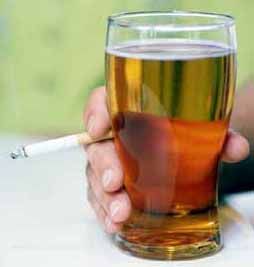
A “sin tax” on tobacco and alcohol could help countries fund their HIV treatment programmes


WASHINGTON DC, 25 July 2012 (PlusNews) – While global HIV funding has stayed flat in recent years, poorer countries have quietly been putting more of their own money into financing the HIV response. “Something very interesting has been happening” in Africa, Bernhard Schwartländer, director of strategy at UNAIDS told a plenary session at the 19th International AIDS Conference in Washington DC.

Treatment numbers are rising despite stagnant funding. “A lot of very clever and dedicated people are working very hard in making sure that services are delivered more efficiently, and… more people receive HIV services with the same amount of money.”

Domestic spending on HIV/AIDS in several African countries, including Kenya, Namibia, Sierra Leone and Uganda, rose by more than 100 percent between 2006 and 2011. For the first time ever, domestic resources exceed international AIDS spending as national governments take on the challenge of redistributing resources, UNAIDS noted.

But the reality is that national AIDS programmes have expanded beyond the capacity of governments to fully support them. If Malawi, for instance, took on the financing of its antiretroviral (ARV) programme – currently funded entirely by the Global Fund to fight AIDS, Tuberculosis (TB) and Malaria – this would consume two-thirds of its overall health budget, said Sharonann Lynch, policy advisor at international health charity Médecins Sans Frontières (MSF).

Poorer governments are still largely dependent on global resources. “The lives of 80 percent of the people who receive AIDS treatment in Africa depend every day, every morning, on whether or not the donor writes another cheque. That is unacceptable – such dependency simply must end,” said Schwartländer.

New sources of income

As an alternative to donor support, innovative financing mechanisms to bridge the funding gap are gaining increasing support from governments. Zimbabwe’s AIDS levy – a 3 percent income tax – generated more than US$26 million in 2011, UNAIDS reported recently. However, Albert Manenji, finance director of Zimbabwe’s National AIDS Council, told IRIN/PlusNews that only 30 percent of Zimbabweans were in the formal sector and contributed to the levy, so they are looking at broadening the revenue base to include small businesses and the informal sector.

Rwanda and Uganda have begun to impose a levy on the use of mobile phones to fund health programmes, and Botswana, Gabon and Malawi, among others, are investigating such a levy specifically for AIDS financing.

Imposing a “sin tax” on alcohol and tobacco to pay for universal access to ARVs could be one of the most ambitious taxes to be implemented.

Modelling by Liverpool University researchers based on the 20 countries with the highest HIV burden suggests that 10 of these countries, including South Africa, Botswana and Malawi, could fully fund universal access over the coming years if governments put a small “global health charge” on alcohol and cigarettes.

Andrew Hill, a research fellow at Liverpool University, said the proposed tax would also generate “substantial additional funds to treat malaria, tuberculosis and other diseases”. Raising taxes could also deter the use of cigarettes and alcohol, lowering the burden of non-communicable diseases linked to smoking and drinking.

The idea of a “sin tax” has long been popular in developed countries, and now the “fat tax”, a levy on sugary drinks and other foodstuffs associated with obesity, is also growing in momentum. But Hill admitted that enforcing these taxes in poorer countries would be difficult.

Schwartländer also suggested that the recent fines imposed on large pharmaceutical firms could be set aside for health assistance, “rather than disappear in the general coffers of those countries”.

In July 2012, British drugmaker GlaxoSmithKline pleaded guilty to criminal charges and agreed to pay $3 billion in fines for promoting its best-selling antidepressants for unapproved uses, and failing to report safety data about a top diabetes drug.

Schwartländer pointed out that “three billion dollars could easily pay for a year of drugs for all those on treatment today”.

By IRIN Global

29 August 2012

http://www.irinnews.org/Report/95946/HIV-AIDS-New-ways-to-fund-the-fight

Giving children a chance to LIV.

It Takes a Village To Raise A Child


Close to the new King Shaka Airport, near Durban in South Africa, lies a property with views to die for. High on a hill, overlooking Hazelmere Dam on one side, and the Indian Ocean on the other. Around this jewel, swathes of cane, lush and verdant green. One could sit for hours taking in the panorama, the open spaces and the beauty of a coastal paradise.

The people who live here are not so concerned with the view. Or the need to simply sit and wax lyrical about it. For them, this part of the earth is a haven of safety. Here lies LIV Village, a home for orphaned children. They do not need the views, but protection from a young life filled with trauma and someone to hold them close as they struggle for survival. For those fortunate enough to live in the village, hope is the buzzword. Within these parameters, children can be children again, secure in the knowledge that they will have a bed to sleep in, a school to learn in, a place to play without fear. More importantly, they know that this is the place where love is present, kindness is a gift and they need never be labelled ‘undesirable’ again. It is a home for life.

A powerful vision begat a powerful dream. I had no idea of the existence of  LIV, an acronym for Lungisisa Indlela Village, until I had the honour of meeting Tich Smith, the man behind the dream, in London. Once he got talking he was like a man possessed; the fervour of his ambition to build enough small villages to house these troubled children seems his sole purpose on earth. Unlike many charities however, the idea behind LIV is not simply to collect funds ad infinitum, but to create a self sustaining enterprise – an investment portfolio of smaller businesses that would create employment and become financially viable to fund the villages in their own right. LIV flowers and LIV eggs are two such examples.

And this is just the beginning.  By 2013, there will be 600 children housed in three bedroomed houses with a foster mother, each one participating in school and on the sports field. Every child will be raised in the embrace of Christian values, turning ‘scars to stars’ so that they in turn will become valued leaders and help others who had seen only a futile future ahead.

And the world is getting behind the dream. With endorsements by such prominent sportsmen like John Smit, Shaun Pollock and Gary Kirsten, all giving of their time to support the cause, LIV Village has expanded to incorporate two adjoining farms into the project.  The South African government is on board, pledging millions in support. Prominent academics and heads of schools have committed themselves to the classrooms to initiate academic excellence. In fact the more I learn, the more I am convinced that this may become the model we South Africans need to solve the problem of so many vulnerable and parentless children.

Human nature is just that. Human nature. When it comes to the plight of others, the need is so overwhelming that sometimes it is easier to simply dehumanise the issue.  Thousands are homeless, jobless and without hope.  We cannot cope with the demand for resources or funds and help so we simply become blasé and wait for the angst to pass.  It is impossible to aid every starving, homeless child.  Those responsible do not care, continue to perpetuate the problem and why should we give of our time and money to alleviate the situation? I will tell you why. You have never eaten cardboard to fill your stomach and allay the hunger. Been raped repeatedly as an infant because some myth about curing Aids by having sex with a virgin has a man force himself on you. Never watched a loved one die for lack of money, or medicine. Thought reading and learning to write was something other people did. You have never walked miles for water or tasted mud in your mouth as you try to sleep on a bare floor along with six others. Owned a single item of clothing. Cherished a single candle as your most treasured possession.  You have never thought death was a better option to the life you are living. There is no freedom in poverty. In the sea of searching faces, one child will look to you for help, will be worthy of saving.  If you cannot do it for humanity, do if for a single child. That one child may just be the leader of tomorrow.

LIV village is such a promise of hope.  In time, those 600 children will become 5,000 children – and 5,000 educated and well-adjusted adults can change the world for the better. I think that is what we need – a promise for the better. The best. Over coffee I interacted with a man who wants to make a difference, just like the well-known sportsmen I met who also believe in the cause.  Just like the foster mothers who are giving of themselves to tuck a little person into bed.

There are a multitude of charities trying their best on nothing but a dream to make a difference. An insurmountable task. But not impossible.

It takes a village to raise a child.  This village will raise many, whether you contribute or stay silent. Your voice however, will begin to build a choir of chance, of hope and of endless possibilities to make a little girl or boy feel part of a society, a community and eventually the world. LIV is nurturing the living dead to become teachers, politicians, pilots and entrepreneurs of a new world where people care.  Are you one of those?

There is a place in South Africa, where the views are spectacular.  Made more so by the laughter of happy children and that is worth more than the vista.

Visit LIV village at www.liv-village.com – you owe it to yourself to have a look.

Be prepared for some amazing eyes looking straight back at you!


By Karen De Villiers

28 August 2012

http://www.thesouthafrican.com/news/giving-children-a-chance-to-liv.htm