Category Archives: ICPD

South Africa, Which Once Led On Promoting LGBT Rights Abroad, Could Become A Roadblock
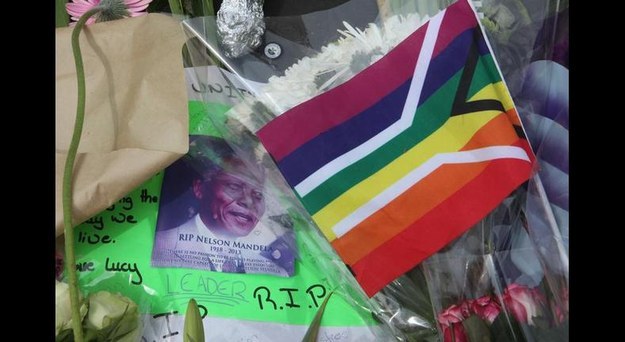
SA mandela LGBTI Ntsoaki NhlapoAdvocates fear South Africa might turn against an LGBT rights resolution at the UN that it sponsored three years ago.

South Africa was once the essential nation to advancing LGBTI rights in international diplomacy. Now it has become a potential roadblock.

Back in 2011, South Africa sponsored a resolution before the United Nations Human Rights Council (HRC) that, for the first time, recognized LGBTI rights as human rights. Other nations, especially from Latin America, had been working to advance LGBTI rights in less high-profile ways for several years before, but South Africa’s leadership was critical to taking the effort to the level of a formal resolution. Such a proposal had to have at least one prominent African backer, its supporters believed. Otherwise, it would play into the hands of LGBTI rights opponents in Africa and other parts of the world that had once been colonized who argue that homosexuality was a Western perversion brought by colonial powers.

An updated version of the resolution was tabled Thursday at a Human Rights Council meeting underway in Geneva. It was sponsored by Brazil, Colombia, Chile, and Uruguay. A vote is expected next week.

Not only is South Africa’s name not on it, but some LGBTI rights supporters tell BuzzFeed News that South Africa’s diplomats are behaving so strangely in negotiations that they worry the country could even turn against the resolution. A South African defection might not only help torpedo the proposal, it would also be a stunning symbolic reversal for a country that set the standard for protecting LGBTI rights. When South Africa adopted its first post-apartheid constitution in 1993, it became the world’s first nation to protect LGBTI rights in its fundamental rights declaration. This came out of a commitment to fighting a broad range of oppression, and it commanded even greater moral authority because it was rooted in the experience of fighting white supremacy.

So some LGBTI rights supporters are looking at South Africa’s reluctance to clearly support the new resolution as a fundamental betrayal.

“We currently have leadership that fails to represent the ethos of what the constitution says and the equality principles they have to uphold,” said Mmapeseka Steve Letsike, a lesbian activist who chairs the South African National AIDS Council’s Civil Society Forum. “We have leadership going out of this country putting their personal beliefs before its own people. We have leaders that fail to protect their own.”

South Africa’s pullback on LGBTI rights internationally comes as homophobia has become an increasingly common political tool across Africa, framed as a form of standing up to the West. Nigeria and Uganda both passed sweeping bills criminalizing LGBTI rights advocacy this winter, the governments of The Gambia and Chad both have pending proposals to stiffen laws against homosexuality, and LGBTI people are being targeted by police from Zimbabwe to Egypt to Senegal.

“Silence in the context of the African Bloc suggests a kind of complicity with the homophobic rhetoric,” said Graeme Reid, a South African who directs Human Rights Watch’s LGBT program. “It speaks of a kind of misplaced solidarity … not aligning with the [LGBTI] people who are the victims of human rights abuse, but with the perpetrators under the rhetoric of supporting our ‘African brothers and sisters.’”

LGBTI rights supporters were also hopeful that some smaller African countries could be persuaded to abstain on the vote — a kind of soft yes — and one or two might even be convinced to back it. This could tip the balance if the vote is close. The 2011 resolution was a nail-biter, passing 23-19 with three abstentions. But that becomes very hard if South Africa can’t counterbalance conservative continental heavyweights that might be lobbying the smaller countries.

“As soon as [South Africa] pulls back, it gives countries like Nigeria and Egypt room to bully and push the smaller countries,” said an LGBTI rights advocate from another southern African country who asked to speak anonymously in order to avoid a backlash in negotiations. “We need South Africa to maintain the same position if not better” than in 2011.
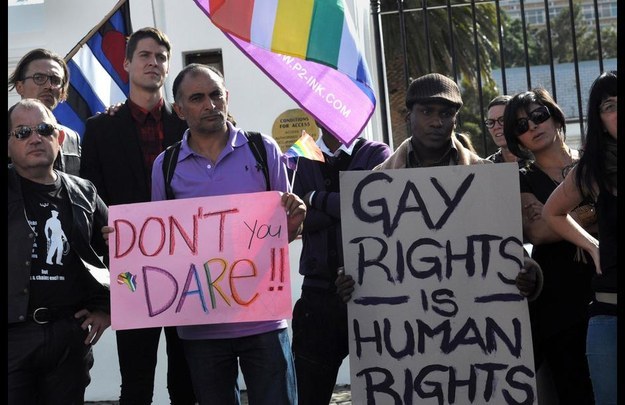
gay rights is humn rights

It’s hard to see why this resolution is so important by reading the plain language — all it really does is order a bi-annual study of LGBTI rights by the United Nations High Commissioner for Human Rights. But there are only a few places where language referring to LGBTI rights exists in any international agreements. This small resolution is a way of giving U.N. staff authority to work on LGBTI issues and means that it will be a regular focus of discussion in Geneva. And it will be a precedent that can be used to broaden the inclusion of LGBTI rights in other human rights agreements.

Most LGBTI rights supporters came into the negotiations that began last week assuming that South Africa would be supportive even if it no longer wanted its name on the resolution. Regional coalitions are very important in the U.N., and other major powers within the Africa bloc, especially Nigeria and Egypt, have been at the forefront of pushing anti-LGBTI policies. South Africa had taken a lot of heat for the 2011 resolution, and many LGBTI supporters might have understood if officials chose not to take a public role in support this year.

But they’ve withheld their support even in private discussions, say sources familiar with the negotiations. The head of South Africa’s Geneva delegation, Ambassador Abdul Samad Minty, took the unusual step of coming personally to an informal meeting on Wednesday, something usually left to staff. But he said virtually nothing in the meeting, said a source in the room, which showed other nations that South Africa isn’t about to go to bat for the proposal.

This posture follows a move by South Africa’s ruling African National Congress party to block a parliamentary motion to condemn anti-LGBTI legislation enacted by Uganda in February (which has since been struck down by the court). It also comes after a vote by South Africa during the June HRC session that stunned LGBTI rights supporters: South Africa joined with conservative nations on a procedural vote to exclude a sentence stating “various forms of the family exist” in an Egyptian-led resolution on the “Protection of the Family.” The resolution passed without this language, and LGBTI rights supporters were concerned that the language could be used as precedent for excluding families from protections under international law if they are not led by a heterosexual couple.

“In the room they’re being a little bit weird,” said a diplomat from a Western country working on the resolution, referring to South Africa’s behavior in the negotiations. But this isn’t entirely new. “They’ve been behaving weird for two or three years on this,” the diplomat said.

The diplomat attributed that more to a change in personnel than an intentional shift in policy: Jerry Matjila, who was South Africa’s ambassador to the Human Rights Council when work began on the 2011 resolution, has since returned to Pretoria to take a senior post in the Department of International Relations and Co-operation. His replacement, Ambassador Minty, lacks his personal commitment to the issue, say sources who have worked with the delegation.

South Africa’s Geneva mission and the Department of International Relations and Co-operation in Pretoria did not respond to requests for comment.

But some South African activists see this dilution of South Africa’s commitment to LGBTI rights internationally as part of a larger trend in the country’s leadership. The late Nelson Mandela and other leaders of the African National Congress embraced LGBTI rights as part of a commitment to fighting a broad range of oppression as they brought South Africa out of apartheid — Matjila is seen as part of that school. But that commitment is not as strong among the younger generation of leaders, most notably President Jacob Zuma, who called same-sex marriage “a disgrace to the nation and to God” around the time the unions won legal recognition in the country.

The shift doesn’t mean South Africa has done a 180 on LGBTI rights. Rather, it’s led to a kind of schizophrenia that is frustrating to LGBTI rights supporters. The lack of support for this resolution is all the more confusing because it comes at a time that there is a new commitment from the government to fighting anti-LGBTI hate crimes inside the country, spurred by a series of horrific rapes and murders of black lesbians.

“Domestically, there is a sense of a real commitment and energy and political will,” said Human Rights Watch’s Graeme Reid. But the international stance is incoherent — the Latin Americans only introduced the resolution at the last minute because South Africa wouldn’t let go of its ownership of the issue until just before the Human Rights Council session began earlier this month.

“There is an air of uncertainty about their position because they have been dragging their feet on this for the last three years, not moving on the resolution and not dropping it,” Reid said.

The resolution’s supporters are optimistic that they will have the votes to pass the resolution if it gets an up or down vote next week, and no one who spoke to BuzzFeed News for this story said they thought it was possible that South Africa would vote against the resolution on the final vote. It could abstain on a final vote, a possibility that some of the resolution’s supporters fear is more likely as the negotiations wear on. Or it could vote for a procedural motion that would kill the resolution by denying an up or down vote — exactly what it did to keep the inclusive language out of the Protection of the Family resolution in June.

“It would be unacceptable, incomprehensible, and almost unconscionable for a relatively new democracy like South Africa to support shutting down debate at the UN’s human rights body [to affirm a principle] that’s in its own constitution,” said Marianne Møllman, program director of the International Gay and Lesbian Human Rights Commission, in an interview from Geneva.

draft resolution

By J. Lester Feer

Source: http://www.buzzfeed.com/lesterfeder/south-africa-which-once-led-on-promoting-lgbt-rights-abroad?utm_term=9vaowf#2dmkbjy

South Africa: Pregnant women and girls continue to die unnecessarily

south africa carousel

Hundreds of pregnant women and girls are dying needlessly in South Africa. In part, this is because they fear their HIV status may be revealed as they access antenatal care services, according to a major report published by Amnesty International today.


Struggle for Maternal Health: Barriers to Antenatal Care in South Africa, details how fears over patient confidentiality and HIV testing, a lack of information and transport problems are contributing to hundreds of maternal deaths every year by acting as barriers to early antenatal care.


“It is unacceptable that pregnant women and girls are continuing to die in South Africa because they fear their HIV status will be revealed, and because of a lack of transport and basic health and sexuality education. This cannot continue,” said Salil Shetty, Amnesty International’s Secretary General.


“The South African government must ensure all departments work together to urgently address all the barriers that place the health of pregnant women and girls at risk.”


South Africa has an unacceptably high rate of maternal mortality. There were 1,560 recorded maternal deaths in 2011 and 1,426 in 2012. More than a third of these deaths were linked to HIV. Experts suggest that 60% of all the deaths were avoidable.


Antenatal care is free in South Africa’s public health system. However, Amnesty International’s research found that many women and girls do not attend clinics until the later stages of their pregnancy because they are given to believe that the HIV test is compulsory. They fear testing and the stigma of being known to be living with HIV. Nearly a quarter of avoidable deaths have been linked to late or no access to antenatal care.


Worryingly, these fears are not without foundation. Amnesty International’s report, based on field research conducted in Mpumalanga and KwaZulu-Natal provinces, contains testimonies from women and girls who say that health care workers inappropriately discuss HIV test results with others.


“The nurses are talking about people and their status”, a woman from KwaZulu-Natal explained.


Amnesty International also found that several clinics it visited use processes for pregnant women and girls living with HIV that disclose their status, including separate queues for antiretroviral medication, different coloured antenatal files and different days for appointments.


“[I]f I go for antiretroviral, my line is that side. All the people in this line they know these people are HIV. That’s why people are afraid to come to the clinic,” one woman in Mpumalanga told Amnesty International.


“During antenatal care, if women come out of the counsellor’s room with two files, then everyone knows they are HIV positive,” said another woman.


Women and girls said they feared discriminatory treatment even from partners and family members as a result of testing positive for HIV and that HIV-related stigma remained a problem in many communities.


“While HIV testing is an important public health intervention it must be done in a manner that respects the rights of women and girls and does not expose them to additional harm. It is deeply worrying that the privacy of pregnant woman and girls is not respected in health facilities. The South African government must take urgent steps to correct this,” said Salil Shetty.


“It is vital that health care workers in South Africa receive additional training on providing quality care that is both free of judgement and stigma and that women and girls accessing sexual and reproductive health services are able to trust that their confidentiality will be respected.”


Lack of information about sexual and reproductive health


Amnesty International’s report also identifies that a lack of information and knowledge about sexual and reproductive health and rights increases risks of unplanned pregnancies and HIV transmission, especially among adolescents. Likewise women and girls are often unaware of the importance of early antenatal checks.


Persistent problems relating to transport


The report also documents the lack of progress made in KwaZulu-Natal and Mpumalanga to ensure that women and girls can physically access health services. Problems persist relating to shortages of public transport and poor road infrastructure. The roads in some areas visited by Amnesty International are of such poor quality that they become impassable when it rains. Even when it is dry, ambulances will not go beyond a certain point on some roads. Amnesty International had documented the same problems in both provinces in a 2008 report.


“The South African government must build better road networks in these rural provinces to guarantee access to healthcare facilities. The government must also ensure that ambulances are always available to transport those who are in need,” said Salil Shetty.


Amnesty International is also calling on the government to:


  • Ensure that all health system procedures uphold patient privacy, particularly for people living with HIV.
  • Improve knowledge about sexual and reproductive health and rights, including through comprehensive sexuality education that involves men and boys.
  • Urgently address the persistent lack of safe, convenient and adequate transport, and the poor condition of transport infrastructure.


Additional information


This report builds on Amnesty International’s 2008 report, ‘I am at the lowest end of all’: Rural women living with HIV face human rights abuses in South Africa, in which the organisation documented gender, economic and social inequalities as barriers to health care for women living with HIV.


9 October 2014

By Amnesty International

Source: http://www.amnesty.org/en/news/south-africa-pregnant-women-and-girls-continue-die-unnecessarily-2014-10-09

Leaving no one behind in the post-2015 development agenda: young marginalized people claim their space

missionbrazil_632The sexual and reproductive health rights of young marginalized populations are often neglected and their collective voice in this critical area not always heard. To try to redress this imbalance young people from marginalized communities and key populations in Bangladesh, Ethiopia, Puerto Rico and Uganda met in New York this week to discuss how to put these rights issues firmly on the post-2015 development agenda, leaving no one behind. 


Taking place on 25 September, the General Assembly side event which took the form of a panel discussion, examined the vital role of community engagement, advocacy and service delivery in protecting the rights and meeting the needs of young key populations. These include men who have sex with men, sex workers and young people living with HIV.   


Young speakers, who were peer educators, directors of national and regional NGOs, actors and community leaders, argued that universal access to HIV services and health coverage could not be achieved without prioritizing the needs of the most marginalized. They also noted the contribution of comprehensive sexuality education to improving young people’s health and the role that communities can play in both promoting rights and challenging stigma and discrimination.


The event was hosted by the Government of Brazil and organized by the International HIV/AIDS Alliance, GESTOS, the Global Youth Coalition on AIDS, ATHENA, ICASO, International Civil Society Support, STOP AIDS NOW!, Stop AIDS Alliance, the HIV Young Leaders Fund, the African Services Committee, and the Global Forum on MSM and HIV, in collaboration with UNAIDS.


Quotes

"Setting goals is only part of the story. Where we should look for change is the way that we will implement the goals. We need to change the way we are doing business and craft the space for civil society in the new post-2015 agenda."

Luiz Loures, UNAIDS Deputy Executive Director


“We are talking about development here and sexual and reproductive rights are development."

Pablo Aguilera, HIV Young Leaders Fund


By UNAIDS

26 September 2014

Source: http://www.unaids.org/en/resources/presscentre/featurestories/2014/september/20140925csyoungpops/

We Can’t Have a Post-2015 Agenda Without SRHR

In 2000, the creators of the Millennium Development Goals (MDGs) completely overlooked sexual and reproductive health and rights (SRHR), a mistake that, if repeated, would cripple the dreams of millions of young girls and women for years and generations to come.


Access to SRHR enables individuals to choose whether, when, and with whom to engage in sexual activity; to choose whether and when to have children; and to access the information and means to do so. To some, these rights may be considered an everyday reality. However, that is not the case for millions of young people in the world – particularly girls and women.


On Tuesday night, I had the fantastic opportunity to listen to some of the foremost global leaders speak on behalf of ensuring access to sexual and reproductive health and rights in the post-2015 agenda. The benefits of ensuring SRHR are society wide and inevitably translate into improved education, economic growth, health, gender equality, and even environment.

15151254527_adb1d98efd_k

Education


“At my high school, you would be expelled if found with a condom.” – Samuel Kissi, former President, Curious Minds Ghana


When girls are healthy and their rights are fulfilled, they have the opportunity to attend school, learn life skills, and grow into empowered young women. Wherever girls’ SRHR are ignored, major educational barriers follow. Child marriage and early pregnancy are major contributors to school dropout rates. In South Asia and Sub-Saharan Africa, girls are married before age 18 at an alarming 50 percent and 40 percent respectively. And in Sub-Saharan Africa, where 90 percent of adolescent pregnancies occur in marriage, it is safe to assume that not all those sexual acts were consensual and not all those pregnancies were planned.


Economic Benefits


“Initially I used to oppose family planning, but now I fully support. I support it because my wife has more time to work and earn money.” – The Honorable Dr. Tedros Adhanom Ghebreyesus, Minster of Foreign Affairs for the Federal Democratic Republic of Ethiopia, sharing the story of an Ethiopian man’s changed opinion regarding the importance of SRHR


Protecting SRHR not only saves lives and empowers people, but it also leads to significant economic gains for individuals and for the community as a whole. As previously stated, ensuring SRHR helps to decrease school dropout rates and, as a result, leads to a more productive and healthy workforce as each additional year of schooling for girls increases their employment opportunities and future earnings by nearly 10 percent.


Broader Health Agenda


“We cannot eliminate new HIV infections without providing SRHR services to women so they can make informed decisions to protect themselves and their children in the future. Yes, we will end the AIDS epidemic, but first we need to respect the dignity and the equality of women and young girls.” – Dr. Luiz Loures, Deputy Executive Director, UNAIDS


Access to SRHR guarantees quality family planning services, counseling and health information. These services are critical, particularly because women are often victims of gender-based violence and sexual assault and thereby face greater risks for sexually transmitted diseases like HIV/AIDS. Failing to secure and uphold SRHR dooms women and girls with an increased risk of unsafe, non-consensual sex and maternal mortality.


Gender Equality


“How can you control your life if you cannot control your fertility?” – Helen Clark, UNDP Administrator


When a woman can easily plan her family, she is more equipped to participate in the economy alongside her male colleagues. When the sexual rights of a woman or girl are fulfilled, she will experience decreased rates of sexual violence and enjoy a healthy relationship with a respectful partner. When a woman or girl does not fall victim to child marriage and early pregnancy, she can stay in school and achieve anything she puts her mind to.


Environment


“The woman continues to bring life, to bring up the next generation, to stand before you and say, ‘I am ready to embrace my rights and to deliver a better planet to humanity.’” – Joy Phumaphi, former Minister of Health, Botswana; Chair, Global Leaders Council for Reproductive Health

15151200248_776fc50801_k

A 2012 study found that community water and sanitation projects designed and run by women are more sustainable and effective than those that are not. Similarly, women produce 60 to 80 percent of food in developing countries and, with the economic and educational gains that coincide with secured SRHR, a woman is better equipped to effectively manage her land.


The post-2015 Sustainable Development Goals will not happen without SRHR being addressed. So far, the world has failed to recognize that SRHR are equally as fundamental to global development as finance and trade. We can no longer afford to view SRHR as a taboo or promiscuous topic. When 90% of first births in low-income countries are to girls under 18; when the leading cause of death among adolescent girls aged 15 to 19 is pregnancy and childbirth; when two-thirds of new HIV infections in sub-Saharan Africa are among adolescent girls; and when 200 million women want to use family planning methods but lack access, the young girls and women of the world do not have a promiscuity problem – they have a human rights problem.


By Elisabeth Epstein

25 September 2014

Source: http://girlsglobe.org/2014/09/25/we-cant-have-a-post-2015-agenda-without-srhr/

South Africa, Which Once Led On Promoting LGBT Rights Abroad, Could Become A Roadblock

Advocates fear South Africa might turn against an LGBT rights resolution at the UN that it sponsored three years ago.


South Africa was once the essential nation to advancing LGBTI rights in international diplomacy. Now it has become a potential roadblock.


Back in 2011, South Africa sponsored a resolution before the United Nations Human Rights Council (HRC) that, for the first time, recognized LGBTI rights as human rights. Other nations, especially from Latin America, had been working to advance LGBTI rights in less high-profile ways for several years before, but South Africa’s leadership was critical to taking the effort to the level of a formal resolution. Such a proposal had to have at least one prominent African backer, its supporters believed. Otherwise, it would play into the hands of LGBTI rights opponents in Africa and other parts of the world that had once been colonized who argue that homosexuality was a Western perversion brought by colonial powers.


An updated version of the resolution was tabled Thursday at a Human Rights Council meeting underway in Geneva. It was sponsored by Brazil, Colombia, Chile, and Uruguay. A vote is expected next week.


Not only is South Africa’s name not on it, but some LGBTI rights supporters tell BuzzFeed News that South Africa’s diplomats are behaving so strangely in negotiations that they worry the country could even turn against the resolution. A South African defection might not only help torpedo the proposal, it would also be a stunning symbolic reversal for a country that set the standard for protecting LGBTI rights. When South Africa adopted its first post-apartheid constitution in 1993, it became the world’s first nation to protect LGBTI rights in its fundamental rights declaration. This came out of a commitment to fighting a broad range of oppression, and it commanded even greater moral authority because it was rooted in the experience of fighting white supremacy.


So some LGBTI rights supporters are looking at South Africa’s reluctance to clearly support the new resolution as a fundamental betrayal.


“We currently have leadership that fails to represent the ethos of what the constitution says and the equality principles they have to uphold,” said Mmapeseka Steve Letsike, a lesbian activist who chairs the South African National AIDS Council’s Civil Society Forum. “We have leadership going out of this country putting their personal beliefs before its own people. We have leaders that fail to protect their own.”


South Africa’s pullback on LGBTI rights internationally comes as homophobia has become an increasingly common political tool across Africa, framed as a form of standing up to the West. Nigeria and Uganda both passed sweeping bills criminalizing LGBTI rights advocacy this winter, the governments of The Gambia and Chad both have pending proposals to stiffen laws against homosexuality, and LGBTI people are being targeted by police from Zimbabwe to Egypt to Senegal.


“Silence in the context of the African Bloc suggests a kind of complicity with the homophobic rhetoric,” said Graeme Reid, a South African who directs Human Rights Watch’s LGBT program. “It speaks of a kind of misplaced solidarity … not aligning with the [LGBTI] people who are the victims of human rights abuse, but with the perpetrators under the rhetoric of supporting our ‘African brothers and sisters.’”


LGBTI rights supporters were also hopeful that some smaller African countries could be persuaded to abstain on the vote — a kind of soft yes — and one or two might even be convinced to back it. This could tip the balance if the vote is close. The 2011 resolution was a nail-biter, passing 23-19 with three abstentions. But that becomes very hard if South Africa can’t counterbalance conservative continental heavyweights that might be lobbying the smaller countries.


“As soon as [South Africa] pulls back, it gives countries like Nigeria and Egypt room to bully and push the smaller countries,” said an LGBTI rights advocate from another southern African country who asked to speak anonymously in order to avoid a backlash in negotiations. “We need South Africa to maintain the same position if not better” than in 2011.


It’s hard to see why this resolution is so important by reading the plain language — all it really does is order a bi-annual study of LGBTI rights by the United Nations High Commissioner for Human Rights. But there are only a few places where language referring to LGBTI rights exists in any international agreements. This small resolution is a way of giving U.N. staff authority to work on LGBTI issues and means that it will be a regular focus of discussion in Geneva. And it will be a precedent that can be used to broaden the inclusion of LGBTI rights in other human rights agreements.


Most LGBTI rights supporters came into the negotiations that began last week assuming that South Africa would be supportive even if it no longer wanted its name on the resolution. Regional coalitions are very important in the U.N., and other major powers within the Africa bloc, especially Nigeria and Egypt, have been at the forefront of pushing anti-LGBTI policies. South Africa had taken a lot of heat for the 2011 resolution, and many LGBTI supporters might have understood if officials chose not to take a public role in support this year.


But they’ve withheld their support even in private discussions, say sources familiar with the negotiations. The head of South Africa’s Geneva delegation, Ambassador Abdul Samad Minty, took the unusual step of coming personally to an informal meeting on Wednesday, something usually left to staff. But he said virtually nothing in the meeting, said a source in the room, which showed other nations that South Africa isn’t about to go to bat for the proposal.


This posture follows a move by South Africa’s ruling African National Congress party to block a parliamentary motion to condemn anti-LGBTI legislation enacted by Uganda in February (which has since been struck down by the court). It also comes after a vote by South Africa during the June HRC session that stunned LGBTI rights supporters: South Africa joined with conservative nations on a procedural vote to exclude a sentence stating “various forms of the family exist” in an Egyptian-led resolution on the “Protection of the Family.” The resolution passed without this language, and LGBTI rights supporters were concerned that the language could be used as precedent for excluding families from protections under international law if they are not led by a heterosexual couple.


“In the room they’re being a little bit weird,” said a diplomat from a Western country working on the resolution, referring to South Africa’s behavior in the negotiations. But this isn’t entirely new. “They’ve been behaving weird for two or three years on this,” the diplomat said.


The diplomat attributed that more to a change in personnel than an intentional shift in policy: Jerry Matjila, who was South Africa’s ambassador to the Human Rights Council when work began on the 2011 resolution, has since returned to Pretoria to take a senior post in the Department of International Relations and Co-operation. His replacement, Ambassador Minty, lacks his personal commitment to the issue, say sources who have worked with the delegation.


South Africa’s Geneva mission and the Department of International Relations and Co-operation in Pretoria did not respond to requests for comment.


But some South African activists see this dilution of South Africa’s commitment to LGBTI rights internationally as part of a larger trend in the country’s leadership. The late Nelson Mandela and other leaders of the African National Congress embraced LGBTI rights as part of a commitment to fighting a broad range of oppression as they brought South Africa out of apartheid — Matjila is seen as part of that school. But that commitment is not as strong among the younger generation of leaders, most notably President Jacob Zuma, who called same-sex marriage “a disgrace to the nation and to God” around the time the unions won legal recognition in the country.


The shift doesn’t mean South Africa has done a 180 on LGBTI rights. Rather, it’s led to a kind of schizophrenia that is frustrating to LGBTI rights supporters. The lack of support for this resolution is all the more confusing because it comes at a time that there is a new commitment from the government to fighting anti-LGBTI hate crimes inside the country, spurred by a series of horrific rapes and murders of black lesbians.


“Domestically, there is a sense of a real commitment and energy and political will,” said Human Rights Watch’s Graeme Reid. But the international stance is incoherent — the Latin Americans only introduced the resolution at the last minute because South Africa wouldn’t let go of its ownership of the issue until just before the Human Rights Council session began earlier this month.


“There is an air of uncertainty about their position because they have been dragging their feet on this for the last three years, not moving on the resolution and not dropping it,” Reid said.


The resolution’s supporters are optimistic that they will have the votes to pass the resolution if it gets an up or down vote next week, and no one who spoke to BuzzFeed News for this story said they thought it was possible that South Africa would vote against the resolution on the final vote. It could abstain on a final vote, a possibility that some of the resolution’s supporters fear is more likely as the negotiations wear on. Or it could vote for a procedural motion that would kill the resolution by denying an up or down vote — exactly what it did to keep the inclusive language out of the Protection of the Family resolution in June.


“It would be unacceptable, incomprehensible, and almost unconscionable for a relatively new democracy like South Africa to support shutting down debate at the UN’s human rights body [to affirm a principle] that’s in its own constitution,” said Marianne Møllman, program director of the International Gay and Lesbian Human Rights Commission, in an interview from Geneva.


By J. Lester Feder

19 September 2014

Source: http://www.buzzfeed.com/lesterfeder/south-africa-which-once-led-on-promoting-lgbt-rights-abroad#2dmkbjy

500 days and counting: Progress for girls and women means progress for all

August 18 marks 500 days remaining before the Millennium Development Goals expire at the end of 2015. Some countries are on track to meet those goals and some are not, and central to the difference is their relative levels of investment in women and girls.

The MDGs emerged from an historic summit of world leaders to mark the new millennium nearly 15 years ago. Since then, countries that worked to boost girls’ education, women’s rights and comprehensive maternal, sexual and reproductive health care saw benefits not just for gender equality and longer lives for women and children but in other areas as well — against poverty and hunger, against diseases including HIV and AIDS, and toward a more sustainable environment. Investment in girls and women turned out to be the most cost-effective way to advance on all the goals.

Women Deliver was organized to point out this connection. At three global conferences of activists and decision-makers from around the world — in London in 2007, in Washington, D.C. in 2010 and in Kuala Lumpur in 2013 — it provided statistics and case studies that proved the truth of its slogan, “Invest in women — it pays!” Every year brought more proof and better examples of investments in girls and women in which everybody won. So today, as the international community begins final MDG assessments and considers future plans, we are proud to announce that the next triennial Women Deliver conference will be held on May 17-19, 2016 in Copenhagen, Denmark.

Like the previous three gatherings, this one will bring together advocates, policymakers, journalists, young people, researchers and leaders of the private sector and civil society to showcase what it means and how it works when women and girls become the focus of development efforts. It will document the great results around the world where investment in women rose.

The Women Deliver 2016 Conference will also be the first major global conference after the post-2015 development framework, so far called the Sustainable Development Goals, is decided. It will be a first chance for strategizing on ways to turn the MDG spurs for growth into the plowshares of a livable planet, to make startup programs sustainable over the long term, to bring pilot programs to national scale — in short, to firm up long-term support, ensure that girls and women are kept at the center of the new development plans from the beginning, and include them in operations and evaluations at every stage into the future.

Copenhagen was chosen because Denmark is a leader and champion for progress in sexual and reproductive health and rights. The Danish International Development Agency has already launched a new Strategic Framework for Gender Equality, Rights and Diversity to assist women and girls in seizing opportunities and resources to take full control over their own lives. The Ministry of Foreign Affairs of Denmark is fully in support of Women Deliver’s call for additional global commitment on behalf of girls and women.

The post-2015 development framework is being developed as we write, and Women Deliver is working  to ensure that decision makers prioritize maternal, sexual and reproductive health and rights, especially in countries where inequality prevails and where it would help development most.

Closing the gender gap in agriculture alone, for example, could lift up to 150 million people out of hunger. Investing $8.1 billion a year in voluntary family planning would reduce pregnancy-related deaths by 79,000 and newborn deaths by 1.1 million every year. Increasing girls’ school attendance by only 10 percent raises a country’s GDP by 3 percent. And eliminating barriers to employment for girls and women could raise labor productivity in some countries by 25 percent.

These are the facts of life in the 21st century. Imagine a world where no woman dies giving life, where no baby is born with HIV, where every girl can attend school and get a quality education, and where everybody has a chance to fulfill their potential. The post-2015 process can move us closer to that day — if it prioritizes the health, rights, and well-being of girls and women.

In these last 500 days, Women Deliver will build on the momentum generated by our previous gatherings to see that it happens. We will insist that adolescents and young people, who predominate in most developing areas, should get special focus. We will make sure that women are present at the tables where decisions are made. And we will continue playing a critical role in fueling the global movement for maternal, sexual and reproductive health and rights.

We will see you all in Copenhagen!

Aug. 18, 2014, marks the 500-day milestone until the target date to achieve the Millennium Development Goals. Join Devex, in partnership with the United Nations Foundation, to raise awareness of the progress made through the MDGs and to rally to continue the momentum. Check out our Storify page and tweet us using #MDGmomentum.

By Jill Sheffield and Katja Iversen

18 August 2014

Source: https://www.devex.com/news/500-days-and-counting-progress-for-girls-and-women-means-progress-for-all-84064

The Evidence Is In: Decriminalizing Sex Work Is Critical to Public Health

During the 2014 International AIDS conference, The Lancet medical journal released a series of articles focused exclusively on HIV and sex work. One study by Kate Shannon et al., demonstrates that decriminalization of sex work could reduce HIV infections by 33 to 46 percent over the next decade. Shannon’s team showed that “multi-pronged structural and community-led interventions” are essential to promoting the human rights of sex workers, as well as improving their access to HIV prevention and treatment. Dr. Chris Beyrer, the researcher who coordinated this Lancet series, told AIDS conference participants that“[e]fforts to improve HIV prevention and treatment by and for people who sell sex can no longer be seen as peripheral to the achievement of universal access to HIV services and to eventual control of the pandemic,” drawing an irrefutable line between the social, legal, and economic injustices sex workers face and their subsequent vulnerability to HIV.


The Lancet series authors join many other prominent public health voices in identifying the decriminalization of sex work as vital to preventing the spread of human immunodeficiency virus (HIV) and of acquired immune deficiency syndrome (AIDS). For two decades, sex workers rights’ activists throughout the world have pushed human rights, public health, and HIV and AIDS response leaders to recognize that they, along with people who inject drugs and men who have sex with men, are “key populations” without whom an effective HIV and AIDS response is impossible. In 2012, the World Health Organization (WHO) declared that “all countries should work toward decriminalization of sex work and elimination of the unjust application of non-criminal laws and regulations against sex workers.” In South Africa (with the largest population of people living with HIV in the world), the National AIDS Council is urging its government to decriminalize sex work—a demand that advocates and health policy professionals are making in dozens of other countries as well. Amnesty International, Human Rights Watch, and the UN’s Global Commission on HIV and the Law all endorse this position. The latter points out “the impossibility of governments stigmatizing people on one hand, while simultaneously actually helping to reduce their risk of HIV transmission or exposure on the other.”


Sex work has been decriminalized in New Zealand and one province (New South Wales) in Australia leaving sex work businesses subject to standard occupational health and safety regulations. Law enforcement treats the sale of sex as it does any other business, without any intrusion or interruption unless existing laws are being violated.


Decriminalization has resulted in higher rates of condom use and enables sex workers to organize community-based health practices that demonstrably improve health and reduce HIV risk. It also makes it possible for sex workers to report and for the police to address illegal acts as they occur, such as assault, theft of services, employment of minors, or client coercion. In this decriminalized setting, sex workers can be strong allies in the fight against trafficking, intimate partner violence, and child abuse since they can report incidents to the police and social service agencies without putting themselves at risk of arrest.


So, why is the HIV-AIDS field only just beginning to recognize the connection between the decriminalization of sex work and HIV? And why is the trend toward criminalizing populations involved in the sex trades increasing in the United States—moving in the opposite direction from other countries? The following are three contributing factors.


Conflating Sex Work With Trafficking


Public debate around sex work in the United States increasingly focuses on people who have been trafficked or otherwise coerced into the sex trade. Anti-trafficking advocates conflate sex work (people choosing to sell sexual services from among employment options available to them) with trafficking (people being forced into the sex industry against their will). Laws that criminalize all people selling sex (voluntarily or involuntarily) violate the rights of the former and undermine efforts to identify and assist the latter. The Global Commission on HIV and the Law states unequivocally that, “Sex work and sex trafficking are not the same. The difference is that the former is consensual, whereas the latter is coercive.”


A commentary by Steen et al. in the recent Lancet series notes that “repressive and counterproductive police action,” including the arrest and incarceration of trafficking victims for the purposes of “rescue,” has overtaken far more effective responses in several countries. The understandable, but destructively over-simplified, mandate to “rescue and restore” sex workers is also being imposed in public health settings where providers are now charged with identifying and intervening with potential victims of trafficking in the sex trade. Certainly, health-care providers have a duty to watch for and help patients in abusive situations of all kinds. They also have a duty to understand the complexities of human experience, respond to patient-identified needs, and maintain that patients are experts of their own lives, whatever that may look like.


Lack of Access to Health Care for Sex Workers


Providing access to health-care services targeted to consumers’ needs is a vital part of any country’s HIV response. Without it, those most in need of prevention, care, and treatment are least likely to get it.


In a 2010 survey, 53 percent of medical students said they were not adequately trained to address their patients’ sexual issues comfortably. Far fewer professional medical curricula explicitly prepare students to understand that they will encounter sex workers as patients who, like all other patients, are individuals with a wide range of experiences, backgrounds, and needs that can best be treated with patient-centered care.


When sex workers receive demeaning and unprofessional treatment in health-care settings, they see health-care providers as an extension of the larger system that criminalizes them. A survey by the New York City-based Persist Health Project found that few sex workers disclosed their occupation to their health-care provider; only one study participant reported a positive experience after doing so. As one respondent explained, “I think for security reasons, I don’t usually disclose. Mainly because I don’t trust doctors … I sort of treat them like law enforcement.” Another noted that most health-care providers “have no clue who you are, no clue about your background, you can’t read them or know that they’re not going to try to lecture you or give you a stink-eye.”


St. James Infirmary, a peer-based occupational safety and health clinic for sex workers in San Francisco, corroborates these findings. Of their incoming patients, 70 percent had never previously disclosed their occupation to a medical provider for feared of bad treatment. Providing sex-worker friendly health care requires training health-care workers appropriately and supporting services designed specifically with and for the communities they serve.


Violence Risk Exacerbated by Criminalization


People usually envision a sex worker as someone soliciting on the street, but only about 20 percent of U.S. sex workers are street-based. The vast majority see clients in other venues including massage parlors, brothels, apartments they share with other sex workers, or a client’s hotel room. Many connect with clients online.


HIV risk is high among street-based sex workers who experience high levels of violence at the hands of clients and abusive law enforcement personnel. One important way they reduce this risk is assessing a potential client before getting into his car—looking for signals that he might be violent and relaying his license number to a colleague in case the worker disappears. This assessment time is also used to negotiate price and condom use. Law enforcement crack-downs compel sex workers to complete their negotiations quickly (in order to avoid arrest), depriving them of the time needed for assessment and negotiation.


Street-based sex workers have little or no protection if a client becomes violent or refuses to use a condom. Of the street-based workers surveyed in The Lancet study by Shannon et al., 25 percent reported being pressured by clients to have sex without a condom. Those working in remote areas (such as industrial parks) to escape local policing were three times more likely to report being pressured into having sex without a condom than the study population overall. The recent Lancet series data also shows that, in some countries, up to one-third of sex workers do not carry an adequate supply of condoms due to “condoms as evidence” policies that allow police to seize a sex worker’s condom supply and use it as evidence of their intent to engaged in sex work—a widely-used policy in several U.S. cities. 


Getting From Here to There 


Punitive laws against sex work are in place in 116 countries, including the United States, creating, according to the Open Society Foundations, “a state-sanctioned culture of stigma, discrimination, exploitation, and police and client violence against sex workers.”


Decriminalizing sex work in the United States is a long and challenging process, but there is a path to follow. The 1988 ban on federal funding for syringe exchange remained in place for 20 years and, after briefly lifting it in 2009, the Obama administration agreed to its reinstatement in 2011 at Congress’ insistence. Advocacy pressure to overturn it continues.


Thanks to the efforts of dedicated researchers and activists during the two decades between 1988-2009, public health professionals, medical institutions and virtually everyone working in the HIV-AIDS field learned why harm reduction practices are essential. Services to people who use drugs began to improve, although they are still inadequate, primarily because they are grossly under-funded. Progress has been made.


The U.S. National Institutes of Health (NIH) issued a consensus statement that addressed the need for syringe exchange but also observed that “[p]rograms targeting sex workers have been highly efficacious in other countries, but [in the U.S., programs] will encounter cultural and political barriers.” The public silence maintained on this issue for the last 17 years is emblematic of those barriers.


But sex workers’ rights organizations in most U.S. cities, though heavily marginalized, have not been silent. They are struggling to end “condoms as evidence” practices, train health-care providers, find or establish sex worker-friendly health-care services, and demand their rightful place as invaluable allies in ending human trafficking and preventing the spread of HIV. Like the harm reductionists who set up the first syringe exchange sites in the United States, they need the support of mainstream sexual and reproductive health advocates willing to learn from them and join them. Like the early harm reductionists, they need the rest of us to bring our money, skills, and political support this human rights struggle.


We can’t stop HIV in the United States without sustainable and long-term solutions to end the arrest, detention, and incarceration of sex workers in the United States, as well as end the violations against sex workers within the correctional system. A meta-analysis of more than 800 other studies and reports, published in the recent Lancet series, listed abuse experienced by sex workers as including “homicide; physical and sexual violence, from law enforcement, clients, and intimate partners; unlawful arrest and detention; discrimination in accessing health services; and forced HIV testing.” It added “protection of sex workers is essential to respect, protect, and meet their human rights, and to improve their health and well-being.”


Expert voices in support of community-led, sex worker-centered health care in the fight against HIV are becoming more and more numerous. When will the mainstream HIV and AIDS organizations and women’s health advocacy communities join loudly in this demand?


by Anna Forbes and Sarah Elspeth Patterson

13 August 2014

Source: http://rhrealitycheck.org/article/2014/08/13/evidence-decriminalizing-sex-work-critical-public-health/

Uganda anti-gay law declared ‘null and void’ by constitutional court

Members of Uganda's gay community reacts as the anti-gay law is declared null and void

Judges strike down legislation on a technicality, but activists say homosexuality remains criminal offence under colonial-era laws.


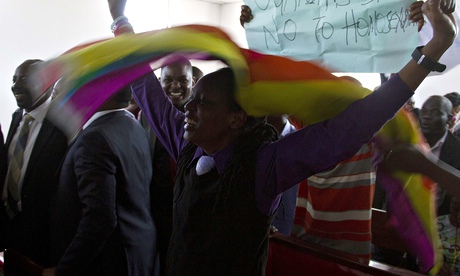
Gay rights campaigners in Uganda and around the world are celebrating a decision by the country's constitutional court to strike down a widely condemned anti-gay law on a legal technicality.


Activists in the courtroom cheered after a panel of five judges ruled on Friday that the speaker of parliament acted illegally when she allowed a vote on the measure despite at least three objections that not enough MPs were in attendance.


"The speaker was obliged to ensure that there was quorum," the court said in its ruling. "We come to the conclusion that she acted illegally."


While celebrating the ruling, activists warned that homosexuality remained a criminal offence in the east African country under colonial-era laws.


The fiercely controversial statute represented a dramatic toughening of the penalties. It banned the "promotion of homosexuality" and enabled life sentences to be imposed for various same-sex acts, including touching in public or living in a same-sex marriage. Activists also warned the state could appeal against the ruling in the supreme court and legislators might try to reintroduce new anti-gay measures.


President Barack Obama described the legislation as "a step backward for all Ugandans", and several donors suspended aid. But Uganda's president, Yoweri Museveni, signed it into law in February, watched by cheering crowds. Asked about homosexuality on CNN, Museveni said: "They're disgusting. What sort of people are they? I never knew what they were doing. I've been told recently that what they do is terrible. Disgusting."


The challenge to the law was brought by 10 petitioners, including academics, journalists, both ruling party and opposition MPs, human rights activists and rights groups. They claimed that it violated the constitutional right to privacy and dignity, as well as the right to be free from discrimination and cruel, inhuman and degrading treatment.


Friday's ruling was made in a courtroom packed with opponents and supporters of the measure. Among those present was Frank Mugisha, director of Sexual Minorities Uganda, who said: "We welcome this ruling and Uganda's lesbian, gay, bisexual and transgender community can celebrate a small victory against oppression.


"However, we are disappointed that the case was not heard on its true merits. The truth is that not only is the anti-homosexuality act persecutory, it is also unconstitutional and illegitimate. This law has no place in our society, which values dignity, privacy and equality for all our citizens. Until the act has been dismissed on the substance of our arguments, we cannot rest easy."


Ugandan lawyer Ladislaus Rwakafuuzi, a lawyer representing the activists, said the ruling "upholds the rule of law and constitutionalism in Uganda".


Homophobia is widespread in the socially conservative country, where American evangelical Christian groups have been accused of fuelling prejudice. The legislation was seen as a political ploy by Museveni to shore up support before elections in 2016, which will be his 30th year in power.


The court's intervention allows him to blame others for its defeat while also placating western donors, who were reluctant to punish a military ally.


Outspoken anti-gay preacher Martin Ssempa had suggested that the petition was being pushed to mend Uganda's international reputation before Museveni travels to Washington next week to meet Obama at a landmark US-Africa summit. "There are efforts … to drum up a legal precedent to try to show [Washington] that, 'Hey, we are not that bad on homosexuality,'" Ssempa told Agence France-Presse this week.


The US last month froze some aid programmes, as well as cancelling military air exercises and barring entry to the US for specific Ugandan officials involved in "human rights abuses", including against the gay community.


Rights groups claimed that the law had led to a sharp increase in arrests and assaults on members of the gay and lesbian community. Its annulment was welcomed by the Human Dignity Trust, an organisation of international human rights lawyers challenging anti-gay laws across the world.


Jonathan Cooper, its chief executive, said: "It's a fantastic victory for the rule of law. That Uganda's gay and lesbian community has won a reprieve today from the oppression of the loathsome anti-homosexuality act, we can only celebrate.


"The brilliance and determination of the activists who have pursued this challenge serve as an inspiration to us all. It is also heartening to know that the rule of law has prevailed and politicians are shown not to be above the procedures that govern them.


"However, this is but a temporary fix; the fight is far from over. The international community must seize this opportunity to support Ugandan's gay and lesbian citizens in their battle for the basic freedom from persecution. Now the act has gone, we must do all we can to stop it coming back. Uganda's constitution – which protects citizens' rights to privacy and dignity – must be for all Ugandans."


Dr Paul Semugoma, a Ugandan gay rights activist based in South Africa, said: "I am over the moon. Very happy. But we have had legal victories before. It was struck down on a technicality. It may return.


"In Uganda, homophobia is such an inherent part of culture now that opportunistic politicians are likely to bring it back. They would pass it."


Sarah Jackson, deputy regional director of Amnesty International, said: "Even though Uganda's abominable anti-homosexuality act was scrapped on the basis of a technicality, it is a significant victory for Ugandan activists who have campaigned against this law.


"Since it was first being floated in 2009, these activists have often put their safety on the line to ensure that Ugandan law upholds human rights principles.


"We now hope that this step forward translates into real improvements in the lives of lesbian, gay, bisexual, transgender and intersex people in Uganda, who have been trapped in a vicious circle of discrimination, threats, abuse and injustice for too long."


Kosiya Kasibayo, a state attorney, said that a decision had not been made on whether to appeal against the ruling in the supreme court.


By David Smith

1 August 2014

Source: http://www.theguardian.com/world/2014/aug/01/uganda-anti-gay-law-null-and-void

Urban population boom poses massive challenges for Africa and Asia

The UN predicts that two-thirds of the world will live in cities by 2050, with 90% of growth taking place in the global south

Population-in-Africa--Con-006

Two-thirds of the world's population will live in cities by 2050, posing unique infrastructural challenges for African and Asian countries, where 90% of the growth is predicted to take place.

The planet's urban population – which overtook the number of rural residents in 2010 – is likely to rise by about 2.5 billion to more than 6 billion people in less than 40 years, according to a UN report. Africa and Asia "will face numerous challenges in meeting the needs of their growing urban populations, including for housing, infrastructure, transportation, energy and employment, as well as for basic services such as education and healthcare", it adds.

Future development targets should focus on creating inclusive cities with adequate infrastructure and services for all residents, said John Wilmoth, director of the UN's population division. "Managing urban areas has become one of the most important development challenges of the 21st century," he said. "Our success or failure in building sustainable cities will be a major factor in the success of the post-2015 UN development agenda."

The report says rapid urbanisation will bring opportunities for governments to improve access to important services. "Providing public transportation, as well as housing, electricity, water and sanitation for a densely settled population is typically cheaper and less environmentally damaging than providing a similar level of services to a predominantly rural household," it says.

Africa is projected to experience a 16% rise in its urban population by 2050 – making it the most rapidly urbanising region on the planet – as the number of people living in its cities soars to 56%.

The report predicts there will be more than 40 megacities worldwide by 2050,each with a population of at least 10 million. Delhi, Shanghai and Tokyo are predicted to remain the world's most populous cities in 2030, when each is projected to be home to more than 30 million people.

"Several decades ago most of the world's largest urban agglomerations were found in the more developed regions, but today's large cities are concentrated in the global south," the UN says. "The fastest growing urban agglomerations are medium-sized cities and cities with fewer than 1 million inhabitants, located in Asia and Africa."

The world's 3.4 billion-strong rural population will start to decline as urbanisation becomes more common, the report says. The UN projects that rural populations will increase in only a third of countries between 2014 and 2050, as states with large rural communities will take longer to urbanise. "In general, the pace of urbanisation tends to slow down as a population becomes more urbanised," the report says.

The UN cautions that sustainable urbanisation requires cities to generate better income and employment opportunities, and "expand the necessary infrastructure for water and sanitation, energy, transportation, information and communications; ensure equal access to services; reduce the number of people living in slums; and preserve the natural assets within the city and surrounding areas".

Urbanisation has historically taken place in wealthy countries, but such expansion is now happening most rapidly in upper-middle-income countries, where gross national income per capita is between $1,046 and $4,125.

Source: http://www.theguardian.com/global-develop​ment/2014/jul/10/urban-population-growth-africa-asia-united-nations

Post-2015 Agenda: Organized Chaos or Hot Mess?

Sexual and Reproductive Health in Trouble as Goals Move Forward 

UN flag on Crumpled paper texture

The latest version of the zero draft report from the Open Working Group developing the Sustainable Development Goals (SDGs) hit the internet late Monday evening. This is the final draft that member states will have a chance to respond to before the final report is produced and shared with the Secretary General prior to the United Nations General Assembly in September. It is fairly similar to the last draft in that it still has the same 17 goals, with small semantic differences. Overall, there are fewer targets, but both the targets and the process are becoming increasingly convoluted.


This draft misses the integration, aspiration, transformation and sustainability that were meant to drive the post-2015 agenda.  We see important targets missing in this lengthy draft, but we have yet to really see the difficult trade-offs that a final set of implementable goals would require.


How have sexual and reproductive health and rights fared?


Sexual and reproductive health has disappeared from the Health Goal. While a target on sexual and reproductive health was previously included under both the Health and Gender goals, it now only appears under the Gender goal as “ensure universal access to sexual and reproductive health and reproductive rights in accordance with the Programme of Action of the ICPD and the Beijing Platform for Action.” This is problematic for two reasons:


1.    Without SRH under the health goal, family planning is in jeopardy of not being recognized in this new development framework. SRHR is a major component of overall health not only for women and girls, but also for men and boys. It is therefore critical to be included within a discussion of health.


2.    The qualifier of ICPD and Beijing is unnecessary and weakens the human rights frame of the target. Nowhere else in the Open Working Group’s draft document is such a caveat introduced. As such, it undermines the principle of arriving at a forward-looking set of SDGs. There is no need to qualify universal access to sexual and reproductive health or reproductive rights. With a reference to ICPD and Beijing already in the introduction, we hope to see this qualifier removed.


What are other notable points?


  • It is good to see that in proposed Goal 6  (Ensure availability and sustainable use of water and sanitation for all), the following target remained: “By 2030, achieve adequate sanitation and hygiene for all, paying special attention to the needs of women and girls.” This is critical to mainstreamed access to reproductive health.
  •  
  • Comprehensive sexuality education also remains absent from the latest document and should be inserted, ideally under the education goal.
  •  
  • Equity has been and will continue to be a prevailing narrative in the post-2015 agenda.


What’s next?


In New York for the Open Working Group session last week, you could see will, desire, and investment on the faces of delegates, civil society, co-chairs. But you could also see the fatigue. This has been a long and intensive exercise that has lasted nearly two years already. Now is the time point to put words down on paper and respond to drafts in order to rescue the jumbled mess that the draft goals have become.


The final round of informal discussions by the Open Working Group takes place July 14 to 18. The co-chairs (from Kenya and Hungary) will incorporate this final feedback from member states into a final report submitted to the Secretary General in August. A report will simultaneously be submitted by the Intergovernmental Committee of Experts on Sustainable Development Financing. The Secretary General will then take these inputs, among others, and produce his own report, and full negotiations are expected to start in January 2015. The co-chairs of the post-2015 summit (September 21 to 23) are Denmark and Papua New Guinea.


By A. Tianna Scozzaro, Population and Climate Associate – 

3 July 2014

Source: http://www.populationaction.org/blog/2014/07/03/post-2015-agenda-organized-chaos-or-hot-mess/#sthash.VKfcdhBU.dpuf