Category Archives: Gloabl Fund

NEW! Fast Facts e-Poster on the Global Fund’s Country Coordinating Mechanisms (CCMs) in Africa

CLICK HERE to download the CCM Fast Facts e-Poster.

The Global Fund to Fight AIDS, Tuberculosis and Malaria has recently published the 2012 CCM Composition data on its website. While AIDS Accountability International commends this transparency, the nature of the large Excel file-format does not make the data accessible or easy to interpret. This is a barrier to accountability. Responding to this need as urgently as possible, AAI has created a CCM Fast Facts e-Poster which highlights some of the more important statistics on CCM composition in Africa:

Q: Did you know that only one country in Africa has sex worker representation? Which one is it?

Q: Which country only has 5% women sitting on its CCM?

Q: Do you know which three African countries have members representing men who have sex with men?

The Global Fund’s Country Coordinating Mechanisms (CCMs) are the in-country boards in charge of deciding what goes into Global Fund proposals, and how the grants are divided up and managed. Who is sitting on these boards? Who is really affecting the Global Fund decision making process?

Global Fund Invites DRC and Zimbabwe as Early Applicants for New Funding Model

Early Applicants

Early applicants are those in countries that have been selected for new funding and will use the full process. Funding, including incentive funding, will be accessed by submitting a concept note.

Early applicants are eligible for funding starting in 2013 after they receive a formal invitation to participate in a process to develop new grants. This official communication also informs potential applicants of the amount of transition funding allocated to them, and explains how competition for incentive funding will work.

CCMs of early-applicant programs are expected to use the full process of the new funding model (see diagram below).

It is expected that early applicants will develop a concept note for submission within two to four months of being invited to participate. Following submission, the Secretariat and Technical Review Panel (TRP) have one to two months to review the concept notes.

Funding requests that move to grant-making could be signed anywhere between two and eighteen months later, depending on implementation capacity of the Principal Recipients (PRs) and the complexity of the grant negotiations.

Application process of the new funding model.

For more information please refer to the Transition Manual (download).

By the Global Fund
http://www.theglobalfund.org/en/accesstofunding/early/

Application process of the new funding model.

For more information please refer to the Transition Manual (download).

We’ve been fighting Aids – now we must end it

A critical prerequisite to ending Aids is for global leaders to improve the health systems of developing countries – including the drug supply chain

The International Aids Conference wrapped up last week and high praise must be given to advocates and the scientists who have ignited momentum to shift from “fighting Aids” to “ending Aids”.

This will hopefully urge governments and the pharmaceutical industry to make this vision a reality.

Increasingly effective medicines, new treatments for those who develop resistance or severe side effects and even a path for a cure were all amongst the good news at the conference. But to make this reality, pharmaceutical companies’ donor governments must now do their part.

Scientific advances have shown the way for effective prevention and for treatment that saves lives and turns the deadly disease into a chronic condition. But pharmaceutical companies are dragging their feet and not granting licences to public bodies, such as the Medicine Patent Pool, that would enable production of affordable HIV treatment to all people who need it in developing countries.

While US Secretary of State Hillary Clinton has announced a substantial financial commitment on the part of the US to end Aids, her US trade representative is negotiating a trade deal that will in fact undermine such efforts.

By pushing for enhanced monopoly protection on new medicines, including medicines to treat HIV and Aids, US efforts will drive up the cost of medicines for people living in poverty, and the governments and agencies that seek to help them.

The financial crisis has been blamed for a decrease in global funding for HIV and health programmes and that forced the Global Fund to Fight Aids, Tuberculosis and Malaria to announce last year that it wasn’t able to finance any new funding proposals until 2014.

This year, the Global Fund is discussing a new funding model that could lead to severe steps back in country ownership and aid effectiveness, forcing poor countries to go for what they can get, rather than what they actually need.

In South Africa we have seen that the most effective responses to HIV/Aids are contextual – the priorities of countries are derived from the ways in which the epidemic manifests in each country.

Programmes have to be tailored to meet the very real needs of communities. We cannot end Aids without global investment in a massive scale-up of appropriate prevention and treatment efforts, especially through the Global Fund.

We hope that the Global Fund board will reject top-down approaches and instead maintain the country ownership principal that the Fund prides itself on and truly delivers for those in need.

The initiative to achieve an HIV-free generation by stopping mother-to-child transmission is to be applauded.

Yet the lack of commitment of donors and governments to treating women before and after birth is appalling.

Furthermore, the lack of high-level political commitment from country leaders to remove prejudice, stigma and discrimination against the most vulnerable groups threatens to undermine the goal of Ending Aids. Prevention programs – both bio-medical and social – remain the mainstay of HIV and Aids response work.

Critical to the success of these programmes is ongoing awareness-raising and anti-discrimination work that allows the majority of people who need access to treatment and care to get it without being stigmatised.

New World Bank president Jim Kim made a splash at the conference, committing the organisation to playing a crucial role in ending Aids by focusing on what it does best: building health systems.

Oxfam believes investing in health systems such as infrastructure and health worker, drug supply chain and health information systems, is a critical prerequisite to ending Aids.

The World Bank should fulfil this promise by enabling developing countries – with help from other donors – to invest in free public healthcare and in supporting community-based care.

Dr Mohga Kamal-Yanni, Senior Health Advisor, Oxfam International

Urvarshi Rajcoomer, Advisor: Policy and Advocacy, Oxfam in South Africa

01 August 1012

http://mg.co.za/article/2012-08-01-politics-aids-conference-commitment

Global Health Solidarity at a Crossroads

Picture from Class 99

KIGALI – A decade ago, the global community stood together to declare that where people live should not determine whether they live or die when confronted by the scourge of AIDS, tuberculosis, or malaria.

This act of solidarity – unprecedented in human experience – led to revolutionary advances in promoting health care as a human right. The Global Fund to Fight AIDS, Tuberculosis, and Malaria, along with the United States President’s Emergency Plan for AIDS Relief (PEPFAR), quite literally changed the course of history. Programs directly supported by the Global Fund have saved nearly eight million lives since 2002 – an average of more than 4,400 lives every day.

But, while much has been accomplished, much more remains to be done – and the Global Fund needs at least $2 billion to reverse a funding freeze that is in place through 2014. So the world now plays a waiting game to see whether governments will step up and fill the gap.

To be blunt, many of the world’s largest economies are not fulfilling their financial pledges to the Fund. Their politicians cite budget constraints and the need to prioritize domestic programs over fighting diseases that disproportionately kill the world’s poorest.

My country, Rwanda, has been a recipient of Global Fund grants since 2002. Just 18 years ago, our society was torn apart by a brutal genocide that killed more than one million people. Today, Rwanda is a peaceful country full of promise and hope, with one of the world’s fastest-growing economies.

With Global Fund support for our national institutions, we have achieved universal access to lifesaving antiretroviral therapy for people living with HIV, and we have stabilized HIV prevalence at around 3% of the population. Similarly, Rwanda’s tuberculosis program has become a model for Africa, and all Rwandan families now have access to insecticide-treated bed nets to prevent malaria, contributing to an 87% drop in cases during the last seven years.

Integration of services for infectious diseases and primary care has contributed to some of the steepest declines in child and maternal mortality ever observed. And, as life expectancy in Rwanda continues to climb (from below 30 in 1995 to 55 in 2010), we are now taking action against non-communicable diseases such as heart disease, cancer, and diabetes. The flexible, country-owned support provided by the Global Fund has been crucial to our success.

My country is living proof that investing in health is not only the right thing to do, but that it can also create virtuous cycles that promote security and development. In fact, after receiving Global Fund support for years, Rwanda recently made its first donation of $1 million to the Fund.

Unfortunately, infectious diseases are far from under control around the world. Less than a quarter of the world’s children living with HIV have access to treatment, and up to a million people still die of malaria each year. And, alarmingly, only one in six patients with drug-resistant tuberculosis currently receives proper treatment. Moreover, reports of “totally drug-resistant tuberculosis” have recently emerged from India.

Policymakers would do well to remember that it only takes one airplane flight for such a pathogen to go global. Infectious diseases neither respect national borders nor conveniently follow economies into recession. History has shown that retreating from the fight against an epidemic can lead to a renewed plague that is immune to our best drugs, requiring far more expensive measures to control.

Our choice could not be clearer: either we resolve to answer the call of history and provide the Global Fund with the resources that it needs, or we allow political lassitude to undermine a decade of progress and consign untold thousands to preventable deaths. Investing now, on the other hand, would pay off in the long term: just $6 billion more per year for the AIDS response today would save more than $40 billion in averted treatment costs alone over the next decade.

Today, the Global Fund stands at a crossroads. The international community’s regard for the health of the world’s poorest in the face of financial uncertainty will be a standard by which history measures not only our ability to stand together in weathering economic upheaval, but also our capacity for justice.

Now is the time for donor countries, including middle- and low-income countries, to rise to the challenge and ensure that the Global Fund has the resources needed to accept new grant applications as soon as possible. The costs of inaction are morally – and economically – untenable.

By Agnes Binagwaho 

09 July 2012

http://www.guatemala-times.com/opinion/syndicated/into-africa/3186-global-health-solidarity-at-a-crossroads-.html

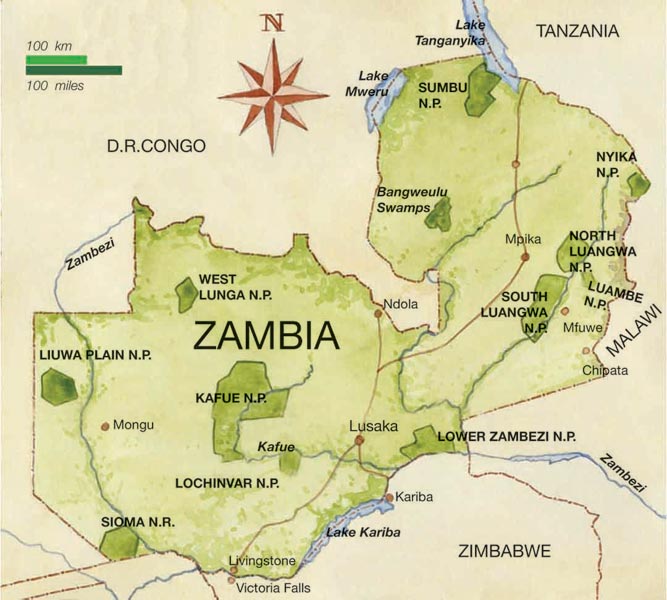
Global Fund resumes funding to Zambia’s public health sector

Map from The Africa Adventure Company

The Global Fund to fight AIDS, Tuberculosis and Malaria has resumed funding to Zambia with an announcement that it will release $100 million for various health programs in the southern African nation.

The Global Fund, together with other donors, suspended funding to Zambia’s health programs in 2009 due to revelation of misappropriation of funds meant for health programs by public workers at the Ministry of Health.

Minister of Health Dr Joseph Kasonde said at a press briefing on Wednesday that the government has secured the funds under Round 8 Phase 2 which will run for three years with effect from July 2012.

“After dry spells of funding from the Global Fund to fight AIDS, Tuberculosis and Malaria, owing to concerns on management of some HIV/AIDS programs, Zambia has successfully secured $100 million from the Fund under Round 8 Phase 2,” the Zambian Minister said.

The funds will be disbursed through three recipients namely the Ministry of Finance and National Planning, Zambia National AIDS Network (ZNAN) and the Churches Health Association of Zambia (CHAZ), he added.

“Zambia is indebted to the Global Fund for restoring the support to the national HIV response which will see majority of beneficiaries receiving different services, particularly those in rural communities,” he added.

The government, he said, will ensure that the funds are utilized for intended purposes following the establishment of systems to ensure transparency and accountability in the application of the resources.

The Global Fund becomes the second donor to resume funding to Zambia’s Ministry of Health following prudent financial management systems put in place after funds were suspended. Last week, Sweden became the first donor to resume funding for health programs.

The Global Fund was established in 2002 as a unique public- private partnership and international financing institution dedicated to attracting and disbursing additional resources to prevent and treat HIV/AIDS, Tuberculosis and Malaria.

Zambia has been a partner of the Global Fund since 2003 and to date has had an approved budget of 951 million dollars with $475 million disbursed to the country to fight HIV/AIDS, Tuberculosis and Malaria.

2012-6-21
By Agencies

http://www.globaltimes.cn/content/716288.shtml

MPs call on the UK to commit more cash to Global Fund


Picture courtesy of the Global Fund.

Aids fund vows crackdown on fraud
MPs are urging the UK to give more money to the Global Fund which fights AIDS, tuberculosis (TB) and malaria.

The International Development Committee has expressed concern that extra funding – pledged by ministers over a year ago – has not yet materialised.

The Fund has faced allegations of fraud, a shortfall from donors and a change of leadership.

Ministers say they will increase donations once they are convinced by the Fund’s reform programme.

The MPs’ report describes how the Global Fund has approved grants worth £14.1bn in 150 countries since it began work a decade ago.

It currently provides about 65% of all international financing to combat TB and malaria – and 21% of the money used against AIDS.
 
But the committee points out that the Global Fund has had a difficult year. It had to cancel its latest round of new grants.

The UK government’s current pledge is to give the Fund £384m up to 2015.

Ministers have said they will increase the commitment – but the MPs are concerned that this money has not yet been delivered, nor the amount of the increase confirmed.

The committee chair, the Liberal Democrat MP Malcolm Bruce, said: “The UK has been a reliable partner to the Global Fund but we are concerned at the continued delay in providing additional funds.

“We strongly urge the Department for International Development to do all possible to commit funds earlier than 2013.

“A significant increase by the UK could help to catalyse contributions from other donors.”

The MPs suggest the G20 meeting in Mexico next month could provide a good opportunity for the UK to make such an announcement – if ministers can be reassured that taxpayers’ money is adequately safeguarded.

The committee heard evidence from the Global Fund’s new general manager, Gabriel Jaramillo.

He recently announced new funds worth £630m. Japan has made its largest contribution to date.

Value for money for taxpayers
 
The international development secretary, Andrew Mitchell, said: “The committee is right to recognise the lifesaving impact the Global Fund can have.

“The past two years have been difficult for the Fund but I am encouraged that strong leadership is now in place.

“The UK is prepared to agree a significant increase in our contribution to the Global Fund – but it must show that the reform programme remains on track and is having an impact.

“We will need to be absolutely clear that British taxpayers are getting value for money for their support to the Fund.”

Oxfam’s head of development finance, Anna Marriott, said: “We urge the UK government to listen to the findings of this report and commit to doubling the amount of money they give to the Global Fund.

“The Global Fund is a crucial lifeline, providing treatment for millions of TB cases, distributing millions of mosquito nets to help prevent malaria and giving millions of people access to life-prolonging HIV medicines.”

Fund By Jane Dreaper
22 May 2012

http://www.bbc.co.uk/news/health-18152571

Main Decisions Made at Board Meeting.

Picture from Global Fund

 This article provides a summary of the main decisions made by the Global Fund Board at its Geneva meeting.

On 10-11 May 2012, the Global Fund Board held its 26th meeting in Geneva, Switzerland. GFO was present, with observer status. The main decisions made at the meeting, in chronological order, were as follows. (For precise wording of what the Board agreed, see the decision points document posted at www.theglobalfund.org/en/board/meetings/twentysixth. Background documentation will also, in time, be posted by the Global Fund at the same location.)

Delegation of authority to FOPC for operating budget. The Board decided that the Finance and Operational Performance Committee has the authority to approve operating expenditures that do not result in an increase in the amount of the Board-approved operating expenses budget for any financial year. The Board also authorised the FOPC to establish a framework to determine, within limits, when decisions on adjustments, reallocations or additions to the operating expenses budget may be taken by the Secretariat or the FOPC. [See Decision Point 4.]

Delegation of authority to Secretariat for grant management. The Board authorised the Secretariat to approve – in limited circumstances – extensions of up to three months to the time period for signing grants (currently 12 months from when the proposal is approved). This authority applies to all future proposals; the Board had previously granted the Secretariat this authority for Round 10 proposals. The Board also granted limited authority to the Secretariat to make other decisions concerning grant management – for example, determining the start date of a grant, and approving extensions to the implementation period of a grant. [See Decision Point 5.]

New funding opportunities. See Article 1 in this issue.

Modification of rules governing grant renewals. The Board noted that the 55% rule has had some negative impact on the achievement of targets in the Global Fund Strategy. (The 55% rule says that in each annual funding window, 55% of all funding must be directed to low income countries.) Consequently, the Board asked the Secretariat to conduct further analysis of this rule, in consultation with the Strategy, Investment and Impact Committee, and to present a recommendation to the Board before its meeting in November 2012. In the meantime, the Board decided to freeze the implementation of the 75% ceiling on grant renewal funding for countries classified as lower-middle-income and above. (This ceiling had been adopted as one way of trying to implement the 55% rule.) This decision applies retroactively to four renewals already approved that were affected by this ceiling. GFO will report on issues related to the 55% rule in a future issue. [See Decision Point 7.]

Executive Director selection. See Article 4 in this issue.

14 May 2012

By Global Fund Observer.

http://www.aidspan.org/index.php?issue=184&article=2&highlights=main~decisions~made~at~meeting