Category Archives: Expert Panel

Key Messages in Brief: The Civil Society African Common Position Paper on ICPD: SIGN ON!

25 April 2013

AAI has distilled the key messages of the Civil Society African Common Position Paper on ICPD into 12 brief points for easy reading.

We will continue seeking endorsements in the coming weeks and have already had over 100 CSOs in Africa and worldwide sign on!

Join us and give more power to the people!

SIGN ON to endorse this document here

1. Human Rights

The document is fundamentally based on human rights. This means that the main objective of all development policies and programmes and their implementation must be to respect, protect and fulfil human rights for all.

1.1.      Demography and population growth: The document clearly addresses the potential abuses of demographic and population growth policies and strategies that ignore the human rights of individuals. It also demands that all population growth and structure, and demographic work is approached with a human rights and gender responsive lens. It requests guarantees that policies to address high fertility and rapid population growth will focus on enlarging, not restricting, individual choices and opportunities. Clear policy guidelines must be developed and implemented so as to ensure that human rights and gender responsive lens is used through to clinic level so that abuse and misinterpretation does not occur.

1.2.      All vulnerable people included: The document identifies vulnerable and key affected populations that require better inclusion and more focussed policies, programming and implementation in order to realize their full socio-economic and civil and political rights and freedoms. It acknowledges the role of both the vulnerable and the role of the already empowered and that they need to engage in promoting equality, equity and empowerment for all.

1.3.      Duty-bearers and rights-holders: Both duty-bearers and rights-holders are identified throughout the document as a means to better identify the needs and entitlements of the former, and the obligations and duties of the latter. It also speaks to where capacity is lacking in order to empower the latter to hold the former accountable.

2. Accountability and Transparency

The document highlights the need for accountability which can be gained from collective transparency, open dialogue and greater focus on implementation and action with the attainment of human rights for all as the ultimate goal.

2.1.      Reporting: To report in a timely manner, accurately and transparently on progress made. To ensure that monitoring and accountability mechanisms adopt a systemic and sustained human rights approach towards the implementation of the ICPD, Maputo Plan of Action (MPOA) and other relevant commitments;

2.2.      Quality of data: To improve the quality of reporting by improving data, increasing quality and quantity of responses in reporting documents, using a collaborative process with civil society for the completion of reports, and ensuring appropriately disaggregated data is available and included in reporting.

2.3.      Dialogue between government and Civil Society Organisations (CSOs): Use open dialogue between government, civil society and policy organs, to create more discussion around current status, national responses and challenges surrounding the attainment of universal access to sexual and reproductive health and rights (SRHR) and health services on the continent.

3. Focus on Implementation

The document highlights the need for a “less talk, more action” stance. This includes a focus on implementation of budget, human resource development and improved national ownership rather than policy and/or commitment development.

3.1.      Budget allocation and spending: To boost funding for health, especially SRHR, by implementing the commitment made in Abuja to dedicate 15% of national budget to health. In addition, the document calls for implementation of the MPOA commitment to allocate 15% of health budget to family planning commodities. It is important to also identify alternative funding sources. There is a need to improve monitoring and evaluation and financial controls of existing budgets and expenditures;

3.2.      Focus on African capacity: To allocate budget and implement capacity building for health systems strengthening through improved human resources. This is for health staff as well as national institutions, community systems and Ministry of Health staff. It is necessary to mount evidence-informed and rights-based responses, whilst also working on retaining existing staff, improving the existing quality of training and promoting South-South cooperation.

3.3.      Leadership and national ownership: To commit to an all-inclusive and accountable leadership that ensures integration of SRHR into national development instruments. Leaders must also create space for national debate on priorities, strategic investments, social protection and legal measures. Leaders are required to create and adhere to good governance practices in all aspects of health systems strengthening.

4. Future forward

The document highlights the possibilities available to us as well as the need for innovative, modern and cutting edge knowledge, attitudes, decisions and strategies to be used in strengthening African health systems.

4.1.      Technology: Use of innovative technologies, up to date knowledge, scientific and evidence-based decision-making to ensure that health systems are modern, sustainable, and intelligent. Decisions must be based on cutting edge philosophies and forward-looking thinking. We should be including newly developed yet proven safe services and commodities.

4.2.      Quality and acceptability of services and commodities: ensure that sexual and reproductive health services and commodities are high-quality, available, accessible, and acceptable to all people. Ensure that the widest range of services and commodities and innovative technologies are provided as part of the modern health system.

4.3.      Protect the population’s human rights: Prioritise human rights in sexual and reproductive health programmes by guaranteeing that services are designed to respond to individual’s health needs. This includes overcoming barriers faced by marginalized groups. This must be done through service provision that is free from stigma, coercion, discrimination and violence, based on full and informed consent, and that affirms the right to pleasure and thus looks to an African future for health systems based on human rights.

For more information, the full Civil Society African Common Position Paper and contact details click here

Who is really affecting the Global Fund decision making processes? New working paper from AIDS Accountability International

Aug/Sept 2012

FEEDBACK REQUESTED

Who is really affecting the Global Fund decision making processes? This new working paper assesses how accountable the Global Fund Country Coordinating Mechanisms (CCMs) are to women, girls and LGBT populations in Southern Africa.

Featuring perspectives from more than 80 interviews and online survey respondents, from 5 Southern African countries, this working paper reveals some of the intricacies and nuances of how CCMs operate in terms of the participation and representation of these key populations. At this stage, with research still on-going, your feedback on the work is incredibly valuable.

CLICK HERE TO READ THE WORKING PAPER

AAI will be publishing a chapter from the paper every day for the next week. Please send your feedback to gemma [at] aidsaccountability.org

Membership of SADC CCMs

The Global Fund has certain requirements and suggestions surrounding the composition of CCMs. They have 10 categories of representation, which are:

  • GOV = Government
  • ML/BL = Multilateral or Bilateral Donors
  • FBO = Faith-Based Organizations
  • PS = The Private Sector
  • EDU = Educational Institutions
  • NGO = Non-Governmental Organizations
  • PLWD = People Living with Diseases
  • KAP = Key Affected Populations
  • OTH = Other

The most recent data from the Global Fund on the average composition of Southern African CCMs is from the 4th quarter of 2011 (Figure 1). Compared to the global averages of CCM composition, Southern Africa has higher government representation at 37% (global average is 35%) and lower NGO representation at 17% (global average is 23%). Curiously, the Southern African average of 6% for people living with diseases represented as a constituency is lower than the global average of 8%. The rest of the constituencies are fairly well-aligned with global averages.

The main issue that the Global Fund highlights is that “the challenge is to balance the role of government with those of other constituencies.”[i] With this in mind, there are certain examples of Southern African CCMs which are very far from the regional average, in terms of composition, and far from the Global Fund’s requirements of government/non-government balance. For instance, in Swaziland, Government representation on the CCM is the highest in the region, at 47% (Figure 2). Second to Swaziland are Angola at 43% seats for government on the CCM, and South Africa at 39%. At the lowest end of the spectrum in terms of government representation is Namibia at 26%, which is 11% lower than the regional average.

Informing this data, the Global fund also suggests that “Membership of CCMs should comprise a minimum of 40% representation of the non-government constituencies (multilateral and bilateral partners are not counted within this 40%)”[ii], which means that GOV and ML/BL taken together should not comprise more than 60% of seats. There are two countries in the region that are not meeting this requirement: Malawi and Angola. In terms of multilateral and bilateral representation, Malawi is by far the highest in the region at 30%. Taken together with its government representation of 35%, it its non-governmental constituency representation cannot possible reach the 40% that is recommended by the Global Fund. Angola also exceeds this 60% GOV & ML/BL ceiling with 43% GOV and 18% ML/BL.

Another consituency that varies quite a bit in terms of representation is the NGO sector. Malawi is by far the lowest in this regard, with only 9% NGO representation, 8% below the regional average. Botswana is also relatively low at an NGO representation level of 11%. At the other extreme, NGO representation makes up 26% of the Namibian CCM, which is 9% above the regional average. Other than these anomolies, most other countries in the regional hover around the average for NGO representation.

When it comes to the populations that this project is particularly concerned with – women, young girls and sexual minorities – there is also stark variation across the region. In terms of key affected populations, which the global fund says “Key population groups include: women and girls, men who have sex with men, transgender persons, people who inject drugs, male and female and transgender sex workers and their clients, prisoners, refugees and migrants, people living with HIV, adolescents and young people, vulnerable children and orphans, and populations of humanitarian concern.”[iii] In this regard, Botswana is by far the most inclusive when it comes to KAP representation, with this constituency making up 16% of their CCM.

Second to Botswana in this regard, is Mozambique, with 5% KAP representation, and Lesotho at 4%. When compared to other countries in the region, this really demonstrates Botswana’s leadership in terms of marginalized people being represented on the CCM. For instance, Angola, Malawi, Namibia, South Africa, Swaziland, Zambia and Zimbabwe all have 0% KAP representation on their respective CCMs.

Another way to measure the participation of women on the CCMs is to look at how many members are actually female. While they might not be representing women’s groups, per se, they may be more inclined to advocate for women’s issues. The average in the region is 58% men and 42% women, sitting on CCMs (Figure 3). Most countries in Southern Africa do seem to be achieving a balance between male and female representatives, with the exception of Lesotho, which has a CCM of 60% women (the highest in the region), and Zambia which has a CCM of 24% women (the lowest in the region) (Figure 4). Otherwise, most other countries are relatively even, with both South Africa and Swaziland achieving a male: female ration of 50:50. Namibia is not far off either, with a ratio of 48:52 and neither is Mozambique with 53: 47.

It should be noted that percentage data and ratios can often hide things that pure numbers reveal. The size of CCMs in Southern Africa also varied greatly, which percentages do not expose. For instance, the Zimbabwean CCM has 40 members, compared to South Africa’s which has 18. So while South Africa looks like it has many more PLWD representatives than Zimbabwe (11% compared with 5%) they actually both have 2 seats for this constituency. Similarly, Zimbabwe also has the highest absolute number of multilateral/bilateral seats on its CCM (8 representatives), despite having close to average ML/BL representation, percentage-wise.

In addition to the discrepancy between percentage and absolute representation, there are a whole host of limitations that come with this comprehensive quantitative data on representation. For example, some countries allow alternates to join for meetings, while others do not, so this skews the comparability of representation between countries. Secondly, and more importantly, numeric representation data tells you nothing about who actually shows up for meetings. Moreover, it also tells you nothing about who participates in a meaningful way, by speaking, challenging and actively advocating for one’s constituency. For this reason, the majority of this project is dedicated to honing in on these more qualitative evaluations of Southern African CCMs. To get at this more effectively, AIDS Accountability International used online surveys and field visits for face-to-face interviews, to get at what is really happening in terms of representation and participation on Southern Africa’s CCMs.


[i]The Global Fund (2004b).Analyses of CCM Membership at Rounds 1 – 4. Page 14.www.theglobalfund.org/documents/ccm/CCM_MembershipAtRounds1to4_Analysis_en/

[ii]The Global Fund. (2011b). Guidelines and Requirments for Country Coordinating Mechanisms.Page 13. www.theglobalfund.org/documents/ccm/CCM_Requirements_Guidelines_en/

[iii]The Global Fund, 2011b, Page 23.

‘Aids cure could be found within 10 years’

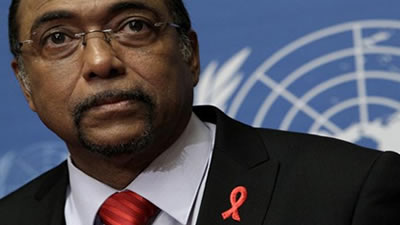
Michel Sedibe'

The Executive Director of the Joint United Programme on HIV/Aids Michel Sidibé believes a cure for Aids will be found within 10years. He was speaking at the 19th International Aids Conference in Washington in the United States.

Sidibé says the current research studies have shown great progress in finding a possible cure for this disease.

He says there is a need for further investments in HIV research. “ We are seeing progress, what we need is to mobilise science, we need to continue to invest in research because without the cure, I don’t think we’ll eradicate, we can end but not eradicate this epidemic, we need cure or vaccine. How far are we? I personally feel that cure is not so far, functional cure is possible probably in the six to 10 years.”

Sidibé added there is a need for further investments in HIV research.
Meanwhile Aids activists at the Aids Conference have called on countries to lift HIV travel restrictions. There are currently 46 countries, territories and areas that apply some form of restriction on the entry, stay and residence of people living with HIV.

The US was one of those countries until President Barack Obama lifted the travel ban two years ago.

South Korea has become the latest country to lift the travel ban.  The International Aids Conference has welcomed South Korea’s decision to lift travel restrictions on HIV-positive people.

This comes as chief executives from more than 20 multi-nationals call on governments to end the restrictions, describing them as both discriminatory and bad for business.


SABC News

24 July 2012

Business consultation postponed

We have decided to postpone the consultation on the Business Ranking to September 2010 when we will have more data to present.

AAI UNGASS Review Consultation

After the first consultation this year, on the Sexual Diversity Scorecard, we are now running the AAI UNGASS Review Panel Consultation.

As you are aware, the year 2010 is the ‘deadline’ for the current UNGASS process, as defined by the 2001 Declaration of Commitment on HIV/AIDS. For this reason, UNAIDS recently initiated a process that will allow stakeholders to review experiences and reflect on lessons learnt since 2001, as well as make recommendations on what should be the nature of a revised process to drive and monitor the global response to HIV and AIDS in the future. Final decisions will be taken at a meeting planned for 2011.

This consultation offers an opportunity to express your views and experiences of the UNGASS process, with the hope of influencing the UNGASS Review Process to develop in a positive and constructive direction.

In order for us to take your comments into consideration we ask you to email them (incorporated into the word doc above) to johanna@aidsaccountability.org by Monday 17 May at the latest.

For more information, please contact Johanna Löfgren at:johanna@aidsaccountability.org.

Expert Panel Consultations 2010

Dear Member of the AIDS Accountability Expert Panel,

Welcome to your page on AAI’s website!

This is where you will find updated information on AAI’s research development, and participate in online consultations.

We are very pleased to announce the Panel Activity Plan for this year:

Research Agenda & Panel Activities 2010 (pdf)

It is our hope that this page will be an interactive forum for information exchange and debate. We therefore encourage you to provide feedback or pose questions in between the scheduled consultations. To submit a comment on a text posted here you simply click on the headline and type your comment in the comment space.

We at AAI very much look forward to working with you this year!

Best wishes

Johanna Löfgren

Expert Panel Evaluation 2010

In February this year, AAI conducted our yearly online based evaluation with the AIDS Accountability Expert Panel. This year, twenty-one members had completed the survey by the deadline date.

The purpose of the evaluation is to collect feedback on the strengths and weaknesses of the consultation process in 2009 and map members’ interest in AAI’s different ratings. Based on the evaluation findings we have planned for action to further improve the Panel activities.

This Evaluation Summary(pdf) outlines the results and comments from individual members and suggests AAI action points for each area.

We welcome your feedback on the report, by posting a comment below!

By: Johanna Löfgren, Manager Research Process