Category Archives: ICPD

Uganda’s President signs anti-gay bill into law

updated 5:58 AM EST, Mon February 24, 2014
Watch this video


Ugandan president to sign anti-gay bill


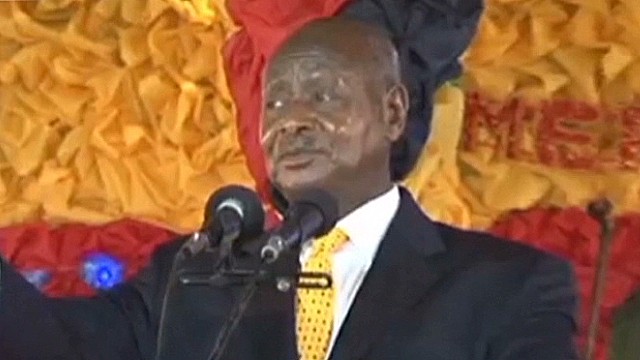
(CNN) — Ugandan President Yoweri Museveni signed into law Monday a bill that criminalizes homosexuality.

Museveni had gone back and forth about the controversial bill.

Last month, Museveni said he wouldn't sign the bill, describing homosexuals as "sick" people who needed help, not imprisonment.

Then he backtracked this month and said he'd sign it because scientists had determined that there's no gene for homosexuality and it was merely abnormal behavior.

Then, last week, he said he would seek advice from American scientists before he made any decision.

Homosexual acts are illegal in Uganda. The law toughens the penalties, including life imprisonment for certain acts.

Museveni said that Ugandan scientists had determined there was no gene for homosexuality.

"It was learned and could be unlearned," he said.

Shortly after his announcement, U.S. President Barack Obama warned that enacting the bill would affect relations between the two nations. He described the proposal as an "affront and a danger to the gay community" in Uganda.

The United States and Britain are among the nation's largest donors.

Placating Western donors

Then, in what appeared to be a move to placate Western donors, Museveni said he would seek extended guidance.

In a statement last week, he said U.S. scientists sent him opinions indicating "homosexuality could be congenital."

"I therefore encourage the U.S. government to help us by working with our scientists to study whether, indeed, there are people who are born homosexual," Museveni said. "When that is proved, we can review this legislation."

Years of debates

A Ugandan lawmaker first introduced the bill in 2009 with a death penalty clause for some homosexual acts. It was briefly shelved when Britain and other European nations threatened to withdraw aid to Uganda, which relies on millions of dollars from the international community.

The nation's parliament passed the bill in December, replacing the death penalty provision with a proposal of life in prison for "aggravated homosexuality." This includes acts where one person is infected with HIV, "serial offenders" and sex with minors, Amnesty International said.

The bill also proposed years in prison for anyone who counsels or reaches out to gays and lesbians, a provision that would ensnare rights groups and others providing services to lesbian, gay, bisexual and transgender people.

Homosexuality in Africa

Homosexuality is illegal in 38 African countries, where most sodomy laws were introduced during colonialism. In Uganda, homosexual acts are punishable by 14 years to life in prison.

But lawmakers in the conservative nation have sought tougher legislation, saying the influence of Western lifestyles risks destroying family units.

Rights groups worldwide have condemned the bill as draconian.

By Faith Karimi,

24 February 2014

http://www.cnn.com/2014/02/24/world/africa/uganda-anti-gay-bill/

CNN's Antonia Mortensen in Entebbe, Uganda, and Yousuf Basil in Atlanta contributed to this report.


African bishops speak out against raft of anti-gay laws.

  •  
  • Editorial says Church has been silent, even complicit, in discourse on new legislation.
  • The Southern Cross
  • South Africa
  • February 18, 2014
  • Recently the Ugandan and Nigerian parliaments both passed severe anti-gay legislation. Uganda’s President Yoweri Museveni has vetoed it; Nigeria’s President Goodluck Jonathan signed it into law. Other countries, such as Cameroon and Tanzania, are proposing to pass similar legislation.

    These laws are not intended to render same-sex acts illegal — they already are, and punishable, in most African countries — but to persecute people on the basis of their sexual orientation.

    Such laws are not only unjust, but they also have the potential to tear at the fabric of society if they are misused to facilitate false denunciations for gain, advancement or vengeance, much as what Christians are exposed to in Pakistan under that country’s intolerable blasphemy law.

    There is a deep-seated sense of homophobia running throughout Africa, and beyond (Russia, for example, recently also passed anti-gay laws). African leaders routinely engage in populist homophobic rhetoric, often putting forward the fiction that homosexuality is “un-African”.

    In some cases, such as Nigeria’s, homophobic sentiments and laws are deployed for political profit by embattled leaders.

    Even in South Africa, where homosexuality and same-sex marriages are legal, homophobic bigotry finds expression in violent attacks on homosexuals and in “corrective” rape, both of men and women. Often these crimes are unreported or ignored by the police.

    The effects of homophobia are also seen in the inordinately high rate of suicides among homosexuals, especially teenagers.

    Homophobia is largely premised on a false notion that homosexuality is chosen and curable. This month, Spanish Cardinal-elect Fernando Sebastián Aguilar, retired bishop of Pamplona, made the astonishing claim that homosexuality is a “defect” comparable to his condition of high blood pressure.

    In Africa, homophobic perceptions are encouraged by fundamentalist Christian groups, generally imported from the United States, which are said to agitate for anti-gay legislation, and by the proponents of the Islamic sharia law.

    Their position is in conflict with Catholic teachings. The Church cannot sponsor the criminalisation of matters of private morality, and much less the advocacy of human rights. Prejudice and the persecution of homosexuals are in defiance of Catholic doctrine.

    Even as it emphatically rejects homosexual carnal acts, the Catechism of the Catholic Church declares that “every sign of unjust discrimination in their [homosexuals’] regard should be avoided”. The Catechism further demands that homosexuals “must be accepted with respect, compassion, and sensitivity” (2358).

    Jailing homosexuals for being gay and insisting on their human rights, or even for having sex, self-evidently is a sign of “unjust discrimination” that lacks in respect and compassion.

    While the Church’s teachings prevent her from standing with homosexuals on many issues, especially same-sex marriage, she has an obligation, mandated by Christ, to be in solidarity with all those who are unjustly marginalised and persecuted.

    Alas, the Church has been silent, in some cases even quietly complicit, in the discourse on new homophobic laws. This absence of intervention for justice may well be interpreted, wrongly or not, as approval of injustice, in line with the maxim Qui tacet, consentire videtur (Silence gives consent).

    Instead, the Church should present herself as compassionate and courageous in standing with the those living in fear.

    African bishops especially ought to speak out, as loudly as they do on same-sex marriage, against the discriminatory legislation and violence directed at homosexuals, many of whom are fellow Catholics.

    Where is the prophetic voice of the Church in condemning the general homophobia in society?

    It would require a very peculiar reading of the Gospel to locate Jesus anywhere else but at the side of the marginalised and vulnerable. The Church must be seen to be standing with Jesus and those who face unjust persecution, even if — especially if — it does not condone the lifestyles of those at risk.

    That would be true Christian witness.

    Full Story: Africa’s anti-gay laws 

    Source: The Southern Cross

Obama Condemns Uganda’s Tough Antigay Measure.

RANCHO MIRAGE, Calif. — President Obama on Sunday condemned a measure to criminalize homosexuality in Uganda, publicly warning the country’s president that such discrimination could harm its relationship with the United States.

President Yoweri Museveni of Uganda signaled on Friday that he was likely to sign a bill that would punish the “the promotion or recognition” of same-sex relations with as much as life in prison.


“As we have conveyed to President Museveni, enacting this legislation will complicate our valued relationship with Uganda,” Mr. Obama said in his statement.

The bill, Mr. Obama added, “will be more than an affront and a danger to the gay community in Uganda.”

“It will be a step backward for all Ugandans and reflect poorly on Uganda’s commitment to protecting the human rights of its people,” the president said.


RELATED COVERAGE
    document
    Document: Obama on Uganda’s Antigay BillFEB. 16, 2014
    President Yoweri Museveni delayed signing a version of the bill last year, saying it was flawed.

    Ugandan President Says He Will Sign Tough Antigay MeasureFEB. 15, 2014


Mr. Obama’s statement came as he was golfing at a private course in Rancho Mirage, near the Sunnylands estate in California where he was spending the weekend.

Mr. Obama’s national security adviser, Susan E. Rice, who accompanied the president on his trip, announced that she had spoken “at length” with Mr. Museveni on Saturday evening to discourage him from signing the bill.

In a series of posts on Twitter Sunday morning, Ms. Rice said she “told him it will be a huge step backward for Uganda and the world.”


Under the proposed law, a first conviction could result in a 14-year prison sentence, and subsequent convictions of “aggravated homosexuality” could lead to a life term.

The bill passed by the Ugandan Parliament in December is a modified version of a 2009 proposal that included death sentences. It was withdrawn after an international outcry.

Mr. Obama’s statement did not limit criticism to Uganda, noting, “Tragically, we are seeing an increase in reports of violence and harassment targeting members of the LGBT community from Russia to Nigeria.”

Last month, Secretary of State John Kerry said the United States was “deeply concerned” about Nigeria’s new anti-gay law. That measure would impose harsh penalties not only for people convicted of having same-sex relationships, but also for those participating in gay clubs and organizations.


Mr. Obama sent a delegation of prominent gay athletes, including the tennis champion Billie Jean King, to represent the United States at the Winter Olympics in Sochi, seen as a response to Russia’s ban on gay “propaganda.”
Obama on Uganda’s Antigay Bill

Malawi: Joyce Banda Forms Education Committee.

President-Banda

Blantyre — As one way of showing commitment towards the protection of a girl child in the country President Dr Joyce Banda has established a Special Committee on the Acceleration of Girls Education in Malawi.

The President disclosed this on Thursday at Sanjika Palace during an audience with High Level Task Force for Women, Girls, Gender Equality and HIV for Eastern and Southern Africa saying this committee will look at how to overcome traditional barriers to girls' education, such as early marriages and pregnancies.

The Head of State then called upon relevant authorities to hold the necessary consultations and lobbying to ensure that the country attain the right to support for the age of marriage in Malawi to be raised to at least 18 years for both boys and girls to give them time to acquire enough education before marriage.

"There is no question about my personal commitment to the raising of the marriage age. I am however aware that this is a delicate issue among some traditional leaders, conservative communities, faith leaders and some legislators.

"That is why, in my opinion, it is best that we do our homework by engaging all stakeholders and bring the bill to parliament at the right time for us to succeed," said the President Banda.

The president highlighted that there is so much that the country can achieve through working with traditional leaders who are guardians of traditional culture. She said the T/A's ability to mobilise support within their communities will be crucial in promoting and protecting girl child at a local level.

The president said she was very pleased to learn that some chiefs have already started taking big strides in promoting the girl child through the creation of a Declaration of Commitment to be signed by Paramount and Senior Chiefs.

"This declaration focuses on issues of the girl child in a holistic way, looking at education, gender-based violence, sexual and reproductive health and rights, early marriages, and HIV, while also taking advantage of the positive aspects of our culture and cultural ceremonies to support these efforts," delighted the head of state.

In her remarks leader of the High Level Task Force for Women, Girls, Gender Equality and HIV for Eastern and Southern delegation, Professor Sheila Tlou who is UNAIDS Regional Director commended President Dr Joyce Banda for her efforts in improving the welfare of the girl child education and her continued support to girls' education.

She however requested for the formation of a high level committee which will oversee the enactment of the marriage bill so that more girls should be able to complete their education before marriage.

BY YAMIKANI YAPUWA

1 NOVEMBER 2013

http://allafrica.com/stories/201311030198.html


For Millions of Adolescents, Pregnancy Can Be Dangerous.


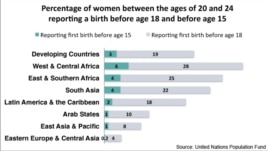
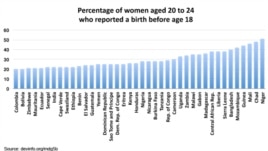
GENEVA — A new report by the United Nations Population Fund (UNFPA)finds millions of adolescent girls suffer serious long-term health and social consequences from pregnancy.  Globally, the U.N. agency estimates 7.3 million girls under 18-years-old give birth, including two million girls younger than 14.
Giving birth to a baby should be a happy moment in the life of a woman.  But, for millions of adolescents around the world, early pregnancy and childbirth results in serious health problems, social exclusion and even death.

In developing countries, 20,000 girls under 18 give birth every day, the report says.  It estimates some 70,000 adolescents in developing countries die each year from complications during pregnancy and childbirth.  Among those who survive, many will develop an obstetric fistula. This is a hole in the birth canal, which leaves the girl leaking urine constantly.

The director of the UNFPA office in Geneva, Alanna Armitage, says adolescent girls are at increased risk of child marriage and sexual coercion.  Maternal death among girls under the age of 15 from low- and middle-income countries is twice that of older females,” says Armitage.

“Our report shows that nine out of 10 pregnancies to girls under 18 take place within a marriage. And, as you may know, every day, 39,000 girls are married in violation of their basic human rights.  One in nine is married before the age of 15 and this, of course, will continue as long as families, communities and governments tolerate child marriage,” she said.

The report highlights the economic impact of adolescent pregnancy.  It notes the lifetime opportunity costs related to adolescent pregnancy range from one percent of annual GDP in China to 30 percent of annual GDP in Uganda.

To drive this point home, the report notes $3.4 billion could have been added to the Kenyan economy had the more than 200,000 adolescent mothers in the country been employed rather than pregnant.

The report finds in every region of the world, impoverished, poorly educated rural girls are more likely to become pregnant than those who live in richer, more urban areas.  UNFPA Senior Maternal Health Advisor Luc de Bernis says the highest rates of adolescent maternal mortality are found in Sub-Saharan Africa and South Asia.

He says the problem is marginally greater in the Francophone than the English-speaking African countries.

“Africa is not homogeneous and we have many differences, but the fact is young girls are not protected in the majority of these countries — not in the Francophone for sure…and not in the English speaking world,” said Bernis. “In Kenya, Uganda, you have a rate of abortion which is absolutely enormous and it explains a big part of the maternal mortality.  A big number of these abortions occur among very young girls.”

The report says adolescent pregnancy is a much bigger challenge in the developing world than in developed countries.  But it finds that adolescent pregnancy is still a significant issue in the richer nations.

It says blaming a young girl for getting pregnant is counter-productive.  Instead of changing the girl’s behavior, the report says, society should change its attitudes and actions.

Among the recommendations for reducing adolescent pregnancy with its related risks, the report suggests keeping girls in school, stopping child marriage, and providing adolescents with access to sexual and reproductive health, including contraception.

By Lisa Schlein

30 October 2013

http://www.voanews.com/content/pregnancy-dangerous-for-millions-of-adolescents/1780067.html

South African fight against maternal mortality shows mixed progress.

South Africa’s District Health Barometer, which kicked off in Pretoria yesterday (Monday October 28th), revealed an inconsistent picture of the progress to combat maternal mortality.

Although the overall number of maternal deaths has decreased by 57.6 per 100,000 births in the last four years, the country is still way off the 2015 targets that have been set by the UN’s Millennium Development Goals.

And according to Health-e, a more detailed look at the new data shows some regions are in a desperate position. One example is the Central Karoo district of Cape Town, which has seen stillbirths more than double in the last year.

The Barometer explained that the worsening problems in Central Karoo give an insight into the inadequate provision of healthcare during the latter stages of pregnancy.

It read: “The stillbirth rate is a good indicator of care during the third trimester [of pregnancy] and intra-partum period [labour].”

The Western Cape was also found to have the highest rates of infant diarrhoea in the whole of the country, but interestingly it had the lowest number of infants to die from the disease – perhaps indicating a strong infant healthcare system.

29 October 2013

http://www.figo.org/news/south-african-fight-against-maternal-mortality-shows-mixed-progress-0011684

Put Young Girls at the Centre of Development

Do you remember your favorite toy as a child? Your first day at school? Your first love? The moment you clearly felt you’d become an adult?

Many young girls will never have any of those memories. As of today, the International Day of the Girl Child, around 250million of them live on less than $2 a day. They don’t go to school. They’ve never seen a doctor. In many cases, they’re married before they turn 15 and many die from childbirth complications.

Adolescent girls are not children, but they’re not quite adults. That makes them particularly vulnerable, powerless and at risk of different forms of exploitation. They are a category on their own, with very specific needs that global policy makers and the international humanitarian community must identify, understand and tackle appropriately.

So far, this hasn’t happened. Adolescent girls have notably been left out of the Millennium Development Goals agenda which, while successfully targeting the improvement of healthcare standards for women and children, has failed to address crucial issues regarding teenagers. In the eyes of those driving development, an adolescent girl is invisible.

There are plenty of ‘invisible girls’ around the word: 50% of Tanzania’s population is under the age of 15; 30% of the demographic of the entire Middle East is between the age of 15 and 29; and in India, more than half the nation is under 25. This is the largest youth generation in history. Its potential is unrivalled, yet left completely untapped. Worst, this category is now at risk.

Very rarely is contraceptive promotion targeted to the specific needs of young girls. Standard family planning for adult women is implemented instead. The unfortunate result is a rise in HIV infections and sexually transmitted diseases, along with 86million unintended pregnancies, almost half of which lead to abortion. Three million of such abortions are unsafe, and are a leading cause of maternal mortality.

Nearly 10% of all girls in low-income countries are mothers before they turn 16. They are five times more likely to die in childbirth than women aged 20; their bodies are just not ready for pregnancy. Yet in African countries – where half of all births are to adolescent girls – sexual and reproductive health services tend to focus exclusively on married women.

Violence against girls continues to be one of the most pressing challenges the world faces. Nearly half of all recorded sexual assaults worldwide are against girls aged 15 or younger, but very little has been done by the international community to create the right framework for these young victims to come forward, so justice can be enforced. As a result, the vast majority of violent crimes against girls go completely unreported.

How can we turn things around before it’s too late? We must start with the girls.

Teenage girls must be listened to and taken seriously. It’s time for the international development community to identify them as a priority target, one that must be consulted when implementing and evaluating new programs and services. The top-down approach has failed too often.

Girls must be the focus of targeted funding. But for that to happen, they must be properly identified first. Data must be compiled and analyzed in a much smarter way, classifying people not only by sex, but also by very specific age segments (10-14, 15-19). Failure to do so will result in ineffective programs, and further waste of aid money.

Sexual violence against girls must be increasingly addressed at both international and national levels. There is a chronic data deficit worldwide, as victims often don’t report rape. Even in countries such as the UK, only 15% of all victims of rape come forward. Much more has to be done to reassure young girls that justice is firmly on their side, preventing them from falling into the trap of self-blame.

Countries that don’t meet their obligations in enforcing the rule of law must be held accountable. Perception polls are a good to way to start, especially when data is lacking. The latest expert poll on women’s rights by the Thomson Reuters Foundation showed India to be the most dangerous country for women within the G20. The finding came six months before the infamous Delhi gang rape, and has since been used extensively by activists to demand change.

Education, however, must top all priorities. Placing girls in a safe learning environment means reducing their chances of being sexually or economic exploited, or married off as child brides. Giving girls the right skills means making sure they enter adulthood as active citizens, with more choice in life. It’s a matter of human rights, but also an investment that could solve global challenges. On average, 70% of every woman’s salary is spent directly on her family. This has obvious positive consequences for society at large.

It is estimated that just one additional year of secondary schooling can boost girls’ future earnings by 15-25%. In practical terms, that means that if girls in Nigeria had the same employment rate as boys, the country would add $13.9billion annually to the economy. In Kenya, this would add $27billion to the national GDP. In India, four million adolescent illiterate mothers translate into a loss of over $383billion in potential lifetime income.

There are tipping points in history that must be exploited. And the tipping point for gender seems closer than ever. But to trigger real change, we must be strategic and tackle the root of the problem, not just the symptoms. The main obstacle to girls’ empowerment – from access to healthcare, to safety and education – lies in the many discriminatory social norms embedded within their respective communities.

We know that cultural change is the hardest to harness, but with the active involvement of committed governments at a national level, and with the active participation of men, it can happen. The recent progress in the fight against female genital mutilation in Kenya is evidence that the backing of national governments is essential and can create wide-scale victories. When men see women leaders within their communities they understand the importance of education for their daughters.

Our tipping point is now. It’s time to take action. It’s time to make a radical shift, to start seeing girls not as vulnerable or as a liability, but as potential leaders. It’s time to see girls for who they are: the driving force of their generation, one poised to bring real social change.

Women’s access to healthcare is one of the themes at the forthcoming Trust Women Conference – London 3-4 December. The event is organised by the Thomson Reuters Foundation in partnership with the International Herald Tribune

www.facebook.com/everymothercounts

11 October 2013

By Christy Turlington Burns and Monique Villa

http://www.huffingtonpost.co.uk/christy-turlington/christy-turlington-international-day-of-the-girl_b_4078816.html

Women’s health communities critical to reducing maternal and child mortality in Africa.

Obstetricians and gynecologists, ministers, public health specialists and civil society organizations convened in Addis Ababa, Ethiopia from 2-5 October at the First International Federation of Gynecology and Obstetrics (FIGO) Africa Regional Conference to discuss ways of improving maternal and child health in Africa.

Speaking at the opening, UNAIDS Deputy Executive Director, Programme, Luiz Loures highlighted the link between HIV and maternal and child health. He called for women’s health and HIV communities to closely work together to increase access to life-saving health services to reach the most marginalized in society.  He also stressed the need to uphold the sexual and reproductive rights of women living with HIV.

In sub-Saharan Africa, women are more likely to be living with HIV than men, accounting for 58% of the 22.1 million adults who were living with HIV in the region in 2012. Young women are particularly at risk of HIV infection–– around 28% of all new adult HIV infections in sub-Saharan Africa are among young women between the ages of 15-24. HIV is also a leading cause of death among women of reproductive age and has a major impact on child health and mortality, mainly through the transmission of HIV from mother to child.

Dr Loures congratulated FIGO on its visionary and bold work on women’s sexual and reproductive rights. He also underscored UNAIDS commitment to strengthening its collaboration with FIGO to raise political visibility and engage women’s networks on HIV and sexual and reproductive rights issues to reduce AIDS related maternal and child mortality.

Quotable

Human rights must be at the centre of our practice as everyone has a right to live. Our primary commitment as physicians is to save lives.

Luiz Loures, UNAIDS Deputy Executive Director, Programme

FIGO looks forward to active collaboration with UNAIDS to ensure the protection of the rights of women living with HIV regarding access to their services in the health sector.

Professor Professor Sir Sabaratnam Arulkumaran, FIGO President

Ethiopia has made excellent progress towards achieving the millennium development goals on maternal and child health and we are grateful for the assistance from our partners, such as FIGO and UNAIDS.

Dr Amir Amare, State Minister at the Federal Ministry of Health – Ethiopia

Secure Africa’s Future by Ensuring Sexual and Reproductive Rights and Health for All.

African government leaders meet this week in Addis Ababa, Ethiopia, to chart a forward-looking agenda building on commitments made at the landmark International Conference on Population and Development (ICPD) in Cairo in 1994. At that conference, governments placed the human rights and empowerment of women, including their reproductive health and rights, squarely at the center of population policies and sustainable development.

As former president of Mozambique, I join with others in pride for the progress we have achieved. Policies and programs inspired by Cairo have saved and improved millions of lives in Africa. They have been levers for our continent’s increasing dynamism. But more needs to be done to ensure a prosperous tomorrow, one where all our people enjoy their rights, dignity and health. The future of Africa is at stake.

As co-chair of the High-Level Task Force for ICPD, I know that if governments agree to uphold sexual and reproductive rights and health for all, they will also be helping Africa reduce poverty and meet its development objectives, while capitalizing on current economic growth.

In spite of recent progress, grim realities cannot be ignored. Sub-Saharan Africa accounts for over half of the 800 maternal deaths that occur globally each day. Our region’s rate of unsafe abortion is the highest in the world — over 5 million each year — with 25 percent performed on adolescent girls. More than 45 percent of African women and girls experience physical and/or sexual violence in their lifetime. Thirteen million African girls under 18 are married, increasing their risks of early child-bearing, HIV, persistent poverty, and domestic violence. And over 4 million youth in Africa are infected with HIV.

These are preventable problems with cost-effective solutions. Solving them is a matter of political leadership, backed by resources. No country can afford to forgo opportunities to make sexual and reproductive health and rights a reality in the 21st century. These priorities are keys to unleashing the full energies and talents of our people, especially women and young people. They must be pillars of any sound post-2015 global development agenda.

The High-Level Task Force for ICPD calls upon leaders to consider four policy recommendations crucial for Africa’s development transformation:

  1. Enact legal and policy reforms that respect, protect and fulfill sexual and reproductive rights for all. We must repeal legal barriers — including restrictions on access to contraception and safe abortion — that block women and young people from getting the sexual and reproductive services they need. We must reject harmful social norms of control over human sexuality, including those related to sexual orientation and gender identity. Too many of our brothers and sisters face horrific acts of violence and discrimination on this basis. This is not the Africa we want.
  2.  

  3. Accelerate universal access to quality sexual and reproductive health information, education and services. No woman or adolescent girl should die giving birth, or from complications of unsafe abortion, a major killer of our women and girls. This is a grave social injustice: Where abortion is illegal, it is the poorest women and girls who risk their lives.
  4.  


  5. Guarantee universal access to comprehensive sexuality education for all young people, both in and out of school. Youth-friendly sexual and reproductive health services and comprehensive sexuality education are keys to empowering Africa’s 300 million young people, preventing early pregnancy, halting the spread of HIV and promoting gender equality. They are also essential, alongside quality education and decent work opportunities, to realizing the full potential of Africa’s demographic window of opportunity.
  6.  


  7. End violence against women and girls and impunity for perpetrators. We must focus on prevention, putting a stop to violence against women and girls in the first place. To do this we must engage men and boys from all walks of life. And we must end child marriage and female genital mutilation within a generation. It is also high time that we secure universal access to critical services and access to justice for all victims and survivors of gender-based violence.


Leaders gathered in Addis have the opportunity to adopt an agreement to fully meet the needs and rights for all, with the empowerment of women and young people and sexual and reproductive health and rights at the center. This will put us on the right path to bolster the resilience of our people and families, the vibrancy of our communities and the sustainable, inclusive growth of our nations.

Joaquim Chissano is former president of Mozambique and co-chair of the High Level Task Force for ICPD, a group of government, civil society, and private sector leaders working to ensure that sexual and reproductive health and rights is central to the global development agenda.


by Joaquim Chissano

Former president of Mozambique; co-chair, High-Level Task Force, ICPD

http://www.huffingtonpost.com/joaquim-chissano/africa-sexual-reproductive-rights-health_b_4005108.html

Africa Civil Society Statement on ICPD Beyond 2014.

The civil society organizations of Africa recognize African governments and development partners for the progress that has been made towards the realization of the commitments of the ICPD Programme of Action (PoA). Since 1994 governments have formulated various policies to contextualize the ICPD PoA, and they have adopted various regional protocols to reinforce the ICPD and other development frameworks.In spite of the gains, there are marked deficiencies in implementation, and Africa has realized the least progress in most ICPD and related MDG indicators.We call upon African governments and development partners to urgently demonstrate political will and commitment to the ICPD agenda by mobilizing financial resources and enabling implementation of interventions to address the continent’s population and development challenges.Actions must be guided by: Human Rights principles, integrity, transparency and accountability, inclusiveness, and strong partnerships with the private sector, CSOs and communities.


1. Under Human Security, Environment and Population Mobility, CSOs recommend the following:

1.1  Intensify peace-building, conflict prevention and resolution mechanisms within countries and across borders

1.2  Enhance provision of relief and related social services to people affected by conflict,     particularly women and girls, refugees, internally displaced people, and persons with disabilities

1.3  Reinforce the development and enforcement of laws and programs to end the culture of violence and impunity that is perpetuated by militarization, fundamentalism, patriarchy, and human trafficking.

1.4  Strengthen local, national and regional justice systems to bring those who commit war crimes and crimes against humanity to justice.

1.5  Ensure food security and strengthen agricultural productivity and livelihoods

1.6  Enact national policies and bilateral agreements that protect the human rights of African migrant workers within and outside Africa especially women, in line with ILO conventions.

1.7  Urgently implement AU Heads of State Decision to remove visa and related restrictions to facilitate the freedom of movement within Africa.

1.8  Reinforce efforts to enhance the role of Africans in the diaspora in Africa’s development,

1.9  Promote rural development to reduce rural-urban migration and improve urban planning, governance and infrastructure

1.10  All governments and other stakeholders should reinforce integration of population dynamics and the environment at all levels of development planning and programme implementation.


2. Under Inclusive Economic Transformation we recommend the following:

2.1 Maximize Africa’s chances of harnessing the Demographic Dividend by investing in people and enhancing inclusive economic growth

2.2 Develop review and enact national policies and laws to ensure that trade and investment agreements with multinationals, foreign governments, and local companies are transparent, strategic, and prevent exploitative business practices and capital flight.

2.3 Strengthen governance, political and economic systems that are grounded in the Human Rights framework, integrity and accountability in use of public resources and service delivery, inclusiveness and investment in human development.

2.4 Enact laws that strengthen the capacity of communities to access, control and manage land, energy, technology and information, especially for women, youth, persons with disabilities, and indigenous people.

2.5 Institute and extend social protection mechanisms to safeguard the wellbeing of vulnerable groups by recognizing and rewarding women for their role in taking care of the children, the sick, the elderly, persons with disability, and other disadvantaged people, among other mechanisms.


3. Regarding Education and Employment, we recommend that Governments and Stakeholders should:

3.1 Reform and harmonise formal and non-formal education systems and curricula to ensure quality education that fosters innovation, development of productive skills, spirit of entrepreneurship, and visionary leadership that meets emerging needs of local and global economies.

3.2 Ensure universal enrolment, retention, and progression at primary, secondary and tertiary levels

3.3 Develop and fully implement policies and programs to prevent and address all forms of school-based violence

3.4 Ensure relevance of education that includes promoting technical, vocational education and training programs, making use of new information and communication technologies that are applicable to current labour market trends and demands.

3.5 Intensify efforts to create employment, alternative livelihoods and enhance the civil and political participation for young people and their role as agents of socioeconomic change and development.


4. On Health and Sexual and Reproductive Health and Rights, we urge governments to:


4.1 Operationalize the right to health by adopting equity, rights-based planning and resource-allocation,

4.2 Prioritize and adequately finance universal access to comprehensive, quality and integrated SRH services including adequate counselling, information and education; access to full range of acceptable, affordable, safe, effective and high-quality contraceptives of choice, comprehensive maternity care, access to comprehensive abortion care, prevention and treatment of infertility, STIs, reproductive cancers and other diseases.

4.3 Repeal laws criminalizing access to safe abortion in line with the provisions of Article 14 of the Maputo Protocol.

4.4 Create awareness and ensure that the right to health, especially SRHR, for all people including marginalized groups is respected

4.5 Remove existing barriers, including requirements for spousal and parental consent, to women and young people gaining access to family planning, comprehensive abortion care, and other reproductive health services.

4.6 Implement the MPoA commitment to allocate 15% of the health budget to family planning and address all demand and supply oriented barriers of access to, and use of family planning.

4.7 Implement and fully fund, quality, evidence-based comprehensive sexuality education programmes for both in and out-of-school youth that is relevant to each age group.

4.8 Strengthen male involvement as advocates, clients and equal partners on SRHR, including in the promotion of gender equality and SRHR of women and girls.

4.9 Eliminate sexual and gender based violence in private and public spheres,

4.10 Strengthen and enforce laws that end child, early and forced marriage and set minimum legal age of marriage to 18.

4.11 Formulate and implement policies and programs that promote positive African cultures, and challenge harmful traditional practices.

*****

We also recognise the role of Monitoring, Transparency and Accountability and we urge all stakeholders to –

Strengthen the capacities of local experts and institutions in generation, analysis, and use of data and research evidence to ensure evidence-based decision-making and transparent monitoring and accountability processes for all aspects of the ICPD and other development agendas.

*****

In conclusion, if governments, development partners and other stakeholders implement the recommendations above, Africa will achieve the goals of the ICPD agenda and other development frameworks, harness the Demographic Dividend and achieve sustainable development. 5

Governments and all stakeholders must simultaneously invest in rights-based universal access to family planning and other sexual and reproductive health services, public health, quality education, adopt economic policies that will create employment, and ensure accountable use of public financial and natural resources.


Download the document here.