

There is a risk that Millennium Development Goals aimed at improving child and maternal mortality and expanding access to sanitation will be missed, the United Nations has warned.

There is a risk that Millennium Development Goals aimed at improving child and maternal mortality and expanding access to sanitation will be missed, the United Nations has warned.
With a little over a year to go to ensure the eight MDG targets are met, the UN this week issued a progress report, which showed that goals on poverty reduction, improving drinking water sources, improving the lives of slum dwellers and achieving gender parity in primary schools had already been met.
Progress was also being made on MDGs covering hunger, debt relief and malaria, tuberculosis and HIV treatment.
‘However, some MDG targets related to largely preventable problems with available solutions, such as reducing child and maternal mortality and increasing access to sanitation, are slipping away from achievement by 2015, despite major progress,’ the UN said.
‘The report calls on all stakeholders to focus and intensify efforts on the areas where advances have been too slow or not reached all.’
More reliable statistics were needed for monitoring development, the report said. It noted that the number of member states submitting progress reports on HIV/Aids increased from 102 in 2004 to 186 in 2012, helping galavanise global efforts. Funding for HIV programmes more than tripled in this period and 9.5 million people living with HIV were accessing antiretroviral treatment in 2012.
UN member states are currently considering a new set of development goals that can replace the MDGs in 2015. These are likely to be agreed in September next year.
UN secretary general Ban-Ki Moon said: ‘Our efforts to achieve the MDGs are critical to building a solid foundation for development beyond 2015. At the same time, we must aim for a strong successor framework to attend to unfinished business and address areas not covered by the eight MDGs.
‘Tackling growing inequality, in rich and poor countries alike, has become the defining challenges of our times. Our post-2015 objectives must be to leave no one behind.’
By Vivienne Russell
9 July 2014
http://www.publicfinanceinternational.org/news/2014/07/un-warns-some-mdg-targets-may-be-missed/

To triumph over maternal mortality, initiatives must focus on adolescent girls, Secretary-General Ban Ki-moon today said, ones that allow them to go to school, marry whom they choose, shield them from harmful traditional practices and provide them with appropriate family planning services.
"When an adolescent girl is safe from harm and able to choose when to bear children, she can be saved from HIV infection, haemorrhage, obstetric complications such as obstructed labour and fistula, and death," Mr. Ban told an audience in Nairobi, Kenya, at an event on ending maternal mortality.
Reducing maternal mortality by three-quarters and providing universal access to reproductive health by 2015 has been one of Millennium Development Goals (MDGs) with the slowest progress.
"Even though we have seen advances in recent years, too many women still die in childbirth or from complications related to pregnancy," Mr. Ban said. "Most of these deaths are preventable."
He noted that "a little investment in simple solutions", which can range from basic midwife training for women in villages to motorcycle ambulances in remote rural areas, can go a long way.
"Women need a safe environment to deliver with the assistance of skilled birth attendants," the Secretary-General said.
The Every Woman Every Child initiative, which he launched in 2010 for this reason, is a global effort to mobilize and intensify global action to save the lives of 16 million women and children and improve the lives of millions more.
Also in his speech, Mr. Ban highlighted the impact of harmful traditional practices, such as female genital mutilation, on the lives of adolescent girls. Some 20 per cent of girls in Kenya are cut in this "barbaric practice", Mr. Ban said, while the proportion in Somalia is close to 98 per cent.
"African governments are united in opposing female genital mutilation, and the United Nations is giving priority to helping all communities abandon this practice," he said.
His audience included Margaret Gakuo Kenyatta, First Lady of Kenya, who in January launched the 'Beyond Zero Campaign' to accelerate the implementation of Kenya's national plan towards improving maternal and newborns' lives, including through the elimination of new HIV infections among children in Kenya.
Mr. Ban said the UN has said it fully supports the Kenyan efforts, which include free maternity services, and which can serve as a "role model for the rest of Africa".
Also today, Mr. Ban met with Kenyan President Uhuru Kenyatta at the State House in Nairobi. He expressed solidarity with the people of Kenya in light of recent terrorist incidents, and his confidence in Mr. Kenyatta's leadership in maintaining national unity in the face of the security challenges.
The two leaders also discussed issues of regional peace and security, including the situations in Somalia in South Sudan where Kenya is helping to create sustainable peace, according to a UN spokesperson.
Mr. Ban also praised Kenya's rule in utilizing renewable energy sources, and discussed the new sustainable development agenda to follow the MDGs after 2015.
28 June 2014
Source: http://allafrica.com/stories/201406301836.html

United Nations: India continues to battle poverty, child and maternal deaths, according to a United Nations report on the Millennium Development Goals that said while several key global targets have been met, more sustained effort is needed to cover disparities by the 2015 deadline.
The 'Millennium Development Goals Report 2014', launched by UN Secretary-General Ban Ki-moon here yesterday, said many global MDG targets on reducing poverty, increasing access to improved drinking water sources, improving the lives of slum dwellers and achieving gender parity in primary schools have already been met.
Many more goals are within reach by their 2015 target date, the report said, adding that if current trends continue, the world will surpass MDG targets on malaria, tuberculosis and access to HIV treatment.
The report is the most up-to-date "global scorecard" on efforts to achieve the eight mostly anti-poverty goals agreed by world leaders at a UN summit in 2000.
It, however, said that some MDG targets related to largely preventable problems with available solutions, such as reducing child and maternal mortality and increasing access to sanitation, are slipping away from achievement by 2015, despite major progress.
"We know that achievements have been uneven between goals, among and within regions and countries, and between population groups," Ban said, adding that unless imbalances are addressed through bolder and more focused interventions, some targets will not be met, including in key areas such as childbirth, maternal mortality, universal education, and environmental sustainability.
The overwhelming majority of people living on less than 1.25 dollars a day belong to Southern Asia and sub-Saharan Africa, with one third of the world's 1.2 billion extreme poor living in India alone in 2010.
While Southern Asia has made "strong and steady" progress in reducing child deaths by more than halving its under-five mortality rate, yet nearly one in every three deaths still takes place in the region.India also had the highest number of under-five deaths in the world in 2012, with 1.4 million children dying before reaching their fifth birthday.
Despite progress in all world regions, the maternal mortality ratio in developing regions ? 230 maternal deaths per 1,00,000 live births in 2013 ? was 14 times higher than that of developed regions, which recorded only 16 maternal deaths per 1,00,000 live births in 2013.
Highlighting the extreme differences in maternal mortality among countries, the report said that almost one-third of all global maternal deaths are concentrated in the two populous countries – India and Nigeria.
India has an estimated 50,000 maternal deaths (17 per cent) while Nigeria has an estimated 40,000 maternal deaths (14 per cent).
The report further stated that despite a large increase in sanitation coverage, with an additional two billion people gaining access to an improved sanitation facility, it seems unlikely that the MDG target of 75 per cent coverage will be met by 2015.
"In 2012, a billion people still resorted to open defecation, a practice that needs to be brought to an end, as it poses a huge risk to communities that are often poor and vulnerable already," the report added.
"Open defecation is most prevalent in Southern Asia, Oceania and sub-Saharan Africa. The vast majority ? 82 per cent ? of people practicing open defecation now live in middle-income, populous countries, such as India and Nigeria," it said, adding that nearly 60 per cent of the one billion people practicing open defecation live in India.
With the 2015 deadline for achieving the landmark goals less that 550 days away, the report said many of MDGs have been met or are within reach. Among the targets that have been met is that the world has reduced extreme poverty by half.
In 1990, almost half of the population in developing regions lived on less than 1.25 dollars a day. This rate dropped to 22 per cent by 2010, reducing the number of people living in extreme poverty by 700 million.
Efforts in the fight against malaria and tuberculosis have shown results with an estimated 3.3 million deaths from malaria being averted between 2000 and 2012 due to the substantial expansion of malaria interventions.
The intensive efforts to fight tuberculosis have saved an estimated 22 million lives worldwide since 1995.
"If the trends continue, the world will reach the MDG targets on malaria and tuberculosis," it said.
Access to an improved drinking water source became a reality for 2.3 billion people and the target of halving the proportion of people without access to an improved drinking water source was achieved in 2010, five years ahead of schedule.
In 2012, 89 per cent of the world's population had access to an improved source, up from 76 per cent in 1990.
Hunger also continues to decline, but immediate additional efforts are needed to reach the MDG target, the report said.
The proportion of undernourished people in developing regions decreased from 24 per cent in 1990?1992 to 14 per cent in 2011?2013. However, progress has slowed down in the past decade.
"Meeting the target of halving the percentage of people suffering from hunger by 2015 will require immediate additional effort, especially in countries which have made little headway, the report added.
Launching the final push towards the United Nations targets, Ban appealed to member states that the global post-2015 objective must be to "leave no one behind".
Ban said the world is "at a historic juncture, with several milestones before us."
Citing gains made in the fight against malaria and tuberculosis and access to HIV treatment, Ban underscored that the report makes clear "the MDGs have helped unite, inspire and transform…And the combined action of Governments, the international community civil society and the private sector can make a difference."
"Our efforts to achieve the MDGs are critical to building a solid foundation for development beyond 2015. At the same time, we must aim for a strong successor framework to attend to unfinished business and address areas not covered by the eight MDGs," said the UN chief.
PTI
First Published: Tuesday, July 08, 2014, 08:44
Source: http://zeenews.india.com/news/health/health-news/poverty-child-maternal-deaths-high-in-india-un-report_28670.html
Prime Minister Erna Solberg of Norway, Co-chair of the MDG Advocates Group, and Graça Machel, Chair of The Partnership for Maternal, Newborn & Child Health (PMNCH), joined world leaders and the reproductive, maternal, newborn and child health (RMNCH) community to review progress toward achieving the Millennium Development Goals focused on women and children’s health, and to identify targets for healthy women and children for the post-2015 sustainable development agenda.
The high-level panel of the MDG Advocates—a group of eminent personalities working to focus attention on the need to deliver on the vision for the Millennium Development Goals (MDGs) and to end poverty by 2030—met in Johannesburg at the 2014 PMNCH Partners’ Forum, cohosted by the Government of South Africa, PMNCH, Countdown to 2015, A Promise Renewed, and the independent Expert Review Group. The Panel discussed several new reports released at the Forum, including the Countdown to 2015 report for 2014, which tracks progress in the 75 countries that account for the vast majority of maternal and child deaths, and the Success Factors for Women’s and Children’s Health report, which analyzes 10 countries that have made rapid progress toward the MDGs.
“Globally, we have made good progress on the MDGs,” said Prime Minister Solberg. “But more can and must be done. With fewer than 550 days until the Millennium Development Goals deadline, time is of the essence to scale up our efforts on behalf of women, children and adolescents.”
The leaders called for the new sustainable development agenda to be rights-based, equity focused and to place healthy women, children and adolescents at its core. Leaders called for the new framework, which will be debated by the UN General Assembly in September, to focus on ending preventable maternal, newborn and child mortality, and to ensure sexual and reproductive rights, including universal access to quality sexual and reproductive services.
Since 1990, both maternal and child mortality have halved and 50 million more children go to school each year. But many challenges remain and further rapid progress on health outcomes will require addressing the multiple determinants of health. For instance, every year 14 million girls are forced into marriage, and in many countries, women and girls still do not have access to adequate education.
“Across the world, the rights of women and girls continue to be grossly violated. The burden of poverty on women is ever present.” said Graça Machel. “Every woman should have access to resources and gain space to assert her aspirations. Nobody should die in child birth. All girls should go to school with their brothers and master the tools for a productive life. ”
The Panel also previewed the PMNCH Partners’ Forum Communiqué, which will focus on working across sectors—including education, infrastructure, and economic development—to ensure a comprehensive, broad-based approach to improving women’s and children’s health. The Communique, which was endorsed by the MDG Advocates, called for this comprehensive response to be enshrined in specific new global development goals.
“We proved that Innovative Financing can help us to reach the MDGs” said Philippe Douste-Blazy, United Nations Special Advisor on Innovative Financing for Development. “New partners are uniting in South Africa to commit energy and resources towards innovation and saving lives.”
Dr. Carole Presern, Executive Director of PMNCH, said, “Today, we leave with renewed energy to make sure that women, newborns, children and adolescents do not die from easily preventable causes; that sexual and reproductive health and rights are respected and that everyone, everywhere should be able to look forward to a healthy, happy and productive life..”
Source: http://www.spyghana.com/world-leaders-review-progress-maternal-health/
International leaders and public health experts call for women and children to be at the centre of the post-2015 development agenda
More than 800 leaders and public health experts from around the world opened a landmark two-day meeting in Johannesburg to review new data and call for accelerated action to improve maternal, newborn and child health. The Partnership for Maternal, Newborn & Child Health (PMNCH) 2014 Partners' Forum was opened by Graça Machel, Chair of PMNCH and African Ambassador for Committing to Child Survival: A Promise Renewed, who is making her first public appearance since the end of her mourning period after the death of her husband, Nelson Mandela.
"The world has made remarkable progress to improve health and expand opportunities over the past 14 years. Despite all efforts, there is still much more to be done," said Graça Machel. "Women and children have not been covered adequately. We must ensure that all women, adolescent girls, children and newborns, no matter where they live, are able to fulfill their rights to health and education, and realize their full potential."
In support of the UN Secretary-General's Every Woman Every Child movement, the Partners' Forum builds on two months of high-level meetings in Toronto, Prague, and Washington, DC, where global leaders and health experts met to discuss strategies to promote the health of women and children. At this Forum, leaders discussed steps to assist countries that have lagged behind in efforts to improve reproductive, maternal, newborn and child health, and made specific recommendations for how to maintain the focus on women and children within the post-2015 development agenda. Notably, participants also pledged their financial and policy support and a range of new resources to support the implementation of the new Every Newborn action plan (ENAP), a roadmap to improve newborn health and prevent stillbirths by 2035.
"We are privileged as a country to host this important meeting about the urgent need to improve women's and children's health. This global gathering gives us the opportunity to learn from each other's successes and challenges, and to identify new approaches," said Dr. Aaron Motsoaledi, South African Health Minister. The Government of South Africa is a Forum co-host, together with PMNCH, Countdown to 2015, A Promise Renewed and the independent Expert Review Group.
Despite improvements, 289,000 women still die every year from complications at birth and 6.6 million children do not live to see their fifth birthday, including nearly 3 million newborns. At least 200 million women and girls are unable to access family planning services that would allow them to control when they have children.
The world has been especially slow in improving health outcomes for newborns. Globally, each year, 2.9 million newborns (first 28 days of life) die and 2.6 million are stillborn (die in the last three months of pregnancy or during childbirth). Recent data published in The Lancet Every Newborn Series indicate that 15,000 babies are born and die every day without ever receiving a birth or death certificate. The accompanying analysis found that 3 million maternal and newborn deaths and stillbirths in 75 high burden countries could be prevented each year with proven interventions that can be implemented for an annual cost of only US$1.15 per person.
Responding to this crisis, partners at the Forum launched the ENAP, endorsed by the World Health Assembly in May 2014. The action plan is based on concrete evidence to further reduce preventable newborn deaths and stillbirths. Signalling their support for the full and prompt implementation of the plan, Forum attendees announced 40 new commitments. These commitments are in support of the UN Secretary-General's Every Woman Every Child movement and come from a diverse group of stakeholders, including governments, civil society organizations and the private sector.
"There is absolutely no reason for so many newborns to die every year when their lives can be saved with simple, cost-effective solutions," said Dr. Flavia Bustreo, Assistant Director-General for Family, Women's and Community Health at the World Health Organization. "The WHO remains committed to support countries and work with partners as the plan gets implemented, and to the accountability agenda, which includes reporting on progress achieved every year until 2030."
New data is critical to inform discussions about changing this reality. Today, partners at the Forum released the Countdown to 2015 Report for 2014, which presents the latest assessment of progress in the 75 countries that account for 95 percent of all maternal and child deaths each year. The report finds that in several countries, more than half of the mothers and children in the poorest 20 percent of the population still receive two or fewer of the eight interventions deemed essential for preventing or treating common causes of maternal and child death, including vaccinations, skilled birth attendance, pneumonia and diarrhea treatment, and access to family planning. The analysis shows that, in these 75 countries, a median of 39 percent of deaths of children under age five occur during the first month of life, underscoring a need for improved access to quality skilled delivery care for mother and baby around the time of birth, when most stillbirths and maternal and newborn deaths occur.
"We have affordable interventions that we know work. There's no excuse for not bringing them to the women and children who need them," said Dr. Mickey Chopra, Chief of Health at UNICEF and co-Chair of Countdown to 2015. "The health and well-being of our next generation, and the right of millions of children to live happy, productive lives, is at stake."
One other report was also launched at the 2014 PMNCH Partners' Forum: Success Factors for Women's and Children's Health Report spotlights 10 "fast track" countries making considerable progress in reducing maternal and child deaths, showing that rapid progress is possible despite significant social and economic challenges. The report showed the benefits of investing in high-impact interventions such as skilled care at birth, immunization, and family planning.
Delegates at the Forum emphasized the importance of ensuring that future efforts focus on countries that are making slow progress, and on poor and marginalized populations, including newborns and adolescents. Delegates also urged political leaders to work across different sectors—including education, skills and employment, water supply and sanitation, nutrition, energy, roads, and women's empowerment—to ensure an integrated approach to improving the health of women and children.
###
PMNCH
The Partnership for Maternal, Newborn & Child Health (PMNCH) is a partnership of 625 organizations from across seven constituencies: governments, multilateral organizations, donors and foundations, nongovernmental organizations, healthcare professional associations, academic, research and training institutions, and the private sector. Hosted by the World Health Organization and launched in 2005, the vision of the Partnership is the achievement of the Millennium Development Goals, with women and children enabled to realize their right to the highest attainable standard of health in the years to 2015 and beyond.
Government of South Africa
The Government of South Africa recognizes that success in achieving better health outcomes as a country depends on partners' collective ability to build relationships and work across sectors. We are highly committed to improving the lives of women and children, and the reduction of maternal and child mortality remains a critical area of focus in South Africa. In 2012, South Africa launched the Campaign on the Accelerated Reduction of Maternal and Child Mortality in Africa (CARMMA) strategy, setting goals of reducing maternal and neonatal mortality by more than half between 2013/2014 and 2018/19.
Countdown to 2015
Countdown to 2015 is a global movement to track, stimulate and support country progress towards the health-related Millennium Development Goals, particularly goals 4 (reduce child mortality) and 5 (improve maternal health). Established in 2003, Countdown is supra-institutional and includes academics, governments, international agencies, professional associations, donors, nongovernmental organizations and other members of civil society, with The Lancet as a key partner. The Countdown Secretariat is hosted by the Partnership for Maternal, Newborn & Child Health. Countdown focuses specifically on tracking coverage of a set of evidence-based interventions proven to reduce maternal, newborn and child mortality in the 75 countries where more than 95% of maternal and child deaths occur. Countdown produces periodic publications, reports and other materials on key aspects of reproductive, maternal, newborn and child health, using data to hold stakeholders to account for global and national action. At the core of Countdown reporting are country profiles that present current evidence to assess country progress in improving reproductive, maternal, newborn and child health.
A Promise Renewed
Committing to Child Survival: A Promise Renewed is a global movement to end preventable child deaths. Under the leadership of participating governments and in support of the United Nations Secretary-General's Every Woman Every Child strategy, A Promise Renewed brings together public, private and civil society actors committed to advocacy and action for maternal, newborn and child survival. A Promise Renewed emerged from the Child Survival Call to Action, convened in June 2012 by the Governments of Ethiopia, India and the United States, in collaboration with UNICEF. The more than 700 government, civil society and private sector participants who gathered for the Call to Action reaffirmed their shared commitment to scale up progress on child survival, building on the success of the many partnerships, initiatives and interventions that currently exist within and beyond the field of health. A Promise Renewed is represented on the Forum steering committee by USAID and UNICEF.
Independent Expert Review Group (iERG)
The UN Commission on Information and Accountability for Women's and Children's Health was established by WHO at the request of the United Nations Secretary-General to accelerate progress on the Global Strategy for Women's and Children's Health. Starting in 2012 and ending in 2015, the iERG is reporting regularly to the United Nations Secretary-General on the results and resources related to the Global Strategy and on progress in implementing this Commission's recommendations.
30 June 2014
By All Africa
Source: http://allafrica.com/stories/201406300590.html?viewall=1

The Partnership for Maternal, Newborn and Child Health (PMNCH) Partners’ Forum begins on June 30th in South Africa. The annual conference brings together global partners in the maternal, newborn, and child health communities to discuss trends, challenges, and opportunities in ensuring the wellbeing and empowerment of the world's children and women. With the Millennium Development Goals set to expire in 2015, this year’s conference will have a particular focus on envisioning the post-2015 development framework. Ahead of the event, Women Deliver launched a new infographic and co-hosted a Google+ Hangout with Girls’ Globe and young leaders to reignite a conversation about the importance of investing in the health and rights of adolescents and young people.
The new infographic brings attention to the current global status of today’s youth. It highlights the barriers that young people, particularly young women, face in fully realizing their rights and makes the case for meaningful youth participation in the development processes. The infographic joins six others in a series, all devoted to a variety of girls’ and women’s health and rights issues.
The Google+ Hangout was moderated by Julia Wiklander from Girls’ Globe and Women Deliver Young Leader Yemurai Nyoni from Zimbabwe and Kelly Thompson from the International Federation of Medical Students’ Associations, among others, joined the discussion. Participants shared their perspectives on why governments must recognize the human rights, including the sexual and reproductive rights, of young people, as well as include youth voices in the design and implementation of programs that affect their lives.
View the infographic here.
Source: http://www.womendeliver.org/updates/entry/invest-in-adolescents-and-young-people-for-a-better-future
05-6-2014
Pretoria – The Department of Health has welcomed findings that South Africa is one of the 16 sub-Saharan countries that stand a chance of meeting the Millennium Development Goal (MDG) on maternal mortality by 2015.
According to the findings of the study undertaken by the University of Cape Town’s Hatter Institute for Cardiovascular Research in Africa, in conjunction with the Institute for Health Metrics and Evaluation (IHME) at the University of Washington, the number of maternal deaths has dropped from about 376 000 in 1990 to about 293 000 in 2013.
Maternal mortality in the country has dropped by almost 7% a year over the past decade – at 171.4 maternal deaths per 100 000 live births.
The study showed that 30 countries had annual reductions in the Maternal Mortality Rate (MMR) of MDG 5 pace or better from 2003 to 2013.
“Eight of which were in sub-Saharan Africa (Botswana, Burundi, Kenya, Malawi, Namibia, Rwanda, South Africa, and Swaziland) and 10 in central and eastern Europe (Albania, Belarus, Bosnia and Herzegovina, Bulgaria, Estonia, Latvia, Lithuania, Poland, Romania, and Russia,” according to the findings.
However, the study noted that despite reductions in the number of maternal deaths, only 16 countries, seven of which are developing countries, are expected to achieve the MDG 5 target of a 75% reduction in the MMR by 2015.
Speaking to the GCIS Radio Bulletin, health spokesperson Joe Maila stressed the need to work very hard to make sure that the numbers decline even further.
“The numbers that are there right now are not as good and we want them to be less than what it is. We need to make sure that we work very hard to make sure that it indeed declines further.
“If we work together with all the people involved, one of the things we can do is to make sure that mothers – as soon as they are pregnant – come to our facilities within 14 weeks. That (way), we would be able to know what is it that we can do to make sure that we restore their health,” said Maila.
The findings were part of a study into maternal mortality across the globe over the past two decades. The study aimed to measure levels and track trends in maternal mortality, the key causes contributing to maternal death, and timing of maternal death with respect to delivery.
MDG 5 established the goal of a 75% reduction in the number of maternal deaths per 100 000 live births between 1990 and 2015.
According to the 20 Year Review released by The Presidency in February, life expectancy in the country has increased from 52.7 years in 2002 to 59.6 years in 2013. The Infant Mortality Rate has decreased from 63.5 deaths per 1 000 live births in 2002, to 41.7 deaths per live births in 2013.
The under-five mortality rate has also decreased from 92.9 deaths per 1 000 live births in 2002 to 56.6 deaths per 1 000 live births in 2013. Severe malnutrition among children has decreased from 88 971 in 2001 to 23 521 in 2011. –SAnews.gov.za
Source: http://www.sanews.gov.za/south-africa/sa-making-progress-reducing-maternal-mortality
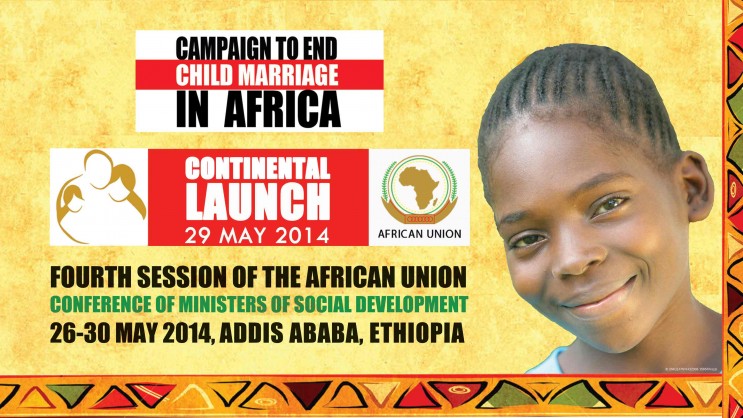
Every year, 14 million girls are married off before they turn 18, with devastating consequences for their health, education and wellbeing. 15 out of the 20 countries with the highest rates of child marriage are in Africa.
In an effort to provide a bright future for millions of women and girls, the African Union has launched the first-ever Campaign to End Child Marriage in Africa. The two-year campaign, organised in partnership with UNICEF and UNFPA, will focus on accelerating change across the continent by encouraging African governments to develop strategies to raise awareness of and address the harmful impact of child marriage.
The campaign also aims to support policies and action that protect girls’ human rights, and to remove barriers to law enforcement.
The campaign brings together a large range of partners including the Ford Foundation, the United Nations Economic Commission for Africa (UNECA), Save the Children, Plan International, Africa Child Policy Forum (ACPF) and the UK Department for International Development (DFID).
Ms Nyaradzayi Gumbonzvanda, the General Secretary of the World Young Women’s Christian Association (YWCA), a member of Girls Not Brides, was named Goodwill Ambassador for the Campaign to End Child Marriage in Africa.
Child marriage is a reality for millions of children – predominantly girls – across Africa. 39% of girls in sub-Saharan Africa are married before their 18th birthday; 13% are married by their 15th birthday.
 The repercussions of marrying as a child affect girls throughout their lives. Marriage often marks the end of girl’s education, limits her economic opportunities outside the home, and exposes her to physical, sexual and emotional violence.
Child marriage also threatens efforts to improve maternal health across Africa. Child brides face higher risk of death and injury in pregnancy and childbirth, with girls under 15 being five times more likely to die in childbirth than women in their 20s. Their children are at risk too: when a mother is under 18, her baby is 50% more likely to die in its first year of life than a baby born to older mothers.
Africans are raising their voices on social media in support of the campaign.
Source: http://www.girlsnotbrides.org/african-union-launches-first-ever-campaign-end-child-marriage/?utm_source=CM+in+the+News+-+Update+to+members&utm_campaign=8afeeeba09Child_marriage_in_the_news_5_June_20146_5_2014&utm_medium=email&utm_term=0_c21d02558c-8afeeeba09-382381337

Women rights activists and Civil Society Organisations (CSOs) recently gathered in Istanbul, Turkey to address the failures of the Millennium Development Goals (MDGs) on the rights of women, and proffer solutions for inclusion in the post-2015 agenda, at an event organised by the Journalists and Writers Foundation of Turkey. Damilola Oyedele was there.
Have the Millennium Development Goals (MDGS) failed to adequately address issues of women rights across the globe? The High Commissioner, United Nations Commission for Human Rights (UNCHR), Ms. Navi Pillay, certainly thinks so. For her, the MDGs did not address a number of critical issues bordering on women as they are too narrowly defined.
In a video message to participants at the Summit on Women's Perspectives on UN Post 2015 Development Agenda held in Istanbul recently, Pillay lamented that the MDGs failed to address the shocking crimes of Gender Based Violence (GBV), failed to highlight a demand for equal access for women to the common goods of education, housing, sanitation and water.
According to her, they also ignored the terrible burden of conflict on women. By being too narrowly minded, Pillay believes the MDGs restricted women issues to those affecting motherhood and the injustice of women's unpaid work.
"Our new framework for development must therefore be built upon the great human right treaties that form the bedrock of our international system. Its goals must be aligned with those of human rights including freedom from want, freedom from fear, non-discrimination and equality and protection of our environment. In each area, our new development framework must specify the actions that would be needed to ensure women's rights with explicit reference to realities of women's lives and the long and suffocating legacy of discrimination," she said.
Summit Focus The two day summit, organised by the Journalists and Writers Foundation, a Turkish NGO which holds a General Consultative Status with the UN Economic and Social Council (ECOSOC), was aimed at contributing to the process of the post-2015 new agenda named the Sustainable Development Goals (SDGs).
Highlights of the agenda for the 306 participants and 109 NGOs from 44 countries include eradication of poverty: what should be done in post-2015 development agenda to go further, specific policies for women, ways to change the rhetorics from that of 'charity' to that of partnership and the creation of decent work for inclusive growth.
Filling the Gaps Under the Women's Empowerment agenda, participants examined modalities for the prevention and elimination of all forms of violence against women and girls, ensuring equal rights of women to own and inherit property, equal opportunities in decision making positions, enabling gender equality in employment and eliminating obstacles for women to enter political, economic and public life.
Other highlights on the agenda for discussion included health, education, food security, water supply and sanitation, environment and climate change and energy, sustainable economic development, peace and good governance.
Victims of Discrimination From Albania, to Norway, to Lithuania, to Nigeria, to Mozambique, to Istanbul, one thing was clear, that several years following the Beijing Declaration and Platform of Action (1995) and the Cairo Declaration on Population and Development (2004), women across the world continue to suffer all forms of discrimination despite their national governments being signatories to agreements from these declarations.
In Egypt, although women were fully a part of the revolution tagged 'Arab Spring', they were labelled unpatriotic when they put forward the gender agenda before the new political class. In Albania, only six per cent of farmlands are owned by women, and 87 per cent of women do not get paid for the work they do. In Turkey, only 25 per cent of women are in the country's labour force, and women have been cast primarily as home makers who should be dependent on their husbands.
In India, reports of rape and bride murders continue to dominate the headlines. In Pakistan, the right of choice in marriage continues to be elusive for most women. In Sudan, women risk being stoned to death if they exercise choice in marrying outside their religion. In Saudi Arabia, women are still denied the right to drive, even though it is the 21st century.
In Nigeria, half-hearted gender equity attempts by the different arms of government have helped to perpetuate GBV, child marriage, female genital mutilation, trafficking in women and girls, unequal opportunities and others, through what has been labelled the need to preserve social and cultural values. Nigerians would remember how the Senate during the last constitutional amendment exercise deliberately refused to peg the marriage age at 18 years, in deference to religious and cultural sensibilities.
Changing the Mindset The attitude which fuels such half-hearted attempts, as the former Executive Director of the UNFPA, Dr. Nafis Sadik, at the summit puts it, is that girls are safer within the 'confines' of marriage. Now Special Adviser to the Executive Director of UNAIDS, Sadik believes that a major step towards gender equity and equality is to work to change the mindset of communities and national leaders that gender equality is in everyone's interest.
"…that resources devoted to universal access to reproductive and sexual health and information and services for girls and women must be an important part of the health agenda. To take action against unsafe abortion does not mean that you must deny that abortion exists. Drive home the message that education, empowering girls and women are essential to economic security, social integration and the whole country's progress in the area of all of these development goals," she said while addressing participants.
According to the UN, 40 million girls under the age of 18 are at the risk of early marriage globally, and because of this, the highest cause of death among girls between the ages of 15-19 is maternal death especially in South Asia and sub-Saharan Africa.
"…some families still believe that girls are safer in marriage than in school and their leaders allow the belief to persist. In many girls and many people's minds even today, women's role is in marriage and having children, and girl's education is only a preparation for that. In that case, they think education need not include sexual and reproductive health rights. In fact, they think it should not be included because it might give girls ideas they should not be having," Sadik lamented.
"We still have a long way to go. In my travels and discussions, I still find policy makers and even national leaders themselves who somehow regard essential services for girls and women as a matter of social welfare and even charity. They think of pregnancy and childbirth as part of the normal things, something that just happens. Apparently in their minds, women's death and disability just happen too. To the tune of 320,000 maternal deaths a year and 10 times that number of infections and injuries, they are hardly concerned with the oppression which make up women's daily lives," she added.
Sensitive Heartbeat As Pillay summarises, the heartbeat of the new agenda must be the heartbeat of accountability, it must track progress of each target and deploy much more accurate and pertinent information on discriminatory laws, unpaid work, inequality within the home, gender based violence, and women's sexual and reproductive health.
"Women's rights are inseparable from men's. They are not optional. Protecting and promoting women's equality is the responsibility of every government. Human rights will only be respected and our societies will only flourish when governments deliver on that responsibility," she summarised.
Is Anyone There? On the sidelines of the summit, THISDAY visited the Kimse Yok Mu (meaning Is anyone there?), a sister organisation of the JWF. It is a NGO that works to provide humanitarian aid particularly in disaster areas. Established in 2002, the name was coined after the 1999 earthquake in Turkey where those trapped under wreckage and their rescues were shouting at each other: "is anyone there?".
The NGO, although it has no branches outside Turkey, currently works in 110 countries with like-minded NGOs resident in those countries or individuals. It has 60,000 volunteers working in all its 41 branches across Turkey.
The Public Relations Officer of the Istanbul branch, Ms. Fatima Demirtas, told THISDAY about Kimse Yok Mu's collaboration with the Nizamiye hospital in Abuja to provide 1,000 cataract surgeries for indigent Nigerians. The NGO would pay for the cost of each unit of materials used for the surgeries.
Kimse Yok Mu professional volunteers provide psychological support to those traumatised by disasters, and build temporary shelters for families that have lost their homes. Poor families are assisted to become economically empowered and their debts are paid off where they exist. The NGO currently has at least 500 Somalis studying in Turkey on scholarship.
Some of its volunteers make items such as table-clothes, shawls, embroidered outfits, etc for sale to raise funds for the humanitarian work. "Some of the ladies choose to volunteer their services at the centre instead of just staying at home. We do not pay them any money for their services but they get to socialise with each other and do some good to humanity," Demirtas said.
She also explained that the organisation carries out adequate investigations to verify claims that a family or individual is indigent before including such on its charity programmes. This, she said, is to ensure that the services go to those who truly deserve them.
5 June 2014
Source: All Africa

Following the celebratory SADC Gender Protocol@Work awards last week, the SADC Gender Protocol Alliance is calling for a strong rights-based approach to the post-2015 SADC Gender Protocol agenda and global development framework.
Last week's regional Summit, which brought together over 400 gender activists, media, government and faith-based organisations from 14 Southern African countries, provided a platform for sharing good practice and acknowledged the work of gender drivers of change. The summit but also held numerous parallel meetings to strategise for continued efforts to achieve gender equality.
Held under the banner "5050 by 2015 and a strong post 2015 agenda" the gathering provided a watershed moment to plan for the year ahead, with ten elections in various Southern African Development Community (SADC) countries. The civil society Southern African Gender Protocol Alliance will present the outcomes of the sessions at the SADC Heads of State Summit in August in Zimbabwe.
The 5050 plenary session highlighted the need women's quotas at all levels, particularly political and economic decision-making. With women's representation in politics declining following recent elections in some SADC countries such as South Africa, delegates concluded that deliberate measures need to be legislated and implemented.
The 28 targets of the SADC Gender Protocol that provides a sub-regional roadmap for Millennium Development Goal (MDG) 3 (gender equality) are due to be achieved by 2015, also the deadline for the MDG's. The SADC Gender Protocol Barometer shows that the region is only about two thirds of the way towards achieving these objectives.
Globally, there is a strong movement to strengthen the gender provisions of the post 2015 agenda. The Alliance is leading a campaign for a strong and revitalised SADC Gender Protocol within the context of the global campaign.
At the post-2015 meeting held last week, Alliance members discussed the strengthening of all thematic areas of the post-2015 SADC Gender Protocol, but placed specific emphasis on burning issues across Southern Africa, highlighting the need to recognise that women are not a homogenous group. The Alliance members thus called for a human rights approach to ensure the new framework is aligned to the global developmental agenda for the achievement of voice, choice and control for all women in all sectors of society.
Members of the Alliance stressed specific areas of concern such as women's empowerment and the crucial link between economic independence in helping curb gender based violence (GBV); greater access to sexual and reproductive health rights; disability and gender and the need to acknowledge that Lesbian, Gay, Bisexual and Transgender (LGBT) rights are fundamental in achieving gender justice and equality. Alliance chair Emma Kaliya from Malawi called for solidarity amongst country representatives by saying, "If an issue is a priority for one country, it is a priority for the whole region."
Climate change and gender justice also remained high on the post-2015 strategy for Southern Africa, especially with the recent discovery of oil and gas in Mozambique. Members called for equitable access to and distribution of wealth, but also environmentally sustainable exploration and development.
Alliance members emphasised the importance of grass roots mobilisation in advancing gender equality, as well as the vital role that youth, men's groups and faith-based organisations play in fighting for human rights and achieving gender justice.
SADC Gender Protocol Alliance members also discussed measures to strengthen and diversify the Alliance in terms of its mandate and also elected a new chairperson– Emma Kaliya, also Chair of the NGO Co-ordination Network in Malawi.
As part of the post-2015 agenda discussion, the Gender, Media and Diversity Centre (GMDC) held a parallel session on gender and media, strategising on how SADC media houses and media training institutions can contribute to the Beijing plus 20 review as well as various initiatives with the newly formed Global Forum on Media and Gender (GAMAG).
This year's SADC Gender Protocol@Work Summit was especially unique because for the first time it followed 15 district level summits and 13 national summits across Southern Africa. It also introduced emerging entrepreneurs as a new category, which saw survivors of GBV presenting their business plans following training rolled out by Gender Links.
After a bilateral meeting, the Namibian delegation said they wanted to introduce a gender summit modelled on the SADC Gender Protocol Summit, to create incentive to mainstream gender in local government ministries within the country.
For the first time five government ministries presented their work on gender mainstreaming and one government ministry went further in scooping the women's rights award. Fifty of the participants that attended the regional summit last week were first-time travellers outside their country and 26 applied for passports for the first time.
The regional Summit together with the district and national summits involved 2363 participants, providing a platform for 190 gender-mainstreaming presentations and awarded a total of 24 winners and 18 runners-up, out of the 185 winners (53 men and 132 women) from the district and national summits.
These gender drivers of change received certificates of recognition and shook hands with the Mauritian Minister for Gender, Mireille Martin and Lesotho's Minister for Gender, Youth, Sports and Recreation, Chief Thesele Maseribane. Representatives from the Department for International Development (DFID) and Norwegian Church Aid congratulated Gender Links, the Alliance and all participants for contributing to the advancement of gender justice and equality in Southern Africa.
Dr. Andrew Nikiindo, Vice Rector at the Polytechnic of Namibia who also spoke at the awards ceremony, urged all participants to continue their fight for gender equality and to carry the baton forward beyond 2015. "Today is an important day for you, these awards show the important role that you have played and are still expected to play in future," stressed Nikiindo
By Katherine Robinson
5 June 2014
Source: http://www.genderlinks.org.za/article/southern-africa-alliance-calls-for-strong-rights-approach-post-2015-2014-06-05