Introduction
The European Union (EU)-Africa summit provides an important opportunity to highlight crucial human rights developments in both Africa and Europe. Progress is being made on many human rights issues in an array of countries, but daunting challenges remain. The summit agenda includes both democracy and governance and peace and security, two broad topics that include a range of human rights concerns.
Human Rights Watch is concerned by some of the negative trends, particularly in Africa regarding the respect for human rights defenders and violations of the rights to freedom of association, expression, and peaceful assembly, and in the EU in relation to the rights of migrant and asylum seekers, and discrimination and intolerance towards migrants and minorities.
This memorandum summarizes key thematic concerns, provides links to specific country information where relevant, and urges African and European member states to implement recommendations that would help address ongoing human rights violations that threaten the lives and well-being of citizens across the continent, as well as the sustainable development of numerous countries.
I. Democracy and Good Governance
Threats to Freedom of Expression, Association, and Peaceful Assembly in Africa
The proliferation of a wide range of nongovernmental organizations and independent media has been among the most important positive developments across Africa in the past two decades. Independent media, civil society activists, and nongovernmental organizations play essential roles in any democratic society, whether through investigating and reporting on government policy, exposing corruption and human rights violations, advocating for the rights of minorities and vulnerable communities, or providing health, education, and other social services.
Human rights defenders—whether individuals, groups, lawyers, or journalists—are fundamental to ensuring the ability of all people to know, understand, and enjoy their rights. They also play a key role in exposing as well as assisting those seeking redress for human rights violations. A vibrant civil society and independent media is also critical for the conduct of free and fair elections in line with international standards. Furthermore, recent events in North Africa and the Arab world demonstrate how public access to communications and Internet technology and the increasing use of social media have amplified both the appetite for information as well as the ability of individuals from all segments of society to organize and respond to developments that affect their lives and interests.
Yet these exciting trends have also provoked a backlash in a number of countries, particularly those governed by longstanding, often authoritarian leaders and ruling parties who fear and suppress independent criticism, political opposition, and peaceful public dissent. As briefly described below, the backlash has assumed a number of forms including: threats, harassment, arbitrary detention, and prosecution of human rights defenders; censorship of independent media and nongovernmental voices; the promulgation and use of laws that violate fundamental rights to freedom of expression and association; and unlawful state efforts to undermine, bar, or crack down on peaceful protests.
Harassment and Prosecution of Human Rights Defenders
Harassment, threats, arbitrary detentions, and politically motivated prosecutions of human rights defenders, including journalists, human rights activists, anti-corruption campaigners, and others have become an alarming, regular feature of too many countries in Africa.
Eritrea presents an extreme case where no independent civil society or media is permitted to operate, but other countries have shown an increasingly repressive tendency or created a hostile environment in which activists and media self-censor due to fear of heavy-handed repercussions.
In countries such as the Democratic Republic of Congo and Angola, journalists and human rights defenders have been the target of threats and physical attacks from state agents. In others, such as in Kenya and Somalia, unidentified assailants who may or may not be affiliated with the state are responsible for numerous acts of violence, including killings. In other countries, such as Ethiopia, Sudan, and South Sudan, abuses usually take the form of harassment, arbitrary detentions, and prosecutions.
Many countries have used a combination of direct threats and oppressive laws and state policies to undermine human rights defenders. Rwanda’s domestic human rights movement has been almost destroyed by state intimidation, personal threats, infiltration, and administrative obstacles. In Burundithe government has often responded to the work of human rights activists and journalists by labeling them mouthpieces of the opposition. Ethiopia’s independent human rights groups have been forced to either stop working on human rights issues or dramatically curtail their activities due to increasingly repressive laws on association and restrictions on foreign funding. Equatorial Guinea also imposes excessive restrictions on the registration and operation of nongovernmental groups, and has no legally registered independent human rights groups. Sudan has shut down human rights and democracy organizations without cause, imposed burdensome registration requirements, and has used its repressive national security apparatus to monitor civil society groups and target individual activists for arrest and detention.
Harassment and arrests of human rights defenders by state security forces frequently increases in the lead-up or aftermath of national elections, as occurred in Zimbabwe in 2013. In Uganda, threats to civil society activists and the media have been linked to reporting on sensitive issues like corruption, oil, land or President Yoweri Museveni’s eventual succession. The Ugandan government’s raids on theDaily Monitor, a leading newspaper, and other media in May 2013 was a clear example of the severity of politically motivated attacks against the media. Uganda’s ruling party uses a wide range of tactics to stifle critical reporting, from occasional physical violence to threats, harassment, bureaucratic interference, and trumped-up criminal charges against journalists. This was particularly apparent during political unrest in September 2009 and prior to the February 2011 elections.
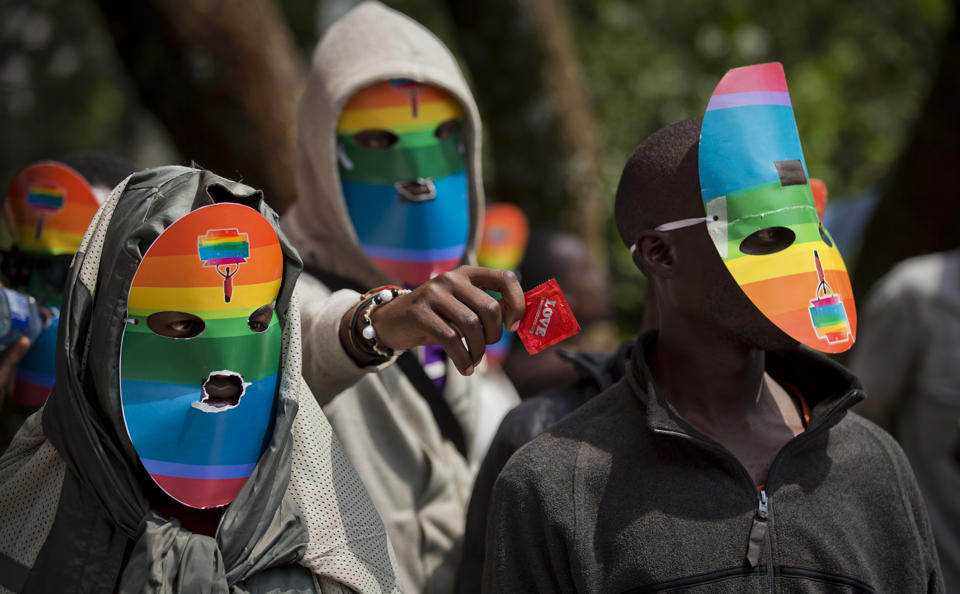
In certain countries, such as Cameroonand Uganda, activists working on the rights of vulnerable minorities—such as the lesbian, gay, bisexual, and transgender (LGBT)—have had workshops shut down and faced particular threats. In Zambia, an HIV/AIDS activist is currently on trial simply for suggesting in a TV interview that decriminalizing same-sex conduct would help facilitate HIV outreach to sexual minorities. Recent laws criminalizing homosexuality in Nigeria and Uganda present a worrying trend that could also have significant impact on human rights activism and advocacy more broadly given the wide latitude of the legislation. In Nigeria, President Goodluck Jonathan signed into law on January 7, 2014, the Same-Sex Marriage (Prohibition) Bill. It is a sweeping and dangerous piece of legislation that criminalizes public displays of affection between same-sex couples and restricts the work of organizations defending gay people and their rights. The law could lead to imprisonment solely for a person’s actual or imputed sexual orientation. People could face charges for consensual adult sexual relations in private; advocacy of LGBT rights; or public expression of their sexual orientation or gender identity. The terms “same-sex marriage” and “civil union” are so broadly defined in the law that they include virtually any form of same-sex cohabitation.
Mainstream human rights organizations in Nigeria could be threatened for opposing the law, and have said they fear speaking out about it. Funders or supporters of LGBT rights and related work in Nigeria could also face increased scrutiny under the law. The law will hinder public health efforts to work on HIV and could criminalize programs funded by major donors that provide education on HIV prevention and health for men who have sex with men.
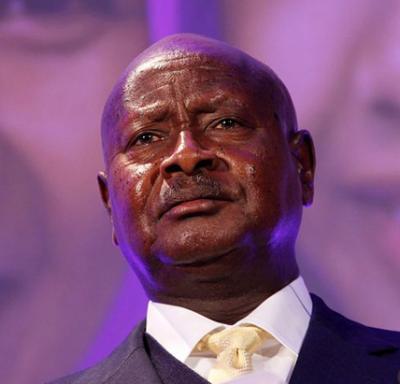
In Uganda, President Yoweri Museveni signed the Anti-Homosexuality Bill into law on February 24, 2014. The new law not only increases the penalty for same-sex conduct to up to life imprisonment, but creates a raft of new and vague criminal offenses that violate the rights to freedom of expression and association among others. The “attempt to commit homosexuality” now incurs a penalty of seven years as does “aiding and abetting” homosexuality. A person who “keeps a house, room, set of rooms, or place of any kind for purposes of homosexuality” also faces seven years’ imprisonment. Because the law also criminalizes the “promotion” of homosexuality, a person could now go to prison simply for expressing a peaceful opinion. Local and international nongovernmental organizations doing legitimate human rights advocacy could now be at risk of criminal sentencing of up to seven years. Public health promotion and prevention efforts targeting “at risk” groups might have to be curtailed, and health educators and healthcare providers could face criminal prosecution under the same provision.
Human Rights Watch urges African and EU representatives participating in the summit to call for and support:
• Thorough investigations of any cases of harassment, threats, or violence against human rights defenders and other civil society activists, and violations of their rights to free expression, association and assembly. Those responsible for such abuses should be held accountable, regardless of position or rank.
• Uganda and Nigeria to take immediate steps to suspend implementation and repeal discriminatory legislation and take substantive steps to ensure all laws comply with their international human rights obligations.
• Thorough reviews of the impact of the Ugandan and Nigerian laws on all EU-supported development projects and programs, particularly taking time to ensure that objectives can be met without a) exposing implementing partners, project employees or beneficiaries to possible criminal prosecution under the laws, and b) discrimination or discriminatory provision of services.
Abusive Laws Regulating the Media and Civil Society
Journalists in Africa are frequently arrested and prosecuted under a variety of laws for doing their work as reporters in violation of international protections for free expression and media freedom. Ethiopia’s prosecution of at least 13 journalists under its counterterrorism law has been a particularly sinister misuse of domestic legislation. More often, countries seeking to limit the independent media introduce specific media legislation. A media law adopted in Burundi in June 2013 undermines the protection of sources, limits subjects on which journalists may report, imposes new fines for media found in violation of the law, and requires journalists to have a minimum level of education and professional experience. Following a legal challenge by the Burundian Union of Journalists, the Constitutional Court ruled in January 2014 that certain articles of the media law were unconstitutional. This provides an opportunity for the Burundian government to not only modify those articles, but ensure that the law as a whole respects journalistic freedom and protects Burundi’s vibrant independent media. Kenya is currently considering legislation that could give authorities a broad remit to censor media and limit foreign funding of nongovernmental organizations.
In Rwanda, where journalists have faced years of intimidation, media laws adopted in 2013 appeared to increase the scope for independent journalism, but a range of other laws have been used to silence media criticism. After several journalists were arrested and convicted in connection with their articles, most Rwandan journalists do not dare investigate or report on human rights abuses by the state or comment on politically sensitive issues.
Criminal defamation laws remain a concern across a number of African countries, particularly Angola, where the country’s most prominent anti-corruption campaigner, Rafael Marques de Morais, has been subjected to nine defamation lawsuits in the last year. Yet civil defamation laws can also be problematic. For example, by allowing damage awards in defamation cases that are far beyond the ability of most Liberian newspapers to pay—and mandating imprisonment for non-payment—Liberian law makes imprisonment the likely outcome of many civil defamation cases, which creates a serious chilling effect on journalism.
Public order and information laws are also frequently used to curtail independent media and civil society activities and public demonstrations on governance issues. For instance the Access to Information and Protection of Privacy Act and the Public Order Security Act in Zimbabweand the recently passed Public Order Management Bill in Ugandahave been or may be used in this way. Even South Africa, widely considered to be one of the most liberal media environments on the continent, has passed a controversial Protection of State Information Bill, known as the “Secrecy Bill,” which could limit protection for journalists and whistleblowers seeking to report information that is in the public interest.
Yet the picture is not entirely bleak. A growing number of African countries, such as Sierra Leone, have passed or are in the process of passing freedom of information laws that could play a crucial role in improving government transparency, the rule of law, and respect for human rights.
Human Rights Watch urges African and EU representatives participating in the summit to:
• Call for the repeal or amendment of legislation that restricts freedom of expression and association, including provisions that limit foreign funding, impose arbitrary or intrusive requirements on the ability of nongovernmental organizations to function, or limit the types of lawful activity that organizations can undertake.
• Support legislation, such as freedom of information laws and other legislation that promotes the rights to freedom of information, expression and association.
Crackdowns on Peaceful Protests
Restrictions on freedom of expression and association are often coupled with crackdowns on public protests. Uganda, Sudan, Ethiopia, Zimbabwe, and Angola, to name a few, have seen public demonstrations in the past few years on a variety of issues, often linked to public concerns over corruption, accountability or state failure to respect human rights and account for violations.
The situation in Burundi is becoming increasingly tense, with repeated confrontations between opposition party members, on the one hand, and the police and the government on the other. Government and police have obstructed opposition party meetings and disrupted demonstrations and other activities. In February, the government attempted to impose pro-ruling party leaders on the opposition party UPRONA, prompting the resignation of all three UPRONA ministers and effectively splitting the party into two. In March, violent clashes between the police and members of the MSD opposition party led to arrests, injuries, and a suspension of the MSD. In March, 69 MSD members were charged in connection with their alleged role in a confrontation with the police. After a summary trial that lasted just one day, and with no time to prepare their defense, 21 were sentenced to life imprisonment, and 34 to various other prison terms.
Sudan’s violent repression of protests in Khartoum and other cities and towns in September 2013 resulted in 170 deaths of protesters and the detention of hundreds. Sudanese security forces arbitrarily detained and tortured peaceful protesters in 2011 and 2012. The Angolan government has responded to periodic protests by a youth movement and war veterans with regular arbitrary detentions and the use of unnecessary or excessive force by security forces. In a similar fashion, the Zimbabwe security forces have quashed peaceful protests with excessive force and arbitrary arrests and detention. Protests by members of the Muslim community in Ethiopia have been met with excessive force, beatings, and detentions, a pattern replicated in Uganda, which has seen several protest movements quashed by abusive police and other security forces.
The EU-Africa summit should:
• Stress that the right to peaceful assembly is a fundamental right embodied in the African Charter on Human and Peoples’ Rights and other international human rights law.
• Condemn the unnecessary or excessive use of force by security forces in response to protests.
• Call on the African Commission for Human and Peoples’ Rights to investigate serious situations in which state security forces have used excessive force against protesters, including most recently in Sudan.
II. Peace and Security
The rapid escalation of conflicts in the Central African Republic (CAR) and South Sudan over the past several months demonstrates the unintended consequences of decades of repression, weak institutions, corruption, and the legacy of impunity in some African countries.
In South Sudan, conflict erupted in December 2013 between pro-government and opposition forces, and has included massive abuses against civilians. The violence has taken on dangerous ethnic overtones across the country and reflects South Sudan’s legacy of impunity for mass crimes during years of civil war. Human Rights Watch has urged both parties to end abuses and ensure justice for crimes against civilians as a key step toward lasting peace.
The African Union (AU) responded in late December by establishing a Commission of Inquiry into the human rights violations and abuses committed. The Commission is set to begin work in April. Human Rights Watch and other international and South Sudanese groups have called on the AU to ensure the Commission be effective, credible, impartial, and independent, that it be staffed with relevant forensic investigators and human rights experts, and that it make public its findings. The EU, which has also pledged to support accountability, should extend support to the AU’s Commission.
With regard to the CAR, to their credit, both the EU and AU responded by pledging or deploying troops in a very insecure and dangerous situation. Those responses have been much appreciated by residents of CAR and the humanitarian actors working to address the massive crisis there.
Human Rights Watch has been documenting abuses in the CAR for the past year and has observed that the presence of the peacekeepers has deterred some violence. In other cases, however, we have seen troops abandon their neutrality and get drawn into the conflict between the Seleka and anti-balaka forces. In some instances, Chadian peacekeeping troops have facilitated the movement of armed Seleka leaders—complicit in grave abuses—to areas where the Seleka can regroup. We have urged the AU to rein in these rogue forces and prevent them from allowing the Seleka to prey on civilians.
Human Rights Watch has also repeatedly called for the augmentation of African and European peacekeeping in CAR, particularly with the deployment of a UN peacekeeping force that can help stabilize the divided nation, prevent further abuses, and help rebuild tattered institutions. Until that force is on the ground, the AU peacekeeping force, known as MISCA, and the French Sangaris need to take immediate additional measures to provide greater security, including actively patrolling areas vulnerable to violence, especially those where minority Muslim populations remain. In the wake of the Seleka collapse, thousands of Muslim residents have fled to the neighboring countries of Chad,Cameroon, and the Democratic Republic of the Congo. Remaining Muslim residents are at extreme risk of violence, either in their homes or on the streets, in Bangui or in more remote locations, such as the south western region. There is an urgent need for more peacekeepers and more resources to contend with this human rights and humanitarian catastrophe.
African and EU representatives at the summit should:
• Call on all the warring parties in South Sudan to protect civilians and civilian property;
• Ensure that the South Sudan Commission of Inquiry is effective, credible, impartial, and independent, that it is staffed with competent forensic investigators and human rights experts, and that it makes its findings public.
• Urgently support the deployment of a UN peacekeeping force in the CAR and expedite the deployment of EU forces in the interim.
Africa and International Justice
In 2014, the commemoration of the 20th anniversary of the Rwandan genocide acts as a sober reminder that ensuring accountability for international crimes such as war crimes, crimes against humanity, and genocide remains one of the most urgent issues on the continent. The EU-Africa summit comes at a time of intense challenges for the International Criminal Court (ICC) in Africa. The election of ICC suspects Uhuru Kenyatta and William Ruto as Kenya’s president and deputy president has generated renewed backlash to the ICC from the AU and some African leaders. The EU-Africa summit is an important moment for African ICC member states to affirm support for the court.
The ICC has its flaws, but it is a crucial court of last resort. Its reach should be expanded, not hindered. Ideally, domestic courts will have the capacity and willingness to ensure justice when serious crimes in violation of international law are committed, but in many cases the judiciary in countries where such crimes are perpetrated is weak. Regional courts have also faced difficulty in their judgments being respected or continuing to operate after taking independent decisions.
There are double standards in the application of international justice: some powerful countries have not joined the ICC and the Security Council has used its power to refer situations to the ICC inconsistently. But justice should not be denied where it is possible because it is not yet possible everywhere. African governments should press for justice wherever the worst crimes are committed, such as in Syria, but not hinder the prospects for justice in Africa. As has been shown in countries such as Sierra Leone, the Democratic Republic of Congo, and Kenya, impunity tends to foster renewed crimes.
A 2013 AU summit decision calls for immunity for sitting officials before international courts. This is contrary to the very core of the ICC’s Rome Statute, which considers the official capacity of those responsible for grave crimes to be irrelevant. This has been a cornerstone of international law since the post-World War II trials at Nuremberg, and is included in the statutes of the International Criminal Tribunals for the former Yugoslavia and Rwanda and the Special Court for Sierra Leone.
The EU-Africa summit should:
• Reaffirm the importance of the ICC in bringing to justice those responsible for the gravest international crimes that cannot be prosecuted in domestic courts.
The Rights of Asylum Seekers and Migrants in the EU
The approach of the EU and its member states to migration and asylum is too often characterized by an emphasis on migration control and border enforcement at the expense of the rights of migrants and asylum seekers, including the right to seek asylum.
Deaths at Sea
The death of over 500 people in October 2013 in two shipwrecks off the Italian island of Lampedusa rightly focused the EU’s attention on boat migration in the Mediterranean. That same month Italy launched an ongoing naval search and rescue operation called Mare Nostrum that has rescued over 14,000 people by mid-March 2014. In December 2013, the Council of the EU endorsed recommendations developed by a specially created task force on short and medium-term measures to limit the loss of life of migrants and asylum seekers at sea.
Human Rights Watch is concerned that many of the EU’s proposed policy responses, though framed in terms of saving lives, reflect the EU’s preoccupation with border enforcement through an emphasis on preventing departure and barring entry. This can be seen in the focus on increased border surveillance—primarily through the launch of EUROSUR, a platform for information sharing among EU countries for the purpose of detecting irregular migratory movements—cooperation with countries of origin and of transit, including joint naval patrols, and a crackdown on people smuggling. The debate has revived longstanding disputes among EU member states about responsibilities for rescue operations, for determining where those rescued should be disembarked, and for processing migrants and asylum seekers.
Enhanced efforts to save lives at sea should go hand-in-hand with respect for other fundamental rights, such as the right to seek asylum and protection against torture and ill-treatment. Human Rights Watch recommends the EU to take the following steps:
• Ensure that increased surveillance of the Mediterranean, including through implementation of EUROSUR, is focused on the paramount duty of rescue at sea, on the basis of a broad definition of distress and a presumption that all intercepted or rescued persons will be taken to the closest safe port of call in an EU country;
• Adopt binding rules to avoid disputes about disembarkation points to ensure that migrants are taken promptly to a safe port of call and given access to asylum, including in situations where the rescue is conducted by private vessels;
• Develop orderly and legal entry mechanisms for asylum seekers; and
• Ensure that immigration cooperation with sending and transit countries is subject to clear and enforceable human rights safeguards.
Access to Asylum
While the EU has moved towards harmonization of asylum procedures and reception standards across the Union, including with the adoption in June 2013 of an asylum package, asylum seekers face gaps in protection in a number of member states. Despite reforms in Greece, asylum seekers there continue to encounter serious obstacles accessing the asylum system, a large backlog in processing cases, and inadequate reception conditions or prolonged detention in sometimes abusive conditions. Asylum seekers in Bulgaria also face poor reception and detention conditions, as well as summary returns to Turkey without proper procedures and excessive use of force by border police. Italy has largely failed to implement a long-term approach for asylum seekers and refugees, adopting instead short-lived “emergency plans” that do not guarantee consistent, adequate standards of treatment, conditions, and access to asylum.
Summary expulsions from the Spanish enclaves of Ceuta and Melilla to Morocco are also a problem, raising concerns that persons in need of international protection are being denied access to asylum procedures and other protections, and that both asylum seekers and irregular migrants are returned without due process to the risk of abuse at the hands of Moroccan security forces. Fifteen migrants drowned on February 6, 2014, while swimming to Ceuta amid serious concerns that the actions of the Spanish Guardia Civil, including firing rubber bullets and teargas at the water, contributed to the deaths.
Recent reform of EU directives brought certain improvements to common EU standards, but the common rules provide broad grounds for detention of asylum seekers, do not obligate member states to provide free legal assistance at first instance, and fail to exempt especially vulnerable asylum seekers, including torture survivors and unaccompanied children, from accelerated procedures. Maltahas a virtually automatic detention policy for up to 18 months, while asylum seekers in Greece may also be held in detention for up to 18 months if they apply for asylum after being detained for irregular migration.
Accelerated procedures at borders, including asylum hearings, are inherently unsuitable for complex cases, and make it difficult for individuals to present medical or other evidence of their need for international protection. Human Rights Watch has documented how such procedures put unaccompanied children at risk of expedited removal from France and fast-track women victims of sexual violence in the United Kingdom into detention and denial of protection.
Asylum seekers as well as unaccompanied children also face transfers between EU countries under the Dublin regulation or bilateral agreements. The Dublin regulation requires as a general rule that the first EU country of entry be responsible for assessing asylum claims, and allows member states to return anyone to the first EU country they entered even if that first country lacks a fully functioning asylum system and adequate reception conditions, or otherwise offers less protection. Recent reforms to the regulation have improved safeguards, including by requiring member states to assess the risk of inhuman or degrading treatment before transfer to another EU country. Concerns remain that theDublin system does not properly weigh the variety of factors that might connect an asylum seeker to one state over another, including wider family relations, community ties, language, as well as personal preference of the applicant. Human Rights Watch has also documented how Italy bypasses the Dublin regulation entirely through summary returns to Greece of adult asylum seekers and unaccompanied children who stow away on ferries from Greece to Italy.
We urge the EU-Africa summit to reaffirm the importance of access to fair and effective asylum procedures and decent reception conditions. EU institutions should monitor and enforce, including through infringement proceedings, full compliance with EU asylum regulations. EU member states should consider further reforming the Dublin regulation. Detention of asylum seekers should be used only as a last resort and for the shortest time possible, and EU countries should not detain unaccompanied children and families with children, but rather provide them with safe reception accommodation.
Discrimination and Intolerance in the EU
Discrimination and intolerance against minorities, including Muslims and Roma, and migrants is a serious concern across the EU. Comprehensive data compiled by the EU Fundamental Rights Agency, judgments by the European Court of Human Rights, assessments by UN treaty bodies and experts, as well as numerous NGO reports, including by Human Rights Watch, all point to persistent hostility and discrimination against certain groups.
Despite binding international and regional norms on combating hate crimes, numerous EU countries lack robust legislation and machinery to adequately address violence based on ethnic or racial prejudice. Human Rights Watch has documented the failure of police and the judiciary in ItalyandGreece to investigate, prosecute, and punish appropriately xenophobic attacks against migrants and minorities, and the inadequacy of state response to hate crimes in Germany.
The use of unlawful ethnic profiling by law enforcement affects minorities and migrants in EU countries. In France, overly broad grounds for police stops and the lack of clear guidelines leads to repeated and abusive identity checks targeting blacks and Arabs, violating anti-discrimination norms and undermining police-community relations. In Greece, Athens police conduct abusive stops and searches based on ethnic profiling and have detained tens of thousands of people, including many legal migrants, in an ongoing police operation to crack down on irregular migration.
While Muslims in the EU face discrimination in a variety of spheres, Muslim women have been particularly singled out by measures aimed at curbing the wearing of the Muslim headscarf and the full-face veil. Some countries, including France and Germany (in eight out of sixteen states), prohibit civil servants, including teachers, from wearing religious symbols. Franceand Belgium have adopted laws prohibiting the concealment of one’s face in public. In all these cases, parliamentary debates have made it clear that Muslim religious dress is the principal target of such bans. Comparable nationwide bans have been proposed in a variety of other countries, including Italy, the United Kingdom, and Denmark, while a number of municipalities in Spain and Italy already have, or are contemplating, local bans.
The situation for Roma, Europe’s largest ethnic minority, is particularly alarming. The EU collectively recognizes that the persistent discrimination and marginalization require intervention, and has developed a strategy and funding to that end. But in practice Roma migrants from Eastern Europe face forced eviction and expulsion in Franceand Italy. Further east, in Hungary, Romania, Bulgaria, the Czech Republic, and Slovakia, the situation is even more alarming, with little progress toward ending forced evictions and housing and school segregation (also a problem in Greece), despite hundreds of millions of euros in EU funding and binding rulings by the European Court of Human Rights.
We encourage participants in the EU-Africa summit to engage in a frank discussion about discrimination and intolerance in the EU. EU member states and institutions should take steps to ensure robust response to hate crimes, to prohibit explicitly the use of ethnic profiling by law enforcement, and implement fully strategies to address deep and widespread discrimination against Roma. EU institutions should affirm the fundamental rights to freedom from discrimination, freedom of religion, and the right to autonomy of Muslim women.
Human Rights Enforcement in the EU
The Treaty on European Union states that the EU is founded on respect for human rights. As outlined in the EU Strategic Framework and Action Plan on Human Rights and Democracy—adopted by the Council of the EU in June 2012—this means both ensuring that the Union’s relations with other countries are founded on respect for human rights, and ensuring rights for everyone are respected within the Union itself. Yet EU institutions have failed to respond adequately to some of the most pressing human rights concerns inside the EU, including abusive laws and practices by some member states.
The European Commission has the power to bring infringement proceedings against member states when they fail to apply correctly and adequately EU law, including in relation to the EU Charter of Fundamental Rights, which is binding on EU member states when they are applying EU law. Ultimately such proceedings can lead to judgments by the European Court of Justice and sanctions. While the Commission has sought to use infringement proceedings in some cases involving human rights, it is has been reluctant to use human rights as the basis. Its decision-making and criteria have been opaque, and it has sometimes accepted cosmetic changes as sufficient to halt proceedings. The Commission has also been hesitant to confront member states on their human rights records in its annual report.
The European Parliament has been more outspoken on occasion and has played an important role in scrutinizing EU legislation and challenging EU policy on human rights. But political and national allegiances have sometimes blunted the Parliament’s effectiveness.
The response of the Council of the EU has been particularly disappointing. It has established a Working Party on Fundamental Rights and Free Movement of Persons (FREMP), where member state officials can discuss human rights challenges and possible EU action in response to violations by member states. But the work of FREMP has in fact been largely confined to negotiating EU accession to the European Convention on Human Rights and no meaningful engagement with civil society has been established. Faced with systematic efforts by the Hungarian government to undermine the rule of law and human rights, for example, and the failure of member states to respect their obligation to investigate complicity in acts of torture and enforced disappearances in the context of the CIA rendition program, the Council has been silent.
The Council acknowledged for the first time, in June 2013, the need to do more to address human rights violations within the EU, and called on the Commission to “take forward the debate … on the possible need for and shape of a collaborative and systematic method to tackle these issues.”
In March 2014, the European Commission announced a new “rule of law mechanism” that would allow it to challenge member states over “systematic threats to the rule of law” that nonetheless fall short of the threshold for action under article 7 of the Treaty on European Union, the EU’s most powerful (but never used) enforcement tool. Though a welcome signal of the Commission’s pledge to act when fundamental values come under threat, concerns remain that the new mechanism does little to overcome the lack of political will that obstructs genuine human rights enforcement in the EU.
Human Rights Watch calls on the EU to heed the detailed recommendations of the Human Rights and Democracy Network, a platform of 48 organizations of which Human Rights Watch is a coordinating member, to improve scrutiny of and accountability for human rights violations within EU borders. These recommendations were set out in an August 2013 statement. The EU should define a more comprehensive internal human rights strategy that mirrors its external strategic framework, and devise a corresponding action plan to guide collective EU action. All EU institutions, including the Commission, the Parliament, and the Council should embrace an ambitious mandate to deploy effectively existing institutional arrangements to promote and protect the full range of rights within the EU, including a willingness to hold individual member states to account when they violate human rights.
Children and Armed Conflict
In the majority of countries with armed conflicts around the world, national armed forces or armed groups have used schools for military purposes, with devastating consequences for the safety and well-being of children and their right to education.
Across Africa, schools have been used for military purposes in at least nine countries since 2005: Central African Republic, Chad, Cote d’Ivoire, Democratic Republic of Congo, Libya, Mali, Somalia, South Sudan, and Sudan. For example, in Congo, armed forces occupied and used schools in Katanga and North and South Kivu in 2013. In South Sudan in 2012, troops used at least 18 schools, affecting approximately 13,000 children. The cost to repair damage cause by such use was around US$67,000 per school.
Good policies and practices have emerged in both Africa and Europe to protect schools from military use. In South Sudan, a 2012 order of the army deputy chief of staff “unconditionally prohibited” forces from “occupying schools, interfering with or disrupting school classes or activities, or using school facilities for any purpose.” In Cote d’Ivoire, nongovernmental organizations shared information on military use of schools with UN peacekeepers, who then advocated with state and non-state actors to leave occupied schools. In Ireland, the Defence Act states that military manoeuvers and encampments cannot interfere with schools or school grounds. In the United Kingdom, the Manual on the Law of Armed Conflict prohibits the use of education institutions for purposes likely to expose it to damage, unless there is no feasible alternative.
As of March 2014, the following AU and EU member states have expressed their support for the process of finalizing the Draft Lucens Guidelines for Protecting Schools and Universities from Military Use during Armed Conflict, which urge armed forces to refrain from using schools and provide six guidelines for good practice: Austria, Croatia, Finland, France, Lithuania, Portugal, Senegal, Slovenia, South Sudan, and Sweden.
The EU-Africa summit should:
• Urge efforts to reduce the harm to children and schools during armed conflict, and support the process of the Draft Lucens Guidelines for Protecting Schools and Universities from Military Use during Armed Conflict.
Women’s Human Rights
Human Rights Watch has documented a range of human rights abuses against women and girls in both the EU, for example in Hungaryand Belgium, and in Africa, such as in Somaliaand Kenya. Cooperation between the EU and Africa is particularly important and useful in three areas: ending child marriage, protecting rights of domestic workers, and ending gender-based violence in conflict.
Child Marriage
Human Rights Watch has documented the
myriad of human rights abusesaround the practice of child, early and forced marriage in a number of countries, including in
South Sudan. The chair of the AU, Nkosazana Dlamini-Zuma, has unequivocally
statedthat “We must do away with child marriage.” The African Charter on the Rights and Welfare of the Child states that child marriage and the betrothal of girls and boys shall be prohibited and effective action, including legislation, shall be taken to specify the minimum age of marriage to be 18 years and make registration of all marriages in an official registry compulsory. The EU is currently developing a large campaign and strategy to end child marriage.
Human Rights Watch urges Africa and the EU to cooperate and to include the following recommendations in any effort to end early, child and forced marriages:
• Set and enforce the legal minimum age of marriage at 18.
• Require verification of age and the full and free consent of both spouses.
• Establish and enforce compulsory marriage registers.
• Provide sufficient training to law enforcement officials on gender discrimination, violence against women, and early, child and forced marriage specifically.
• Recognize marital rape as a criminal offense.
• Increase access to education for girls—including married girls, access to reproductive and obstetric health care for all girls and women.
Domestic Workers’ Rights
An estimated 50 to 100 million people, a vast majority of them women and girls, are employed in private homes as domestic workers. Human Rights Watch has documented abuses against domestic workers around the world, including in
Moroccoand
Guinea. Abuses include being grossly underpaid, extremely long work hours, no freedom of movement, and physical, sexual and psychological abuse. In July 2011, members of the International Labour Organization—governments, trade unions, and employers’ associations—voted overwhelmingly to adopt the ILO Convention No. 189 Concerning Decent Work for Domestic Workers, which established the first global standards for the millions of domestic workers worldwide.
In Africa, good examples are starting to emerge. Both South Africa and Mauritius have ratified the convention. Zambia and Tanzania have raised the minimum wage for domestic workers. A landmark court ruling in Kenya in December 2012 placed domestic workers under the protection of the labor law, extending to them the national minimum wage and social security benefits.
The Council of the EU, the European Commission, and the European Parliament have called on EU countries to ratify the convention. To date, only Italy and Germany have done so, while Ireland and Belgium have pledged their intent to ratify. Spain has issued a royal decree that ensures domestic workers the minimum wage, maximum working week of 40 hours, and minimum daily rest periods.
Human Rights Watch urges the EU and Africa to encourage ratification of the Domestic Workers Convention and act to ensure all member countries implement the convention’s terms.
Gender-Based Violence during Armed Conflict
Human Rights Watch has documented gender-based violence in conflict in Democratic Republic of Congo, Cote d’Ivoire, Sudan, and Guinea, and earlier in Bosnia and Kosovo.Most recently, Human Rights Watch has been conducting research in Somalia’s capital, Mogadishu, where sexual violence is pervasive, including by government soldiers and allied militia. This is due in large part to failed or non-existent state structures to protect women, particularly vulnerable groups such as internally displaced women and girls, and to ensure justice for abuses and tackle the social and economic vulnerability of women and girls. Women interviewed by Human Rights Watch described a paralyzing climate of fear, where no place was safe, and many women are vulnerable to attack, and where perpetrators attacked with impunity.
The EU has developed and adopted a comprehensive approachto the EU implementation of UN Security Council resolutions 1325 and 1820 on women, peace and security. Individual European countries have developed their own initiatives, most notably the Preventing Sexual Violence in Conflict initiative of the United Kingdom. Similarly, the AU adopted resolution 1325 unanimously in the AU Security Council in 2000. Human Rights Watch has learned that the AU is currently in the process of developing a code of conduct for its troops on sexual violence and harassment, a particularly welcome step given recent events in Somalia.
In order to curtail gender-based violence in situations of conflict, Human Rights Watch urges the EU and Africa to:
• Comprehensively address prevention, access to services, access to justice, legal reform and the overall promotion of women’s participation, equality and empowerment.
• Support the UN special representative on Sexual Violence in Conflict.
• Implement the full Security Council resolution 1325 agenda, including subsequent Resolutions 1820, 1888, 1890, and 1960.
• Where lacking, adopt a clear code of conduct on sexual violence and harassment for security forces and peacekeeping personnel, and ensure that regional efforts are done in coordination with already existing mechanisms to combat gender based violence.
Rights of Persons with Disabilities
The Convention on the Rights of Persons with Disabilities (CRPD)—adopted by a majority of African and EU countries as well as the EU itself—explicitly recognizes the importance of international cooperation in advancing the rights of persons with disabilities. Making human rights integral to development—and the post-2015 development framework in particular—would contribute to more just and inclusive development outcomes, would encourage a focus on the poorest and most marginalized communities, such as people with disabilities, and would draw attention to the underlying and systemic reasons why people with disabilities often do not receive services, resources or economic opportunities, and prompt action to address them.
With respect to legislative reform, a number of countries within the EU and Africa, including Ghana, Ireland, and Zambia, have completed or are currently engaged in mental health law reform to comply with their obligations under the CRPD. It is important to ensure that this legislation fully respects the right to legal capacity, freedom from arbitrary detention, including involuntary institutionalization, and free and informed consent.
In the case of Ghana, for example, the 2012 Mental Health Law falls short of its obligations under the CRPD and its implementation has been slow, marked by the lack of community-based mental health services and delays in setting up much-needed oversight mechanisms. People with mental disabilitiesin Ghana face serious abuses in hospitals and spiritual healing centers—so-called prayer camps—including involuntary admission and arbitrary and prolonged detention; inadequate conditions, including overcrowding and poor hygiene; forced seclusion, lack of shelter, physical and verbal abuse, and involuntary treatment, including electroconvulsive therapy. In prayer camps, people with mental disabilities are chained—sometimes outdoors—and denied food and medication and adequate shelter. Of particular concern is a March 2014 announcement that the Ghana Mental Health Authority will launch a “clean the streets operation,” designed to round up people with mental disabilities on the streets and force them into confinement in psychiatric hospitals. This amounts to the arbitrary detention of people with mental health problems for no reason other then their disability status. We are concerned that this operation may be funded through development assistance from DFID.
Human Rights Watch urges Africa and the EU to:
• Align in promoting a disability-inclusive approach to development, particularly in the post-2015 development agenda, on the basis of the CRPD principles of non-discrimination, equality, participation, and accountability.
• Pledge that development assistance will not be used to fund programs that violate the fundamental rights of people with disabilities.
• Share good practices in implementing the rights of persons with mental disabilities as articulated by the CRPD, and to promote regular and adequate oversight of both formal and informal mental health service providers.
• Pledge to reach out to disabled persons’ organizations on the national and local level, to seek their advice on disability-inclusive policies and practices.
• Review all legislation with the aim of harmonization in line with the CRPD, in consultation with the disabled persons’ organizations in each country. Those countries that have not yet ratified the CRPD and its Optional Protocol should do so as a matter of priority.
By Human Rights Wtach
31 March 2014
http://www.hrw.org/news/2014/03/31/memorandum-human-rights-priorities-european-union-africa-summit