Category Archives: Maternal Mortality

World leaders review progress on Maternal health

PMNCH-Forum_2014_PMNCH

Prime Minister Erna Solberg of Norway, Co-chair of the MDG Advocates Group, and Graça Machel, Chair of The Partnership for Maternal, Newborn & Child Health (PMNCH), joined world leaders and the reproductive, maternal, newborn and child health (RMNCH) community to review progress toward achieving the  Millennium Development Goals focused on women and children’s health, and to identify targets for healthy women and children for the post-2015 sustainable development agenda.


The high-level panel of the MDG Advocates—a group of eminent personalities working to focus attention on the need to deliver on the vision for the Millennium Development Goals (MDGs) and to end poverty by 2030—met in Johannesburg at the 2014 PMNCH Partners’ Forum, cohosted by the Government of South Africa, PMNCH, Countdown to 2015, A Promise Renewed, and the independent Expert Review Group.  The Panel discussed several new reports released at the Forum, including the Countdown to 2015 report for 2014, which tracks progress in the  75 countries that account for the vast majority of maternal and child deaths, and the Success Factors for Women’s and Children’s Health report, which analyzes 10 countries that have made rapid progress toward the MDGs.


“Globally, we have made good progress on the MDGs,” said Prime Minister Solberg. “But more can and must be done. With fewer than 550 days until the Millennium Development Goals deadline, time is of the essence to scale up our efforts on behalf of women, children and adolescents.”


The leaders called for the new sustainable development agenda to be rights-based, equity focused and to place healthy women, children and adolescents at its core.  Leaders called for the new framework, which will be debated by the UN General Assembly in September, to focus on ending preventable maternal, newborn and child mortality, and to  ensure sexual and reproductive rights, including universal access to quality sexual and reproductive services.


Since 1990, both maternal and child mortality have halved and 50 million more children go to school each year. But many challenges remain and further rapid progress on health outcomes will require addressing the multiple determinants of health. For instance, every year 14 million girls are forced into marriage, and in many countries, women and girls still do not have access to adequate education.


“Across the world, the rights of women and girls continue to be grossly violated. The burden of poverty on women is ever present.” said Graça Machel.  “Every woman should have access to resources and gain space to assert her aspirations. Nobody should die in child birth. All girls should go to school with their brothers and master the tools for a productive life. ”


The Panel also previewed the PMNCH Partners’ Forum Communiqué, which will focus on working across sectors—including education, infrastructure, and economic development—to ensure a comprehensive, broad-based approach to improving women’s and children’s health. The Communique, which was endorsed by the MDG Advocates, called for this comprehensive response to be enshrined in specific new global development goals.


“We proved that Innovative Financing can help us to reach the MDGs” said Philippe Douste-Blazy, United Nations Special Advisor on Innovative Financing for Development. “New partners are uniting in South Africa to commit energy and resources towards innovation and saving lives.”


Dr. Carole Presern, Executive Director of PMNCH,  said, “Today, we leave with renewed energy to make sure that women, newborns, children and adolescents do not die from easily preventable causes; that sexual and reproductive health and rights are respected and that everyone, everywhere should be able to look forward to a healthy, happy and productive life..”


Source: http://www.spyghana.com/world-leaders-review-progress-maternal-health/

International leaders and public health experts call for women and children to be at the centre of the post-2015 development agenda

More than 800 leaders and public health experts from around the world opened a landmark two-day meeting in Johannesburg to review new data and call for accelerated action to improve maternal, newborn and child health. The Partnership for Maternal, Newborn & Child Health (PMNCH) 2014 Partners' Forum was opened by Graça Machel, Chair of PMNCH and African Ambassador for Committing to Child Survival: A Promise Renewed, who is making her first public appearance since the end of her mourning period after the death of her husband, Nelson Mandela.

"The world has made remarkable progress to improve health and expand opportunities over the past 14 years. Despite all efforts, there is still much more to be done," said Graça Machel. "Women and children have not been covered adequately. We must ensure that all women, adolescent girls, children and newborns, no matter where they live, are able to fulfill their rights to health and education, and realize their full potential."

In support of the UN Secretary-General's Every Woman Every Child movement, the Partners' Forum builds on two months of high-level meetings in Toronto, Prague, and Washington, DC, where global leaders and health experts met to discuss strategies to promote the health of women and children. At this Forum, leaders discussed steps to assist countries that have lagged behind in efforts to improve reproductive, maternal, newborn and child health, and made specific recommendations for how to maintain the focus on women and children within the post-2015 development agenda. Notably, participants also pledged their financial and policy support and a range of new resources to support the implementation of the new Every Newborn action plan (ENAP), a roadmap to improve newborn health and prevent stillbirths by 2035.

"We are privileged as a country to host this important meeting about the urgent need to improve women's and children's health. This global gathering gives us the opportunity to learn from each other's successes and challenges, and to identify new approaches," said Dr. Aaron Motsoaledi, South African Health Minister. The Government of South Africa is a Forum co-host, together with PMNCH, Countdown to 2015, A Promise Renewed and the independent Expert Review Group.

Despite improvements, 289,000 women still die every year from complications at birth and 6.6 million children do not live to see their fifth birthday, including nearly 3 million newborns. At least 200 million women and girls are unable to access family planning services that would allow them to control when they have children.

The world has been especially slow in improving health outcomes for newborns. Globally, each year, 2.9 million newborns (first 28 days of life) die and 2.6 million are stillborn (die in the last three months of pregnancy or during childbirth). Recent data published in The Lancet Every Newborn Series indicate that 15,000 babies are born and die every day without ever receiving a birth or death certificate. The accompanying analysis found that 3 million maternal and newborn deaths and stillbirths in 75 high burden countries could be prevented each year with proven interventions that can be implemented for an annual cost of only US$1.15 per person.

Responding to this crisis, partners at the Forum launched the ENAP, endorsed by the World Health Assembly in May 2014. The action plan is based on concrete evidence to further reduce preventable newborn deaths and stillbirths. Signalling their support for the full and prompt implementation of the plan, Forum attendees announced 40 new commitments. These commitments are in support of the UN Secretary-General's Every Woman Every Child movement and come from a diverse group of stakeholders, including governments, civil society organizations and the private sector.

"There is absolutely no reason for so many newborns to die every year when their lives can be saved with simple, cost-effective solutions," said Dr. Flavia Bustreo, Assistant Director-General for Family, Women's and Community Health at the World Health Organization. "The WHO remains committed to support countries and work with partners as the plan gets implemented, and to the accountability agenda, which includes reporting on progress achieved every year until 2030."

New data is critical to inform discussions about changing this reality. Today, partners at the Forum released the Countdown to 2015 Report for 2014, which presents the latest assessment of progress in the 75 countries that account for 95 percent of all maternal and child deaths each year. The report finds that in several countries, more than half of the mothers and children in the poorest 20 percent of the population still receive two or fewer of the eight interventions deemed essential for preventing or treating common causes of maternal and child death, including vaccinations, skilled birth attendance, pneumonia and diarrhea treatment, and access to family planning. The analysis shows that, in these 75 countries, a median of 39 percent of deaths of children under age five occur during the first month of life, underscoring a need for improved access to quality skilled delivery care for mother and baby around the time of birth, when most stillbirths and maternal and newborn deaths occur.

"We have affordable interventions that we know work. There's no excuse for not bringing them to the women and children who need them," said Dr. Mickey Chopra, Chief of Health at UNICEF and co-Chair of Countdown to 2015. "The health and well-being of our next generation, and the right of millions of children to live happy, productive lives, is at stake."

One other report was also launched at the 2014 PMNCH Partners' Forum: Success Factors for Women's and Children's Health Report spotlights 10 "fast track" countries making considerable progress in reducing maternal and child deaths, showing that rapid progress is possible despite significant social and economic challenges. The report showed the benefits of investing in high-impact interventions such as skilled care at birth, immunization, and family planning.

Delegates at the Forum emphasized the importance of ensuring that future efforts focus on countries that are making slow progress, and on poor and marginalized populations, including newborns and adolescents. Delegates also urged political leaders to work across different sectors—including education, skills and employment, water supply and sanitation, nutrition, energy, roads, and women's empowerment—to ensure an integrated approach to improving the health of women and children.

###

PMNCH

The Partnership for Maternal, Newborn & Child Health (PMNCH) is a partnership of 625 organizations from across seven constituencies: governments, multilateral organizations, donors and foundations, nongovernmental organizations, healthcare professional associations, academic, research and training institutions, and the private sector. Hosted by the World Health Organization and launched in 2005, the vision of the Partnership is the achievement of the Millennium Development Goals, with women and children enabled to realize their right to the highest attainable standard of health in the years to 2015 and beyond.

Government of South Africa

The Government of South Africa recognizes that success in achieving better health outcomes as a country depends on partners' collective ability to build relationships and work across sectors. We are highly committed to improving the lives of women and children, and the reduction of maternal and child mortality remains a critical area of focus in South Africa. In 2012, South Africa launched the Campaign on the Accelerated Reduction of Maternal and Child Mortality in Africa (CARMMA) strategy, setting goals of reducing maternal and neonatal mortality by more than half between 2013/2014 and 2018/19.

Countdown to 2015

Countdown to 2015 is a global movement to track, stimulate and support country progress towards the health-related Millennium Development Goals, particularly goals 4 (reduce child mortality) and 5 (improve maternal health). Established in 2003, Countdown is supra-institutional and includes academics, governments, international agencies, professional associations, donors, nongovernmental organizations and other members of civil society, with The Lancet as a key partner. The Countdown Secretariat is hosted by the Partnership for Maternal, Newborn & Child Health. Countdown focuses specifically on tracking coverage of a set of evidence-based interventions proven to reduce maternal, newborn and child mortality in the 75 countries where more than 95% of maternal and child deaths occur. Countdown produces periodic publications, reports and other materials on key aspects of reproductive, maternal, newborn and child health, using data to hold stakeholders to account for global and national action. At the core of Countdown reporting are country profiles that present current evidence to assess country progress in improving reproductive, maternal, newborn and child health.

A Promise Renewed

Committing to Child Survival: A Promise Renewed is a global movement to end preventable child deaths. Under the leadership of participating governments and in support of the United Nations Secretary-General's Every Woman Every Child strategy, A Promise Renewed brings together public, private and civil society actors committed to advocacy and action for maternal, newborn and child survival. A Promise Renewed emerged from the Child Survival Call to Action, convened in June 2012 by the Governments of Ethiopia, India and the United States, in collaboration with UNICEF. The more than 700 government, civil society and private sector participants who gathered for the Call to Action reaffirmed their shared commitment to scale up progress on child survival, building on the success of the many partnerships, initiatives and interventions that currently exist within and beyond the field of health. A Promise Renewed is represented on the Forum steering committee by USAID and UNICEF.

Independent Expert Review Group (iERG)

The UN Commission on Information and Accountability for Women's and Children's Health was established by WHO at the request of the United Nations Secretary-General to accelerate progress on the Global Strategy for Women's and Children's Health. Starting in 2012 and ending in 2015, the iERG is reporting regularly to the United Nations Secretary-General on the results and resources related to the Global Strategy and on progress in implementing this Commission's recommendations.

30 June 2014

By All Africa

Source: http://allafrica.com/stories/201406300590.html?viewall=1

Invest in Adolescents and Young People for a Better Future

logo

The Partnership for Maternal, Newborn and Child Health (PMNCH) Partners’ Forum begins on June 30th in South Africa. The annual conference brings together global partners in the maternal, newborn, and child health communities to discuss trends, challenges, and opportunities in ensuring the wellbeing and empowerment of the world's children and women. With the Millennium Development Goals set to expire in 2015, this year’s conference will have a particular focus on envisioning the post-2015 development framework. Ahead of the event, Women Deliver launched a new infographic and co-hosted a Google+ Hangout with Girls’ Globe and young leaders to reignite a conversation about the importance of investing in the health and rights of adolescents and young people.

The new infographic brings attention to the current global status of today’s youth. It highlights the barriers that young people, particularly young women, face in fully realizing their rights and makes the case for meaningful youth participation in the development processes. The infographic joins six others in a series, all devoted to a variety of girls’ and women’s health and rights issues.

The Google+ Hangout was moderated by Julia Wiklander from Girls’ Globe and Women Deliver Young Leader Yemurai Nyoni from Zimbabwe and Kelly Thompson from the International Federation of Medical Students’ Associations, among others, joined the discussion. Participants shared their perspectives on why governments must recognize the human rights, including the sexual and reproductive rights, of young people, as well as include youth voices in the design and implementation of programs that affect their lives.

View the infographic here.

Source: http://www.womendeliver.org/updates/entry/invest-in-adolescents-and-young-people-for-a-better-future


SA making progress in reducing maternal mortality

Government-logoB

05-6-2014


Pretoria – The Department of Health has welcomed findings that South Africa is one of the 16 sub-Saharan countries that stand a chance of meeting the Millennium Development Goal (MDG) on maternal mortality by 2015.

According to the findings of the study undertaken by the University of Cape Town’s Hatter Institute for Cardiovascular Research in Africa, in conjunction with the Institute for Health Metrics and Evaluation (IHME) at the University of Washington, the number of maternal deaths has dropped from about 376 000 in 1990 to about 293 000 in 2013.

Maternal mortality in the country has dropped by almost 7% a year over the past decade – at 171.4 maternal deaths per 100 000 live births.

The study showed that 30 countries had annual reductions in the Maternal Mortality Rate (MMR) of MDG 5 pace or better from 2003 to 2013.

“Eight of which were in sub-Saharan Africa (Botswana, Burundi, Kenya, Malawi, Namibia, Rwanda, South Africa, and Swaziland) and 10 in central and eastern Europe (Albania, Belarus, Bosnia and Herzegovina, Bulgaria, Estonia, Latvia, Lithuania, Poland, Romania, and Russia,” according to the findings.

However, the study noted that despite reductions in the number of maternal deaths, only 16 countries, seven of which are developing countries, are expected to achieve the MDG 5 target of a 75% reduction in the MMR by 2015.

Speaking to the GCIS Radio Bulletin, health spokesperson Joe Maila stressed the need to work very hard to make sure that the numbers decline even further.

“The numbers that are there right now are not as good and we want them to be less than what it is. We need to make sure that we work very hard to make sure that it indeed declines further.

“If we work together with all the people involved, one of the things we can do is to make sure that mothers – as soon as they are pregnant – come to our facilities within 14 weeks. That (way), we would be able to know what is it that we can do to make sure that we restore their health,” said Maila.

The findings were part of a study into maternal mortality across the globe over the past two decades. The study aimed to measure levels and track trends in maternal mortality, the key causes contributing to maternal death, and timing of maternal death with respect to delivery.

MDG 5 established the goal of a 75% reduction in the number of maternal deaths per 100 000 live births between 1990 and 2015.

According to the 20 Year Review released by The Presidency in February, life expectancy in the country has increased from 52.7 years in 2002 to 59.6 years in 2013. The Infant Mortality Rate has decreased from 63.5 deaths per 1 000 live births in 2002, to 41.7 deaths per live births in 2013.

The under-five mortality rate has also decreased from 92.9 deaths per 1 000 live births in 2002 to 56.6 deaths per 1 000 live births in 2013. Severe malnutrition among children has decreased from 88 971 in 2001 to 23 521 in 2011. –SAnews.gov.za

Source: http://www.sanews.gov.za/south-africa/sa-making-progress-reducing-maternal-mortality


Maternal and Child Health in Kenya

turan_kenya-maternal-health_s

Why Are Women Dying to Give Life and Children Not Surviving to Experience Childhood?

A recent article Changing Lives, One Woman at a Time: Maternal Heath in Kenya by Siddharth Chatterjee, the United Nations Population Fund (UNFPA) Representative to Kenya and Dr. Abbas Gullet the SG of the Kenyan Red Cross (KRCS) concluded with the words: "no woman should die giving life."

Kenya is a country of incredible contradictions. As the richest country in East Africa,with $840 income per capita, Kenya is the closest to meeting the international middle -income threshold of $1,000. This is a significant rite of passage, but that annual income is still less than $3 per day. The peaceful elections in 2013 and reforms enhancing security and governance have renewed investor confidence-economic growth, estimated at 4.9 percent in 2013 and expected to increase to 5.7 percent in 2014.

Much progress has been made in approaching some of the Millennium Development Goals — examples include Kenya's poverty rate, which has declined from 56 percent in 2000 to 42 percent in 2009 (still a grotesque number). Primary school enrollment reached 84 percent in 2008-2011 (although we must remember this statistic does not account for quality of education, gender inequities in enrollments and secondary school outcomes). Certain health indicators have shown improvement — immunization coverage rates in 201 ranged from 73 percent (newborn tetanus) to 93 percent (MCV) and use of improved drinking water sources reached almost 61 percent (82.7 percent in urban areas).

Yet this nation, which is hurtling towards "development," boasts some of the worst outcomes for maternal and child health in Africa and the world. In 2010, 360 women died out of every 100,000 live births, ranking Kenya 51st on the list of the 75 countries where more than 95 percent of all maternal and child deaths occur. This represents a negligible improvement from 1990 during which 400 women died out of 100,000 live births (and a far cry from the MDG goal of a 75 percent reduction between 1990 and 2015). According to Save the Children's 15th Annual State of the World's Mother Report, Kenya moved 13 places up in world rankings last year but still holds the shameful 143rd place out of 178 countries that report maternal deaths.

For children under five, mortality in Kenya is a much happier story, but not quite happy enough. Mortality decreased from 98.2 children per 1,000 live births in 1990 to 72.9 in 2012. On an absolute basis, Kenya is significantly off track of the MDG goal of a 75 percent reduction by 2015 but recently has seen a fall of more than 8 percent a year, almost twice the MDG rate and enough to halve child mortality in a decade. Still, "each day 15 women and 290 children die as a result of pregnancy complications — including giving birth, HIV and several curable and preventable childhood diseases." Kenya ranked 33rd globally in under-5 deaths (with approximately 35 percent of all neonatal deaths due to severe infections, followed by asphyxia, preterm births and congenital anomalies). Two-thirds of under-5 deaths are post-natal and leading causes include pneumonia and diarrhea. Over 34,000 stillbirths occur a year and 1/3 of children under-5 are stunted, a sign of chronic malnutrition.

Gabriel Demombynes (World Bank Nairobi office) attributes Kenya's success in cutting the rate of infant mortality (deaths of children under one year old) more than any other country to the relatively healthy economy, a functioning democracy and the increased use of treated bed nets from 8 percent of all households in 2003 to 60 percent in 2008. Using figures on the geographical variation of malaria, he calculated that half the overall drop in Kenya's infant mortality can by explained by the huge rise in the use of ITNs in areas where malaria is endemic.

So what is behind this painstakingly slow progress on maternal health in Kenya, especially in light of the enlightened approach to many development issues, including infant mortality? Clearly abject poverty as alluded to above is an overwhelming issue especially in rural areas. With 42 percent of the country still living below the poverty line, access to adequate health care is more than a challenge. Maternal morbidity and mortality in Kenya results from the interplay of social, cultural, economic and logistical barriers, coupled with a high fertility rate (3.76 children born per woman as per World Bank) and inadequate and under-funded health services ($17 US per capita in 2012 according to WHO data). Inadequate water supply, sanitation and hygiene resulting in WASH related illness is the reason for over 50 percent of the hospital visits in Kenya. According to the Kenya AIDS Indicator Survey released by the government in 2009, approximately 1.33 million adults were infected with HIV and many more unaware of the illness. A disproportionate number of those infected by HIV were women (8.7 percent vs 5.6 percent for men), contributing to negative health outcomes.

Tens of thousands of Kenyan women and girls in Kenya suffer from obstetric fistula, a childbirth injury causing leakage of urine and feces, a direct result of inadequate health services. While approximately 92 percent of women giving birth received some antenatal care in 2010 only 47 percent had the recommended 4 or more visits and 56 percent of Kenyan women deliver their babies at home (more in rural areas). Only 44 percent of births were assisted by health care professionals, well below the target of 90 percent of deliveries by 2015, and these rates of antenatal care and skilled birth attendance have declined over the past 10 years, particularly among the poor. Traditional birth attendants assist with 28 percent of births, relatives and friends with 21 percent and in 7 percent of births, mothers receive no assistance at all.

Together with income, education also plays a major role in determining maternal health outcomes, including fertility rates, access to family planning and antenatal coverage. Women with higher education are much more likely to receive antenatal care from a medical doctor than are those with no education (36 vs 21 percent) and clearly the higher the wealth quintile, the more likely a woman is to get antenatal care from a doctor. Although the Constitution of 2010 permits abortions to protect the life or health of a mother, women in Kenya continue to turn to unsafe procedures by unskilled practitioners en masse, due to lack of awareness of the law, stigmas against abortion, resistance from health workers and fear of prosecution by police.

Kenya would do well by drawing lessons and inspiration from success stories in other countries. Today, more than ever, actors at all levels, from large government bodies to small local non-governmental organizations (NGOs) are innovating programs that can directly impact maternal and reproductive health, thereby bringing the MDGs into the reach of many poor and underserved communities. Successful programs in countries like Ethiopia, India and Bangladesh have focused on two key facts; one, often the poorest women who are in dire need of health care live in hard-to-reach rural areas and two, mobile phone technology has expanded at a rapid pace in developing countries.

Since 2000, Ethiopia has reduced the risk of maternal death by nearly two-thirds (from 1 in 24 to 1 in 67). The country's Health Extension Programme created access to preventive services as well as high impact curative interventions at the community level. The deployment of more than 38,000 health extension workers bridged the gap between the community and hospitals, In addition, the Ethiopian government built 3,525 health centers and 16,048 posts to increase access to essential services to communities across the country.

Saadhan in India is a helpline that poor customers can call to access information regarding reproductive health. The service is supplemented by Community Health Workers who can then make house calls, provide information on contraception and refer patients to doctors.

The Indian government's 'Boat Clinics' are aimed at reaching geographically isolated communities in the north-eastern state of Assam. Boats carrying doctors, nurses, lab technicians and pharmacists make regular visits by boat and work with local community health workers to provide mothers and children with necessary services like routine immunization of children 0-5 years and pregnant mothers, vitamin A supplementation, general health check-ups and provision of family planning information and education.

In Bangladesh, the Demand Side Financing Pilot Program provides subsidies and vouchers to pregnant women so they can cover travel costs for regular antenatal health check-ups, deliver their children in hospitals or community health centres and to pay for medication. A similar program also exists in Cambodia.

In Kerala, a study from the International Center for Research on Women revealed that strengthening women's land rights reduces women's risks of HIV, protects women from poverty and sexual violence, and promotes child nutrition and schooling

Lessons from these parts of the world also show cash subsidies, conditional cash transfers and vouchers are all effective tools to aid poor mothers in accessing much-needed maternal health services.

Social workers and policy analysts from developing countries are now extolling the virtues of public-private partnerships (PPP) with regard to maternal and reproductive health care. PPPs combine the reach and muscle of large governmental bodies with the flexibility and ground-level reality understanding of smaller, private institutions.

For example, in Zambia, Merck for Mothers took the step of asking mothers in poor communities about their experiences and what was lacking. This type of 'market research' enabled them to tailor their services to fit the community in question.

Kenya's challenge is now two-fold. It must expand access and information regarding health care and it must make maternal health care affordable. The commitment to the cause already exists in Kenya. What is needed now is smart and decisive action.

The First Lady of Kenya, Margaret Kenyatta launched launched the Beyond Zero campaign on January 24, 2013 to accelerate the implementation of the national plan towards the elimination of new HIV infections among children. This is an appropriate starting point to address the deep and complex factors that have resulted in Kenya's dismal maternal mortality rates.

UNFPA and Kenyan Red Cross in concert with the Kenyan government have an opportunity here to transplant and adapt these lessons from other developing countries in order to implement them in a Kenyan context. From there, successful examples could also be exported to other sub-Saharan African countries, making Kenya a true leader in the continent and an incubator for innovative social policy.

Indeed, "no woman should die giving life," anywhere in the world.

________________

Dr. Annie Sparrow, a paediatrician and public health expert, is an Assistant Professor of Global Health and Deputy Director of the Human Rights Program at Icahn School of Medicine at Mount Sinai in New York City.


Source: http://www.huffingtonpost.com/anniesparrow/maternal-and-child-health_1_b_5454692.html

Standing together: Reproductive Rights and LGBTQ Rights

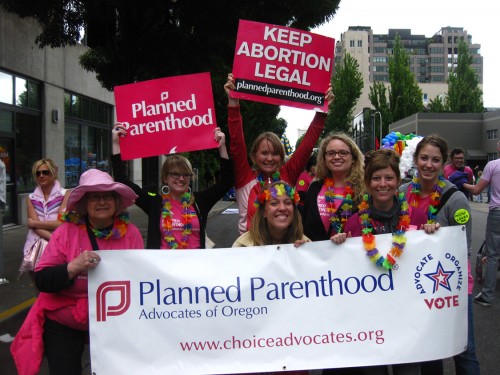
Portland-Pride-2-500x375

By Jimmy Radosta, Special to PQ Monthly

In the 45 years since the Stonewall riots — where the modern LGBTQ movement was born —we’ve seen extraordinary progress on LGBTQ rights in this country, including last year’s historic ruling against the Defense of Marriage Act and 2011’s repeal of “Don’t Ask, Don’t Tell.” Here in Oregon we finally achieved marriage equality in May, and we’re one of only five states that have affirmed that transition care for transgender individuals should be considered an essential part of medical coverage.

This progress is rooted in the same principles that underlie reproductive rights: that politicians should not get to decide what you do with your body or what your family looks like, and that rights in this country should not depend on the state you live in.

We at Planned Parenthood Advocates of Oregon believe that reproductive rights are deeply connected to civil rights for all Americans. We have long stood with LGBTQ people in the struggle for full equality — many of whom turn to Planned Parenthood for health care, information and education.

Members of the LGBTQ community face greater obstacles to obtaining and benefiting from sexual and reproductive health services than non-LGBTQ people. In addition to high rates of stress due to systematic harassment and discrimination — which has been shown to affect physical and mental health — LGBTQ people face low rates of health insurance coverage, high rates of HIV/AIDS and cancer, and high rates of discrimination from medical providers. LGBTQ people of color are at an even higher risk for these disparities.

This is why Planned Parenthood health centers throughout Oregon welcome LGBTQ patients for STD testing and treatment, lifesaving cancer screenings, and other preventive services. Planned Parenthood Columbia Willamette’s “Equal Access Fund” helps provide gynecological exams for women and trans men who aren’t covered by state pregnancy-prevention funding but meet the same economic requirements.

Planned Parenthood also delivers sex education that covers the full range of topics affecting sexual health, and we provide sensitive and accurate information on sexual orientation and gender identity to Oregonians of all ages every day. Oregon is one of only 12 states to require its sexual health curriculum to be medically accurate. This means that, in the rest of the country, young people are receiving false information about birth control’s effectiveness and the right way to prevent STDs.

While this country has seen significant strides in the LGBTQ movement in recent years, there is still work to be done. This year Oregonians faced the possibility of a ballot measure that could have allowed corporations to deny services to same-sex couples. Meanwhile, the U.S. Supreme Court is expected to rule this month on a lawsuit that could allow corporations like Hobby Lobby to deny their employees insurance coverage for birth control because of their personal beliefs. This could create a slippery slope and let bosses deny a whole host of other medical procedures based on their own personal beliefs – such as vaccines, surgeries, blood transfusions and mental health care. The bottom line is this: When secular, for-profit corporations hire and serve the general public, they shouldn’t get to pick and choose which laws to follow. Planned Parenthood Advocates of Oregon vows continued support for any future legislative efforts that will allow for greater access to health care and information for the LGBTQ community in our state.

At Planned Parenthood, we realize that our incredible patients and supporters don’t comprise any one identity, and we’re grateful for the many volunteers, staff and supporters of all genders and identities who work every day to ensure that Oregonians get the health care and information they need.

This year, 45 years after the birth of the modern LGBTQ movement at Stonewall, we are committed now more than ever to fighting for LGBTQ rights. We know the only way we can move forward — all of us together — is by standing side by side.

Jimmy Radosta is the Communications Director for Planned Parenthood Advocates of Oregon. For more information visit PPAOregon.org.


Source: http://www.pqmonthly.com/standing-together-reproductive-rights-lgbtq-rights/19898

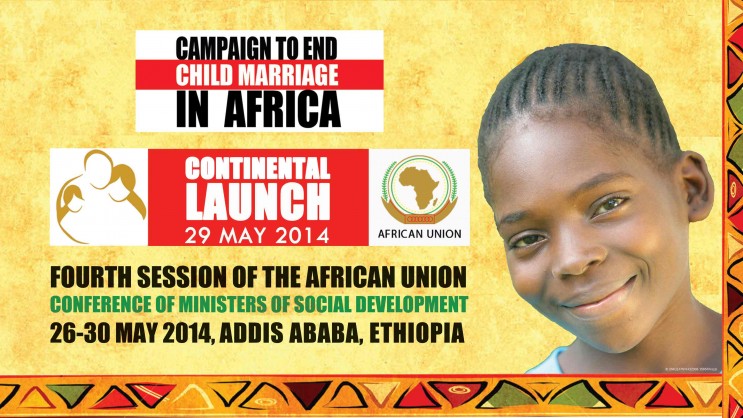
African Union launches its first-ever campaign to end child marriage

  • Africa is home to 15 out of 20 countries with the highest rates of child marriage
  • Two-year campaign will aim to accelerate efforts to end child marriage across the continent
  • "Together we can make Africa free of child marriage" says UNICEF ambassador Angelique Kidjo

3-Banner1CHILDMARRIAGEemail-743x418

Every year, 14 million girls are married off before they turn 18, with devastating consequences for their health, education and wellbeing. 15 out of the 20 countries with the highest rates of child marriage are in Africa.


In an effort to provide a bright future for millions of women and girls, the African Union has launched the first-ever Campaign to End Child Marriage in Africa. The two-year campaign, organised in partnership with UNICEF and UNFPA, will focus on accelerating change across the continent by encouraging African governments to develop strategies to raise awareness of and address the harmful impact of child marriage.


The campaign also aims to support policies and action that protect girls’ human rights, and to remove barriers to law enforcement.


The campaign brings together a large range of partners including the Ford Foundation, the United Nations Economic Commission for Africa (UNECA), Save the Children, Plan International, Africa Child Policy Forum (ACPF) and the UK Department for International Development (DFID).


Ms Nyaradzayi Gumbonzvanda, the General Secretary of the World Young Women’s Christian Association (YWCA), a member of Girls Not Brides, was named Goodwill Ambassador for the Campaign to End Child Marriage in Africa.


The impact of child marriage on Africa’s girls

Child marriage is a reality for millions of children – predominantly girls – across Africa. 39% of girls in sub-Saharan Africa are married before their 18th birthday; 13% are married by their 15th birthday.

factograph4 (.JPG)​The repercussions of marrying as a child affect girls throughout their lives. Marriage often marks the end of girl’s education, limits her economic opportunities outside the home, and exposes her to physical, sexual and emotional violence.


Child marriage also threatens efforts to improve maternal health across Africa. Child brides face higher risk of death and injury in pregnancy and childbirth, with girls under 15 being five times more likely to die in childbirth than women in their 20s. Their children are at risk too: when a mother is under 18, her baby is 50% more likely to die in its first year of life than a baby born to older mothers.


#EndChildMarriageNOW: Join the campaign on social media

Africans are raising their voices on social media in support of the campaign.


Source: http://www.girlsnotbrides.org/african-union-launches-first-ever-campaign-end-child-marriage/?utm_source=CM+in+the+News+-+Update+to+members&utm_campaign=8afeeeba09Child_marriage_in_the_news_5_June_20146_5_2014&utm_medium=email&utm_term=0_c21d02558c-8afeeeba09-382381337

Nigeria: Post-2015 Agenda – Addressing the Inadequacies in Women’s Rights

kimse-yok-mu-asevinde

Women rights activists and Civil Society Organisations (CSOs) recently gathered in Istanbul, Turkey to address the failures of the Millennium Development Goals (MDGs) on the rights of women, and proffer solutions for inclusion in the post-2015 agenda, at an event organised by the Journalists and Writers Foundation of Turkey. Damilola Oyedele was there.

Have the Millennium Development Goals (MDGS) failed to adequately address issues of women rights across the globe? The High Commissioner, United Nations Commission for Human Rights (UNCHR), Ms. Navi Pillay, certainly thinks so. For her, the MDGs did not address a number of critical issues bordering on women as they are too narrowly defined.

In a video message to participants at the Summit on Women's Perspectives on UN Post 2015 Development Agenda held in Istanbul recently, Pillay lamented that the MDGs failed to address the shocking crimes of Gender Based Violence (GBV), failed to highlight a demand for equal access for women to the common goods of education, housing, sanitation and water.

According to her, they also ignored the terrible burden of conflict on women. By being too narrowly minded, Pillay believes the MDGs restricted women issues to those affecting motherhood and the injustice of women's unpaid work.

"Our new framework for development must therefore be built upon the great human right treaties that form the bedrock of our international system. Its goals must be aligned with those of human rights including freedom from want, freedom from fear, non-discrimination and equality and protection of our environment. In each area, our new development framework must specify the actions that would be needed to ensure women's rights with explicit reference to realities of women's lives and the long and suffocating legacy of discrimination," she said.

Summit Focus The two day summit, organised by the Journalists and Writers Foundation, a Turkish NGO which holds a General Consultative Status with the UN Economic and Social Council (ECOSOC), was aimed at contributing to the process of the post-2015 new agenda named the Sustainable Development Goals (SDGs).

Highlights of the agenda for the 306 participants and 109 NGOs from 44 countries include eradication of poverty: what should be done in post-2015 development agenda to go further, specific policies for women, ways to change the rhetorics from that of 'charity' to that of partnership and the creation of decent work for inclusive growth.

Filling the Gaps Under the Women's Empowerment agenda, participants examined modalities for the prevention and elimination of all forms of violence against women and girls, ensuring equal rights of women to own and inherit property, equal opportunities in decision making positions, enabling gender equality in employment and eliminating obstacles for women to enter political, economic and public life.

Other highlights on the agenda for discussion included health, education, food security, water supply and sanitation, environment and climate change and energy, sustainable economic development, peace and good governance.

Victims of Discrimination From Albania, to Norway, to Lithuania, to Nigeria, to Mozambique, to Istanbul, one thing was clear, that several years following the Beijing Declaration and Platform of Action (1995) and the Cairo Declaration on Population and Development (2004), women across the world continue to suffer all forms of discrimination despite their national governments being signatories to agreements from these declarations.

In Egypt, although women were fully a part of the revolution tagged 'Arab Spring', they were labelled unpatriotic when they put forward the gender agenda before the new political class. In Albania, only six per cent of farmlands are owned by women, and 87 per cent of women do not get paid for the work they do. In Turkey, only 25 per cent of women are in the country's labour force, and women have been cast primarily as home makers who should be dependent on their husbands.

In India, reports of rape and bride murders continue to dominate the headlines. In Pakistan, the right of choice in marriage continues to be elusive for most women. In Sudan, women risk being stoned to death if they exercise choice in marrying outside their religion. In Saudi Arabia, women are still denied the right to drive, even though it is the 21st century.

In Nigeria, half-hearted gender equity attempts by the different arms of government have helped to perpetuate GBV, child marriage, female genital mutilation, trafficking in women and girls, unequal opportunities and others, through what has been labelled the need to preserve social and cultural values. Nigerians would remember how the Senate during the last constitutional amendment exercise deliberately refused to peg the marriage age at 18 years, in deference to religious and cultural sensibilities.

Changing the Mindset The attitude which fuels such half-hearted attempts, as the former Executive Director of the UNFPA, Dr. Nafis Sadik, at the summit puts it, is that girls are safer within the 'confines' of marriage. Now Special Adviser to the Executive Director of UNAIDS, Sadik believes that a major step towards gender equity and equality is to work to change the mindset of communities and national leaders that gender equality is in everyone's interest.

"…that resources devoted to universal access to reproductive and sexual health and information and services for girls and women must be an important part of the health agenda. To take action against unsafe abortion does not mean that you must deny that abortion exists. Drive home the message that education, empowering girls and women are essential to economic security, social integration and the whole country's progress in the area of all of these development goals," she said while addressing participants.

According to the UN, 40 million girls under the age of 18 are at the risk of early marriage globally, and because of this, the highest cause of death among girls between the ages of 15-19 is maternal death especially in South Asia and sub-Saharan Africa.

"…some families still believe that girls are safer in marriage than in school and their leaders allow the belief to persist. In many girls and many people's minds even today, women's role is in marriage and having children, and girl's education is only a preparation for that. In that case, they think education need not include sexual and reproductive health rights. In fact, they think it should not be included because it might give girls ideas they should not be having," Sadik lamented.

"We still have a long way to go. In my travels and discussions, I still find policy makers and even national leaders themselves who somehow regard essential services for girls and women as a matter of social welfare and even charity. They think of pregnancy and childbirth as part of the normal things, something that just happens. Apparently in their minds, women's death and disability just happen too. To the tune of 320,000 maternal deaths a year and 10 times that number of infections and injuries, they are hardly concerned with the oppression which make up women's daily lives," she added.

Sensitive Heartbeat As Pillay summarises, the heartbeat of the new agenda must be the heartbeat of accountability, it must track progress of each target and deploy much more accurate and pertinent information on discriminatory laws, unpaid work, inequality within the home, gender based violence, and women's sexual and reproductive health.

"Women's rights are inseparable from men's. They are not optional. Protecting and promoting women's equality is the responsibility of every government. Human rights will only be respected and our societies will only flourish when governments deliver on that responsibility," she summarised.

Is Anyone There? On the sidelines of the summit, THISDAY visited the Kimse Yok Mu (meaning Is anyone there?), a sister organisation of the JWF. It is a NGO that works to provide humanitarian aid particularly in disaster areas. Established in 2002, the name was coined after the 1999 earthquake in Turkey where those trapped under wreckage and their rescues were shouting at each other: "is anyone there?".

The NGO, although it has no branches outside Turkey, currently works in 110 countries with like-minded NGOs resident in those countries or individuals. It has 60,000 volunteers working in all its 41 branches across Turkey.

The Public Relations Officer of the Istanbul branch, Ms. Fatima Demirtas, told THISDAY about Kimse Yok Mu's collaboration with the Nizamiye hospital in Abuja to provide 1,000 cataract surgeries for indigent Nigerians. The NGO would pay for the cost of each unit of materials used for the surgeries.

Kimse Yok Mu professional volunteers provide psychological support to those traumatised by disasters, and build temporary shelters for families that have lost their homes. Poor families are assisted to become economically empowered and their debts are paid off where they exist. The NGO currently has at least 500 Somalis studying in Turkey on scholarship.

Some of its volunteers make items such as table-clothes, shawls, embroidered outfits, etc for sale to raise funds for the humanitarian work. "Some of the ladies choose to volunteer their services at the centre instead of just staying at home. We do not pay them any money for their services but they get to socialise with each other and do some good to humanity," Demirtas said.

She also explained that the organisation carries out adequate investigations to verify claims that a family or individual is indigent before including such on its charity programmes. This, she said, is to ensure that the services go to those who truly deserve them.


5 June 2014

Source: All Africa


NGOs roll out sex freedom drive in Kenya

Kenya Story

Civil society groups in Kenya have started collecting signatures in a new campaign to promote sexual freedom. The campaign targets one million signatures and the support of MPs.


Although it mainly focuses on family planning and reproductive health, the “I Decide” campaign might run into trouble in Kenya because it also wants anti-homosexuality laws repealed. It is also asking the government to provide safe and legal abortion to women.


“We want a world in which sexuality is recognised both as a natural and precious aspect of life,” said Family Health Options Kenya (FHOK), who are coordinating the campaign locally.


FHOK director Edward Marienga said asked politicians to support people’s “rights to decide what happens to their bodies, who they live with and whether or not they become pregnant.” The Kenyan campaign was launched in Nairobi yesterday by Moi University Chancellor Prof Miriam Were.


“Sustainable development and gender equality will be achieved when everyone has access to sexual and reproductive health, the right to bodily integrity, and control over all matters related to their sexuality,” she said. Prof Were further asked the government to expand family planning. “For every $1 invested in family planning $31 in additional public service and health expenditure is saved,” she said.


Organisers want the UN to include sexual and reproductive health and rights among the new global targets to replace the Millennium Development Goals next year. The one million signatures will be presented to UN Secretary-General Ban Ki-Moon mid next year.


Giant pro-abortion lobby International Planned Parenthood Foundation (IPPF) is coordinating similar campaigns in other countries across the world. Health Cabinet Secretary James Macharia said in a statement he supports the campaign. “The Ministry of Health in Kenya is willing to prioritise sexual reproductive health in support of what FHOK in partnership with IPPF are doing,” he said.


The campaign is also petitioning the government to end violence against women and forced marriage. FHOK said in a statement the government should not decided for people what to do with their own bodies, who to love and how. “Shockingly many women and men around the world are denied these basic rights by governments and by tradition,” it said. The campaign hopes to have these rights guaranteed across the world by 2020.


By John Muchangi

16 May 2014

Source: http://www.the-star.co.ke/news/article-167325/ngos-roll-out-sex-freedom-drive-kenya#sthash.M4QAfxk6.dpuf

Open Working Group on Sustainable Development Co-Chairs release the Zero draft for OWG-12

OWGlogo

Zero draft  

The Co-Chairs have now released the “zero draft” of goals and targets, in preparation for the 12th Session of the Open Working Group on Sustainable Development Goals (OWG-12), which takes place 16-20 June at the United Nations in New York.

Accompanying letter from Co-Chairs

In their accompanying letter they refer to the draft chapeau that has now been incorporated into the zero draft. They also reconfirm the dates for the informal-informals (informal discussions), which will take place from Monday to Wednesday, 9-11 June. Their purpose is to “take an initial sounding of delegations’ views on the zero draft” and to provide an opportunity for Member States “to consult on the proposed goals, their targets and means of implementation contained in the zero draft. They also reminded Member States that only 10 days of formal work remain for the OWG process. The full text of the letter is available here.

Introduction and Proposed Goals and Targets on Sustainable Development for the Post2015 Development Agenda – Preliminary comments

In addition to the introduction, the zero draft provides a list of proposed sustainable development goals (SDGs) that are based on and replace the focus areas, as included in the working document that was discussed in OWG-11.  Each proposed goal has a number of proposed targets. The final proposed goal, proposed goal 17, includes suggestions for means of implementation. 

It should be noted that proposed goal 3 is now “Attain health life for all at all ages” with “population dynamics” being dropped from it. Proposed goal 4 is “Provide equitable and inclusive quality education and life-long learning opportunities for all” and proposed goal 5 is “Attain gender equality, empower women and girls everywhere.” 

A preliminary look at the zero draft shows that under proposed goal 3 there is a separate target on reducing the maternal mortality ratio, as well as targets on child mortality and on HIV, tuberculosis, malaria and neglected tropical diseases. There are targets on non-communicable diseases, universal health coverage and healthy life expectancy.  Target 3(f) in the working document has now been become “ensure universal access to sexual and reproductive health for all” in target 3.8.

Target 4.7, under proposed goal 4 on education curricula now reads: “…integrate relevant knowledge and skills in education curricula and training programmes…” It refers to “education for sustainable development and awareness raising on cultures contribution to sustainable development.” Comprehensive sexuality education has not been included.  Meanwhile ICT skills have been dropped.

Proposed goal 5 now includes female genital mutilations as well as child, early and forced marriage in target on eliminating all harmful practices. Target 5.9, like target 5(i) in the working document, says “ensure universal access to sexual and reproductive health and reproductive rights,” however, “in accordance with the Programme of Action of the ICPD” has been added.

While there is no specific reference to population dynamics, issues related to migration can be found in goals including proposed goal 8 “Promote strong, inclusive and sustainable economic growth and decent work for all” and the proposed goal 11 “Build inclusive, safe and sustainable cities and human settlements” addresses issues related to urbanization. It should be noted that issues related to young people and the elderly are still not adequately addressed. 

There are still only limited references to human rights in the goals themselves. The introduction, however, specifically states: “We reaffirm …respect for all human rights…” It then goes on to reaffirm “the importance of the Universal Declaration of Human Rights, as well as other international instruments relating to human rights and international law.”

Proposed goal 10 “Reduce inequality within and among countries” has been re-introduced and contains two parts – “Reduce inequality among social groups within countries” and “International actions to reduce inequalities among nations.”  The former includes the following targets: 10.1 “eliminate discriminatory laws, policies and practices” and 10.5 “empower and promote the social and economic inclusion of …women, minorities, migrants, persons with disabilities, older persons, children and youth.” 

As we move towards the OWG-12, for which we do not yet have the agenda and programme of work, we will have further comments on the zero draft. Click here to read the full Zero Draft. 

3 June 2014

Source: http://ngosbeyond2014.org/articles/2014/6/3/open-working-group-on-sustainable-development-co-chairs-rele.html