Category Archives: Sexual Diversity

Pressure on SA to host talks to end gay persecution

download (1)

Rights groups are putting pressure on SA to hold an Africa-wide seminar on discrimination and violence that has been postponed several times.


The department of international relations and co-operation says it still plans to host an Africa-wide seminar on violence against people because of their sexual orientation and gender identity, even though the meeting has been postponed several times since it was first mooted more than a year ago.


Altogether 38 African countries have laws that criminalise homosexuality and in Mauritania, Sudan and Nigeria it is punishable by death. The issue has lately become a political tool for some African heads of state, such as Uganda’s President Yoweri Museveni. Last week, the Ugandan Constitutional Court rejected a new anti-gay law that would have imposed even more stringent regulations against homosexuality than those already in place.


Rights groups across the continent now accuse South Africa of stalling on the crucial meeting to follow up on a United Nations report titled Discriminatory Laws and Practices and Acts of Violence Against Individuals Based on Their Sexual Orientation and Gender Identity.


“It is essential for policymakers and gatekeepers to have a dialogue with civil society on this issue,” says Tendai Thondhlana, spokesperson for African Men for Sexual Health and Rights (Amsher), based in Johannesburg. “In some countries, governments say violence against sexual minorities doesn’t exist. It is up to us to show them the evidence.”


South Africa, together with Brazil and Norway, was instrumental in passing a resolution at the UN Human Rights Council in June 2011 that led to the report on the issue.


Regional seminars were then held all over the world that fed into the International Conference on Human Rights and Sexual Orientation and Gender Identity in Oslo in April 2013. But none were held in Africa.


No meeting

In March this year, South Africa’s minister of international relations and co-operation, Maite Nkoana-Mashabane, told the UN Human Rights Council that the meeting would be held before the end of June this year, but this has not happened.


The international relations and co-operation department’s spokesperson, Nelson Kgwete, responding to written questions from the Mail & Guardian, says: “South Africa is planning to hold the African regional seminar focusing on finding practical solutions for violence and discrimination against persons based on sexual orientation and gender identity.


“The objective thereof will be to facilitate an open and constructive dialogue on the issue of discrimination and acts of violence against individuals … and generate greater understanding on the root causes of these challenges. It is key to note that the objective of the seminar is not to create new or special rights.”


Kgwete denies that South Africa is succumbing to pressure from other African countries where anti-homosexual laws are in place.


“South Africa remains a sovereign and democratic state, founded on values of, among others, human dignity, the achievement of equality and the advancement of human rights and freedoms, nonracialism and nonsexism.


“South Africa conceived and initiated the idea of the regional seminar without pressure from any country, both inside and outside of the African continent,” says Kgwete.


Pepe Julien Onziema, programme director at Sexual Minorities Uganda, told the M&G telephonically that organisations on the continent understand that, in the current climate, there is a lot of pressure on South Africa in the UN Human Rights Council and in the African Union. South Africa also wants to play an important role in issues of trade and security on the continent, he said, but it needs to stick to its prior commitments.


“South Africa at this point needs to take a stand because it has for many years now had laws protecting sexual minorities and has led the process in the past,” he said.


Rights organisation Amsher, together with the Coalition for African Lesbians, said in a statement that, even if not all African states attend the planned seminar, it should go ahead: “The worsening hostility and increasing violence against persons on the basis of their sexual orientation and gender identity and expression demands accountability,” they said.


In April this year, the African Commission on Human and Peoples’ Rights – an organ of the African Union – passed a resolution on ending violence against Africans based on their sexual orientation and gender identity, which was seen as a step in the right direction by human rights groups.


By Liesl Louw-Vaudran

8 august 2014

http://mg.co.za/article/2014-08-07-pressure-on-sa-to-host-talks-to-end-gay-persecution/

Young people demand sexual and reproductive health rights

Young-people_feature-634x252

The first time Alfred went to a HIV voluntary testing centre, the healthcare provider did not treat him well. As a gay man, his story is not so rare.

“He [healthcare worker] asked me are you a man or a woman? I answered I am a man. Then he asked me about my parents,” said Alfred, who lives on the Caribbean island of Saint Lucia.

“He just looked at me and treated me as if I was a disgrace to my parents. I decided not to go to the health centre after that. Because I do not want to go to a place where I am judged based on my sexual orientation. I am gay and I have sex. So what? ”

Challenges for youth to accessing sexual and reproductive health

Key populations in the HIV epidemic, such as men who have sex with men, sex workers and transgender people, have the same sexual and reproductive health rights as anyone else— the right to have sexual relations free from coercion, to have children and to protect themselves from infection.

Last week’s International AIDS Conference in Melbourne, Australia was an opportunity for young people, especially youth from key populations, including young people living with HIV, to discuss the barriers and challenges they face in accessing sexual and reproductive health services.

During a session moderated by the Athena Network and the International HIV/AIDS Alliance, one young panelist Violet Lindiwe, 23, from Malawi, said: “In my community, when you attend HIV testing and family planning, healthcare professionals are likely to judge you because they think you misbehaved and that’s why you are there.”

Myo Minn Htet, a young man from Indonesia, added: “Culture and religious beliefs make it very difficult to talk about sex and to go to sexual and reproductive health services. Moreover discrimination against young key populations make their access to these services more difficult.”

The legal age to attend health centres is also one of the barriers identified by young people. Annie Zamina from Malawi said: “In my country though the legal age to have sex is 16, you cannot go a clinic and ask for contraceptive pills without your parents’ approval. It seems that while the law says you’re old enough to have sex, you are still too young to use contraception or to protect yourself from HIV.”

young-people_inpost

Young people vulnerable to HIV infection and unwanted pregnancies

According to the UN, globally young people account for 40% of all new HIV infections. Each day, more than 2,400 young people become infected with HIV, and some 5 million young people aged 15–24 live with HIV.

Apart from HIV infection, poor access to sexual and reproductive health and sex education opens the door to many other consequences, such as unintended pregnancies and dropping out of school.

Violet said: “When you listen to me, you may think I have a PhD but in fact, I stopped school when I became pregnant. I have to care for me and my son now. And this is what happens to young women in my community when they get pregnant when still students.”

Integrated services

According to the World Health Organization, linking sexual and reproductive health with HIV services is an approach that has the potential to increase universal access to prevention, treatment, and care services.

This is what Link Up— a programme to improve the sexual and reproductive health and rights of young people—is trying to achieve. The project works with young people living with and affected by HIV in Bangladesh, Burundi, Ethiopia, Myanmar, and Uganda and is implemented by a consortium of organisations, including the International HIV/Aids Alliance, Global Youth Coalition against Aids, and the Athena Network.

Sexual and reproductive health rights

Reproductive rights only become tangible when reproductive health services that offer a high quality of care are made widely available. Availability includes both affordability and easy access, which also implies a range of services under one roof.

Like Alfred, Rebeccah, a young woman living with HIV from Zimbabwe, was also treated badly the first time she went to a clinic to receive counselling about contraception. She said: “The nurse said she was surprised I was still having sex considering my ‘condition’. And she told me I should abstain from sex since I am HIV positive. I cried a lot in her office and decided not to go to that clinic anymore.”

But Rebeccah, like many other young people, is now getting to grips with her rights. “As a young woman living with HIV, I am sexually active and I have the right to go a clinic for family planning services,” she said. “My status should not be an argument to be denied this service. And I really hope people should not use our status, our sexual orientation or sex work as argument to deny access to healthcare because we need, no, we demand access to comprehensive sexual and reproductive health services.”

Nina Benedicte Kouassi is a member of the Key Correspondents network, which focuses on marginalised groups affected by HIV to report the health and human rights stories that matter to them. The network is supported by the International HIV/AIDS Alliance.

Feature image credit: Sheikh Rajibul Islam/International HIV/AIDS Alliance

In-post image credit: Julie Mellin/GYCA

By Nina B. Kouassi

30 July 2014

Source: http://stayingalivefoundation.org/blog/2014/07/young-people-demand-their-sexual-and-reproductive-health-rights/

Uganda anti-gay law declared ‘null and void’ by constitutional court

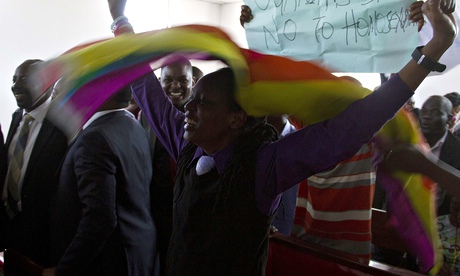
Members of Uganda's gay community reacts as the anti-gay law is declared null and void

Judges strike down legislation on a technicality, but activists say homosexuality remains criminal offence under colonial-era laws.


Gay rights campaigners in Uganda and around the world are celebrating a decision by the country's constitutional court to strike down a widely condemned anti-gay law on a legal technicality.


Activists in the courtroom cheered after a panel of five judges ruled on Friday that the speaker of parliament acted illegally when she allowed a vote on the measure despite at least three objections that not enough MPs were in attendance.


"The speaker was obliged to ensure that there was quorum," the court said in its ruling. "We come to the conclusion that she acted illegally."


While celebrating the ruling, activists warned that homosexuality remained a criminal offence in the east African country under colonial-era laws.


The fiercely controversial statute represented a dramatic toughening of the penalties. It banned the "promotion of homosexuality" and enabled life sentences to be imposed for various same-sex acts, including touching in public or living in a same-sex marriage. Activists also warned the state could appeal against the ruling in the supreme court and legislators might try to reintroduce new anti-gay measures.


President Barack Obama described the legislation as "a step backward for all Ugandans", and several donors suspended aid. But Uganda's president, Yoweri Museveni, signed it into law in February, watched by cheering crowds. Asked about homosexuality on CNN, Museveni said: "They're disgusting. What sort of people are they? I never knew what they were doing. I've been told recently that what they do is terrible. Disgusting."


The challenge to the law was brought by 10 petitioners, including academics, journalists, both ruling party and opposition MPs, human rights activists and rights groups. They claimed that it violated the constitutional right to privacy and dignity, as well as the right to be free from discrimination and cruel, inhuman and degrading treatment.


Friday's ruling was made in a courtroom packed with opponents and supporters of the measure. Among those present was Frank Mugisha, director of Sexual Minorities Uganda, who said: "We welcome this ruling and Uganda's lesbian, gay, bisexual and transgender community can celebrate a small victory against oppression.


"However, we are disappointed that the case was not heard on its true merits. The truth is that not only is the anti-homosexuality act persecutory, it is also unconstitutional and illegitimate. This law has no place in our society, which values dignity, privacy and equality for all our citizens. Until the act has been dismissed on the substance of our arguments, we cannot rest easy."


Ugandan lawyer Ladislaus Rwakafuuzi, a lawyer representing the activists, said the ruling "upholds the rule of law and constitutionalism in Uganda".


Homophobia is widespread in the socially conservative country, where American evangelical Christian groups have been accused of fuelling prejudice. The legislation was seen as a political ploy by Museveni to shore up support before elections in 2016, which will be his 30th year in power.


The court's intervention allows him to blame others for its defeat while also placating western donors, who were reluctant to punish a military ally.


Outspoken anti-gay preacher Martin Ssempa had suggested that the petition was being pushed to mend Uganda's international reputation before Museveni travels to Washington next week to meet Obama at a landmark US-Africa summit. "There are efforts … to drum up a legal precedent to try to show [Washington] that, 'Hey, we are not that bad on homosexuality,'" Ssempa told Agence France-Presse this week.


The US last month froze some aid programmes, as well as cancelling military air exercises and barring entry to the US for specific Ugandan officials involved in "human rights abuses", including against the gay community.


Rights groups claimed that the law had led to a sharp increase in arrests and assaults on members of the gay and lesbian community. Its annulment was welcomed by the Human Dignity Trust, an organisation of international human rights lawyers challenging anti-gay laws across the world.


Jonathan Cooper, its chief executive, said: "It's a fantastic victory for the rule of law. That Uganda's gay and lesbian community has won a reprieve today from the oppression of the loathsome anti-homosexuality act, we can only celebrate.


"The brilliance and determination of the activists who have pursued this challenge serve as an inspiration to us all. It is also heartening to know that the rule of law has prevailed and politicians are shown not to be above the procedures that govern them.


"However, this is but a temporary fix; the fight is far from over. The international community must seize this opportunity to support Ugandan's gay and lesbian citizens in their battle for the basic freedom from persecution. Now the act has gone, we must do all we can to stop it coming back. Uganda's constitution – which protects citizens' rights to privacy and dignity – must be for all Ugandans."


Dr Paul Semugoma, a Ugandan gay rights activist based in South Africa, said: "I am over the moon. Very happy. But we have had legal victories before. It was struck down on a technicality. It may return.


"In Uganda, homophobia is such an inherent part of culture now that opportunistic politicians are likely to bring it back. They would pass it."


Sarah Jackson, deputy regional director of Amnesty International, said: "Even though Uganda's abominable anti-homosexuality act was scrapped on the basis of a technicality, it is a significant victory for Ugandan activists who have campaigned against this law.


"Since it was first being floated in 2009, these activists have often put their safety on the line to ensure that Ugandan law upholds human rights principles.


"We now hope that this step forward translates into real improvements in the lives of lesbian, gay, bisexual, transgender and intersex people in Uganda, who have been trapped in a vicious circle of discrimination, threats, abuse and injustice for too long."


Kosiya Kasibayo, a state attorney, said that a decision had not been made on whether to appeal against the ruling in the supreme court.


By David Smith

1 August 2014

Source: http://www.theguardian.com/world/2014/aug/01/uganda-anti-gay-law-null-and-void

World leaders review progress on Maternal health

PMNCH-Forum_2014_PMNCH

Prime Minister Erna Solberg of Norway, Co-chair of the MDG Advocates Group, and Graça Machel, Chair of The Partnership for Maternal, Newborn & Child Health (PMNCH), joined world leaders and the reproductive, maternal, newborn and child health (RMNCH) community to review progress toward achieving the  Millennium Development Goals focused on women and children’s health, and to identify targets for healthy women and children for the post-2015 sustainable development agenda.


The high-level panel of the MDG Advocates—a group of eminent personalities working to focus attention on the need to deliver on the vision for the Millennium Development Goals (MDGs) and to end poverty by 2030—met in Johannesburg at the 2014 PMNCH Partners’ Forum, cohosted by the Government of South Africa, PMNCH, Countdown to 2015, A Promise Renewed, and the independent Expert Review Group.  The Panel discussed several new reports released at the Forum, including the Countdown to 2015 report for 2014, which tracks progress in the  75 countries that account for the vast majority of maternal and child deaths, and the Success Factors for Women’s and Children’s Health report, which analyzes 10 countries that have made rapid progress toward the MDGs.


“Globally, we have made good progress on the MDGs,” said Prime Minister Solberg. “But more can and must be done. With fewer than 550 days until the Millennium Development Goals deadline, time is of the essence to scale up our efforts on behalf of women, children and adolescents.”


The leaders called for the new sustainable development agenda to be rights-based, equity focused and to place healthy women, children and adolescents at its core.  Leaders called for the new framework, which will be debated by the UN General Assembly in September, to focus on ending preventable maternal, newborn and child mortality, and to  ensure sexual and reproductive rights, including universal access to quality sexual and reproductive services.


Since 1990, both maternal and child mortality have halved and 50 million more children go to school each year. But many challenges remain and further rapid progress on health outcomes will require addressing the multiple determinants of health. For instance, every year 14 million girls are forced into marriage, and in many countries, women and girls still do not have access to adequate education.


“Across the world, the rights of women and girls continue to be grossly violated. The burden of poverty on women is ever present.” said Graça Machel.  “Every woman should have access to resources and gain space to assert her aspirations. Nobody should die in child birth. All girls should go to school with their brothers and master the tools for a productive life. ”


The Panel also previewed the PMNCH Partners’ Forum Communiqué, which will focus on working across sectors—including education, infrastructure, and economic development—to ensure a comprehensive, broad-based approach to improving women’s and children’s health. The Communique, which was endorsed by the MDG Advocates, called for this comprehensive response to be enshrined in specific new global development goals.


“We proved that Innovative Financing can help us to reach the MDGs” said Philippe Douste-Blazy, United Nations Special Advisor on Innovative Financing for Development. “New partners are uniting in South Africa to commit energy and resources towards innovation and saving lives.”


Dr. Carole Presern, Executive Director of PMNCH,  said, “Today, we leave with renewed energy to make sure that women, newborns, children and adolescents do not die from easily preventable causes; that sexual and reproductive health and rights are respected and that everyone, everywhere should be able to look forward to a healthy, happy and productive life..”


Source: http://www.spyghana.com/world-leaders-review-progress-maternal-health/

Invest in Adolescents and Young People for a Better Future

logo

The Partnership for Maternal, Newborn and Child Health (PMNCH) Partners’ Forum begins on June 30th in South Africa. The annual conference brings together global partners in the maternal, newborn, and child health communities to discuss trends, challenges, and opportunities in ensuring the wellbeing and empowerment of the world's children and women. With the Millennium Development Goals set to expire in 2015, this year’s conference will have a particular focus on envisioning the post-2015 development framework. Ahead of the event, Women Deliver launched a new infographic and co-hosted a Google+ Hangout with Girls’ Globe and young leaders to reignite a conversation about the importance of investing in the health and rights of adolescents and young people.

The new infographic brings attention to the current global status of today’s youth. It highlights the barriers that young people, particularly young women, face in fully realizing their rights and makes the case for meaningful youth participation in the development processes. The infographic joins six others in a series, all devoted to a variety of girls’ and women’s health and rights issues.

The Google+ Hangout was moderated by Julia Wiklander from Girls’ Globe and Women Deliver Young Leader Yemurai Nyoni from Zimbabwe and Kelly Thompson from the International Federation of Medical Students’ Associations, among others, joined the discussion. Participants shared their perspectives on why governments must recognize the human rights, including the sexual and reproductive rights, of young people, as well as include youth voices in the design and implementation of programs that affect their lives.

View the infographic here.

Source: http://www.womendeliver.org/updates/entry/invest-in-adolescents-and-young-people-for-a-better-future


Nigeria: Post-2015 Agenda – Addressing the Inadequacies in Women’s Rights

kimse-yok-mu-asevinde

Women rights activists and Civil Society Organisations (CSOs) recently gathered in Istanbul, Turkey to address the failures of the Millennium Development Goals (MDGs) on the rights of women, and proffer solutions for inclusion in the post-2015 agenda, at an event organised by the Journalists and Writers Foundation of Turkey. Damilola Oyedele was there.

Have the Millennium Development Goals (MDGS) failed to adequately address issues of women rights across the globe? The High Commissioner, United Nations Commission for Human Rights (UNCHR), Ms. Navi Pillay, certainly thinks so. For her, the MDGs did not address a number of critical issues bordering on women as they are too narrowly defined.

In a video message to participants at the Summit on Women's Perspectives on UN Post 2015 Development Agenda held in Istanbul recently, Pillay lamented that the MDGs failed to address the shocking crimes of Gender Based Violence (GBV), failed to highlight a demand for equal access for women to the common goods of education, housing, sanitation and water.

According to her, they also ignored the terrible burden of conflict on women. By being too narrowly minded, Pillay believes the MDGs restricted women issues to those affecting motherhood and the injustice of women's unpaid work.

"Our new framework for development must therefore be built upon the great human right treaties that form the bedrock of our international system. Its goals must be aligned with those of human rights including freedom from want, freedom from fear, non-discrimination and equality and protection of our environment. In each area, our new development framework must specify the actions that would be needed to ensure women's rights with explicit reference to realities of women's lives and the long and suffocating legacy of discrimination," she said.

Summit Focus The two day summit, organised by the Journalists and Writers Foundation, a Turkish NGO which holds a General Consultative Status with the UN Economic and Social Council (ECOSOC), was aimed at contributing to the process of the post-2015 new agenda named the Sustainable Development Goals (SDGs).

Highlights of the agenda for the 306 participants and 109 NGOs from 44 countries include eradication of poverty: what should be done in post-2015 development agenda to go further, specific policies for women, ways to change the rhetorics from that of 'charity' to that of partnership and the creation of decent work for inclusive growth.

Filling the Gaps Under the Women's Empowerment agenda, participants examined modalities for the prevention and elimination of all forms of violence against women and girls, ensuring equal rights of women to own and inherit property, equal opportunities in decision making positions, enabling gender equality in employment and eliminating obstacles for women to enter political, economic and public life.

Other highlights on the agenda for discussion included health, education, food security, water supply and sanitation, environment and climate change and energy, sustainable economic development, peace and good governance.

Victims of Discrimination From Albania, to Norway, to Lithuania, to Nigeria, to Mozambique, to Istanbul, one thing was clear, that several years following the Beijing Declaration and Platform of Action (1995) and the Cairo Declaration on Population and Development (2004), women across the world continue to suffer all forms of discrimination despite their national governments being signatories to agreements from these declarations.

In Egypt, although women were fully a part of the revolution tagged 'Arab Spring', they were labelled unpatriotic when they put forward the gender agenda before the new political class. In Albania, only six per cent of farmlands are owned by women, and 87 per cent of women do not get paid for the work they do. In Turkey, only 25 per cent of women are in the country's labour force, and women have been cast primarily as home makers who should be dependent on their husbands.

In India, reports of rape and bride murders continue to dominate the headlines. In Pakistan, the right of choice in marriage continues to be elusive for most women. In Sudan, women risk being stoned to death if they exercise choice in marrying outside their religion. In Saudi Arabia, women are still denied the right to drive, even though it is the 21st century.

In Nigeria, half-hearted gender equity attempts by the different arms of government have helped to perpetuate GBV, child marriage, female genital mutilation, trafficking in women and girls, unequal opportunities and others, through what has been labelled the need to preserve social and cultural values. Nigerians would remember how the Senate during the last constitutional amendment exercise deliberately refused to peg the marriage age at 18 years, in deference to religious and cultural sensibilities.

Changing the Mindset The attitude which fuels such half-hearted attempts, as the former Executive Director of the UNFPA, Dr. Nafis Sadik, at the summit puts it, is that girls are safer within the 'confines' of marriage. Now Special Adviser to the Executive Director of UNAIDS, Sadik believes that a major step towards gender equity and equality is to work to change the mindset of communities and national leaders that gender equality is in everyone's interest.

"…that resources devoted to universal access to reproductive and sexual health and information and services for girls and women must be an important part of the health agenda. To take action against unsafe abortion does not mean that you must deny that abortion exists. Drive home the message that education, empowering girls and women are essential to economic security, social integration and the whole country's progress in the area of all of these development goals," she said while addressing participants.

According to the UN, 40 million girls under the age of 18 are at the risk of early marriage globally, and because of this, the highest cause of death among girls between the ages of 15-19 is maternal death especially in South Asia and sub-Saharan Africa.

"…some families still believe that girls are safer in marriage than in school and their leaders allow the belief to persist. In many girls and many people's minds even today, women's role is in marriage and having children, and girl's education is only a preparation for that. In that case, they think education need not include sexual and reproductive health rights. In fact, they think it should not be included because it might give girls ideas they should not be having," Sadik lamented.

"We still have a long way to go. In my travels and discussions, I still find policy makers and even national leaders themselves who somehow regard essential services for girls and women as a matter of social welfare and even charity. They think of pregnancy and childbirth as part of the normal things, something that just happens. Apparently in their minds, women's death and disability just happen too. To the tune of 320,000 maternal deaths a year and 10 times that number of infections and injuries, they are hardly concerned with the oppression which make up women's daily lives," she added.

Sensitive Heartbeat As Pillay summarises, the heartbeat of the new agenda must be the heartbeat of accountability, it must track progress of each target and deploy much more accurate and pertinent information on discriminatory laws, unpaid work, inequality within the home, gender based violence, and women's sexual and reproductive health.

"Women's rights are inseparable from men's. They are not optional. Protecting and promoting women's equality is the responsibility of every government. Human rights will only be respected and our societies will only flourish when governments deliver on that responsibility," she summarised.

Is Anyone There? On the sidelines of the summit, THISDAY visited the Kimse Yok Mu (meaning Is anyone there?), a sister organisation of the JWF. It is a NGO that works to provide humanitarian aid particularly in disaster areas. Established in 2002, the name was coined after the 1999 earthquake in Turkey where those trapped under wreckage and their rescues were shouting at each other: "is anyone there?".

The NGO, although it has no branches outside Turkey, currently works in 110 countries with like-minded NGOs resident in those countries or individuals. It has 60,000 volunteers working in all its 41 branches across Turkey.

The Public Relations Officer of the Istanbul branch, Ms. Fatima Demirtas, told THISDAY about Kimse Yok Mu's collaboration with the Nizamiye hospital in Abuja to provide 1,000 cataract surgeries for indigent Nigerians. The NGO would pay for the cost of each unit of materials used for the surgeries.

Kimse Yok Mu professional volunteers provide psychological support to those traumatised by disasters, and build temporary shelters for families that have lost their homes. Poor families are assisted to become economically empowered and their debts are paid off where they exist. The NGO currently has at least 500 Somalis studying in Turkey on scholarship.

Some of its volunteers make items such as table-clothes, shawls, embroidered outfits, etc for sale to raise funds for the humanitarian work. "Some of the ladies choose to volunteer their services at the centre instead of just staying at home. We do not pay them any money for their services but they get to socialise with each other and do some good to humanity," Demirtas said.

She also explained that the organisation carries out adequate investigations to verify claims that a family or individual is indigent before including such on its charity programmes. This, she said, is to ensure that the services go to those who truly deserve them.


5 June 2014

Source: All Africa


Zuma appoints first lesbian to cabinet

Brown

President Jacob Zuma, has appointed the country’s first openly gay cabinet minister, a move thought also to be a first in Africa and a symbolic step on a continent enduring a homophobic backlash.

Lynne Brown becomes the public enterprises minister in a cabinet that includes South Africa‘s first black minister of finance.

Brown, 52, who is coloured (of mixed race ancestry), was born in Cape Town and was premier of Western Cape until the African National Congress (ANC) lost control of the province to the opposition Democratic Alliance in 2009.

According to a 2008 profile of her by the South African Press Association, she began her career as a teacher and gained a certificate in gender planning methodology at University College London. “I can’t bear working in an environment where things don’t get done,” she was quoted as saying. “I’m not a flamboyant type of person; I get things done.”

Her personal interests were said to be playing golf, reading and “an admiration of arts and culture”.

She is not seen as a gay rights activist but her ascent to a cabinet post was described on Monday as a significant moment.

Eusebius McKaiser, a broadcaster and political author, who is gay, said: “It is, sadly, probably newsworthy, I guess, insofar as the social impact of openly gay people in high-profile public leadership positions cannot be discounted in a country like South Africa where levels of homophobia, including violence against black lesbian women, remain rife.

“The symbolism matters from an African perspective, too, given other countries around us are enacting and enforcing laws criminalising same-sex sex and lifestyles.”

Steven Friedman, director of the Centre for the Study of Democracy, said: “I think it’s worth drawing attention to. She’s not a gay rights campaigner – it’s not recognition in that sense – but the fact that under the most socially conservative president since 1994 there is the first openly gay minister in such a position is significant.”

South Africa was the first African country to legalise gay marriage but Zuma, a traditional Zulu polygamist, has been criticised for culturally fundamentalist remarks and failing to condemn anti-gay crackdowns in Nigeria and Uganda.

Asked by the Guardian in 2012 about his views on same-sex marriage, the president replied: “That does not necessarily require my view, it requires the views of South Africans. We have a constitution that is very clear that we all respect, which I respect. It has a view on that one, that gay marriage is a constitutionally accepted thing in South Africa. So, no matter what my views would be.”

Zuma, 72, who was inaugurated on Saturday for a second term, named Nhlanhla Nene as finance minister, the first black person to hold the position. Nene, 55, had served as deputy to the widely respected Pravin Gordhan, who is of Indian ancestry.

Nene, whose first name means “luck” in Zulu, is a former parliamentarian and chair of the finance portfolio committee. He spent 15 years at the insurance firm MetLife, where he was a regional administrative manager and where, during racial apartheid, he organised the country’s first strike in the financial sector. Razia Khan, Africa’s regional head of research for Standard Chartered Bank, said: “Nene is an old hand at the treasury. He will be seen to represent policy continuity.”

Cyril Ramaphosa, a former miners’ union leader turned billionaire businessman, becomes deputy president. But Friedman suggested he was far from certain to succeed Zuma. “That’s far more complicated. He doesn’t like taking political risks. The succession may revolve around some regional issues. KwaZulu-Natal is the biggest province and they’re pushing to choose the next president. I don’t think the other provinces will be keen on that.”

After a punishing five-month strike in the platinum mines, the mineral resources minister, Susan Shabangu, was removed.

The police minister, Nathi Mthethwa, who was in office during the killing of 34 striking miners at Marikana in 2012, was also shifted from his post.

By David Smith © Guardian News and Media 2014

Image – Lynne Brown (Gallo)

Source: http://women.mg.co.za/zuma-appoints-first-openly-gay-cabinet-minister/

Calls on state to act as MDG’s deadline nears

ICPD BOB Munyati CPD Post 2015 aids accountability International

Unemployment, maternal health and women inheritance are among challenges yet to be addressed as the deadline for attaining Millennium Development Goals lapses next year. 


In a bid to address such issues, members of G77 Team, an alliance of civil society organisations in Kenya working on areas of population and sexual reproductive health has called on the Government to take necessary measures before the lapse. The lobby has urged the Government to prioritise key services such as family planning, pre and post natal care, treatment of sexually transmitted infections including HIV and provision of quality services for the management of complications arising from abortion. 


The Commission on Population and Development has stressed the importance of integrating population and development into the Post 2015 Development Agenda. 


Health services 


The agenda was discussed during the International Conference on Population and Development (ICPD) that was adopted by consensus by the UN member states. 


It pointed out that there was need of inclusion of certain fundamental issues like equitable and universal access to quality integrated and comprehensive sexual and reproductive health services by including the rights of young people to get comprehensive education on human sexuality. 


Addressing journalists yesterday during a media briefing on the ICPD in Nairobi, programme officer at African Woman and Child Features Services Jane Godia said the media should play its role of creating awareness on population and development. 
“We need to address issues such as sexual reproduction among the youth as most of them engage in sexual activities, putting them at risk of unwanted pregnancies and sexually transmitted infections. This impends on development as they fail to be reproductive in terms of economic growth”, said Godia. 


She also emphasised on the need to assess if the MGD goals have been able to yield results.


By Maureen Abwao and Brigid Chemweno 
14 May 2014
Source: http://www.standardmedia.co.ke/?articleID=2000121212&story_title=calls-on-s
tate-to-act-as-mdgs-deadline-nears

Health experts call for integrated approach to HIV and TB in Zimbabwe

Story

Zimbabwe is facing challenges in eliminating tuberculosis (TB) say health experts, who are calling for much greater integration of HIV and TB programmes within the healthcare system.


Tremendous progress has been made in minimising the spread of HIV while TB programming is weak in comparison, according to Michael Bartos, UNAIDS country director for Zimbabwe.


Strengthening coordination systems

Bartos told a recent workshop for Zimbabwean civil society organisations that there was an urgent need to strengthen coordinating systems across HIV, TB and malaria. The workshop was run by AIDS Accountability International in partnership with Southern Africa AIDS Trust and Zimbabwe AIDS network.


“We need, as civil society, to enhance HIV mobilisation to support TB. There is weak mobilisation of communities where it matters. The issue of resources also needs to be addressed if we are to succeed in eliminating the spread of TB,” Bartos said.


Civil society priorities

At the workshop, representatives from various HIV groups created a priorities charter as an ‘advocacy road map’ for the Global Fund to fight AIDS, TB and malaria. The top priority was the need for a coordinating mechanism for HIV and TB, according to Dr Gemma Oberth, senior researcher at AIDS Accountability International.


“This is because HIV coordinating structures are disproportionately strong, compared with TB civil society networks,” Dr Oberth said.


Some of the priorities identified include prevention, treatment, advocacy, care and support, mitigation and stigma reduction.


Increase in new TB cases

Zimbabwe is ranked 17 among the 22 countries in the world worst affected by TB, according to a research project commissioned by the World Health Organisation.


Victoria James, director of New Dimension Consulting, which carried out the research, said: “The estimated incidence of new TB cases was 633 per 100,000 in 2010 compared to 97 per 100,000 in 1990, reflecting a growing trend. Seventy-five per cent of adult TB cases are reported to be HIV co-infected, while HIV testing in TB is 97 per cent. The treatment rate is very low and civil society needs to focus more on playing a role to address the issues.”


She also highlighted some concerns involving new TB diagnoses, which are reported to have increased from 35,340 in 2013 to 38,725 in 2012.


Lack of resources

According to Dr Charles Sandy, deputy director of AIDS and TB programmes at the Ministry of Health and Child Care, TB is managed through the routine health system. The government is faced with the challenge of a lack of resources, although it collaborates with local and international partners.


“We are dependent on the health delivery system for success of the TB programme. Although we have made some progress in trying to address TB, we are facing challenges of a demotivated health workforce and lack of optimum work performance,” Dr Sandy said.


He added that community awareness in addressing TB was low and more resources were needed to address the challenges. Sandy said the government worked with civil society organisations through the Country Coordinating Mechanism and invited them to make suggestions on how they could be more involved.


Image: Emmanuel Gasa, a young HIV/AIDS activist working within the civil society and attending workshop, Zimbabwe
© Wallace Mawire


Read the Zimbabwe Civil Society Priorities Charter


By Wallace Mawire

7 May 2014

Source: http://www.keycorrespondents.org/2014/05/07/health-experts-call-for-integrated-approach-to-hiv-and-tb-in-zimbabwe-2/

US and EU push Africans once more on abortion and homosexuality.


UN AIDS Accountability InternationalNEW YORK, April 11, 2014 (C-FAM.org) – Africans are crying foul after wealthy Western countries ambushed them with a draft resolution that re-opens the troublesome issues of abortion and homosexuality in UN negotiations.


“You have set a precedent here that will not be forgotten,” said a representative from Cameroon at a briefing three weeks ago. Western countries have proposed a resolution for the annual UN Commission on Population and Development that surreptitiously endorses abortion and homosexuality, even though Africans asked to avoid those controversies.


The U.S., European and some Latin countries are increasingly insistent on homosexuality and abortion ahead of negotiations over a new UN development agenda in September, desperate to include homosexuality and abortion in future development efforts.
Africans for their part don’t want to be pressured on these issues, and have repeatedly stated that these are matters best left to countries individually.


When powerful western governments made their intentions for the resolution known, the Africans on the commission were furious.


The resolution includes references to regional agreements that touch on abortion and sexual orientation and gender identity—contentious issues that do not enjoy universal support at the United Nations. It was prepared by Uruguay, which is chairing the commission this year.


During negotiations this week the Africans repeated their position.


They don’t want a resolution to touch on substantive issues. They would rather have a resolution that defers to the UN General Assembly with regards to abortion and homosexuality in UN development policies.


In 2010 the General Assembly re-committed countries to the development policies agreed to at the 1994 Cairo Conference on Population and Development, and clearly announced that it would not re-negotiate those policies. This year marks the 20thanniversary of the seminal development scheme that made sexual and reproductive health a UN development issue.

The Cairo conference dealt with sexual and reproductive health, but did not include homosexual rights or a right to abortion.
African countries and other developing nations are adamant, now as in 2010, that the Cairo policies should not be re-negotiated or re-interpreted to include abortion and homosexuality.


They are worried about re-opening sensitive issues like sexual rights, abortion and homosexuality. The Cairo policies could not have been adopted had they included such rights, and the issues are still controversial 20 years later.


In fact, no UN treaty or political document recognizes homosexuality or abortion as rights. The General Assembly has been conspicuously silent on these issues because so many countries still have laws that prohibit and restrict abortion as well as laws that punish sodomy.


Together with key allies in Asia and Latin America, Western countries insist that the UN framework must recognize homosexuality and abortion. It is a human rights issue to them.


The commission comes on the heels of another UN conference where Western countries had to twist arms in order to get their way with the Africans. It remains to be seen how far they are willing to go this time around.


All indications are that Western governments have invested heavily in this meeting. Several of the UN officials and government officials that negotiated the Cairo agreement 20 years ago are at UN headquarters. Abortion groups and UN agencies are also out in force raising the issue of abortion and homosexuality at every turn.


By Stefano Gennarini, J.D.
10 April 2014
Source: http://www.lifesitenews.com/news/us-and-eu-push-africans-once-more-on-abortion-and-homosexuality/