Category Archives: Human Rights

SIGN ON CALL FOR SOUTH AFRICA TO TAKE LEADERSHIP IN SAFEGUARDING SOGI RIGHTS AT THE HUMAN RIGHTS COUNCIL

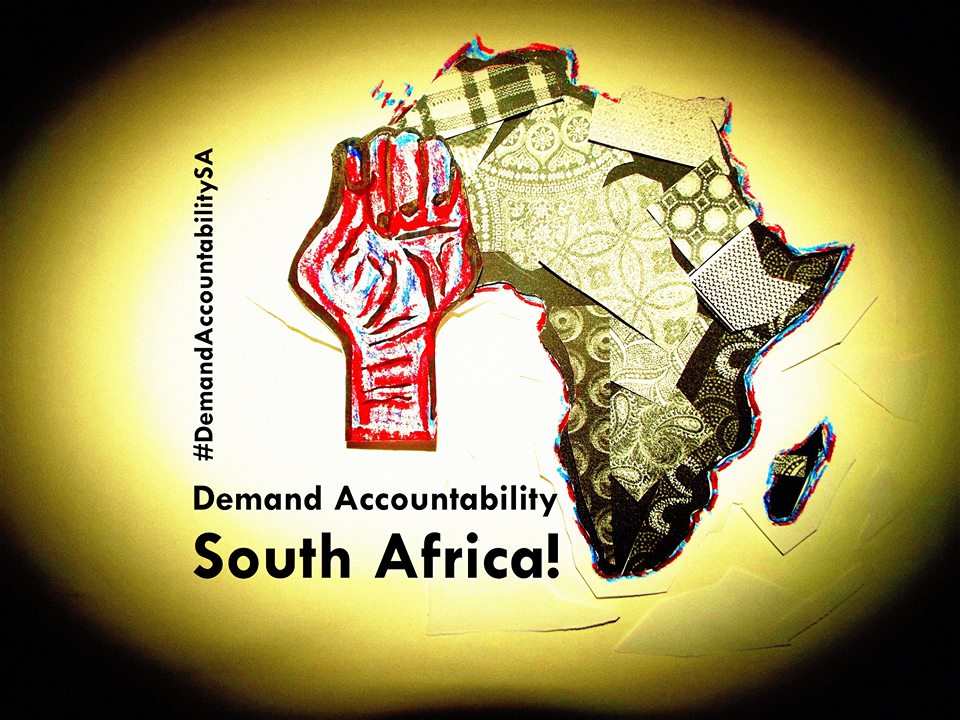
Demand Accountability Profile Image Ntsoaki

As you may know this is the last week of the 27th ordinary session of the United Nations Human Rights Council (UNHRC)for 2014 taking place in Geneva, Switzerland.


This is an important session and with huge implications for SOGI work and SOGI activists. Chile, Uruguay, Colombia and Brazil have tabled a follow up SOGI Resolution 27/L27 to Resolution 17/19 of 2011. This resolution seeks to affirm state’s commitments to safeguarding the rights and freedoms of African people with non-conforming sexualities and gender identities and expressions.


This week, some states seek to amend the language in this resolution, which will attempt to remove all language directly referencing issues of Sexual Orientation and Gender Identity, and replace SOGI language with language equal or roughly equal to “race, colour, sex, language, religion or other opinion, national or social origin, property, birth or other status”. Other states altogether seek to vote against the new and proposed SOGI resolution.


Our work, as civil society and human rights defenders is to ensure that instruments such as the United Nations Human Rights Council work to uphold the rights of ALL people, including gender non-conforming and trans-identifying African women and men.


CAL along with other civil society organisations are calling upon South Africa to ensure that the SOGI language is maintained and that the follow up resolution protecting SOGI rights is passed. We are requesting that South Africa show leadership, as they have in the past, and vote YES for the follow up SOGI resolution.


It is for this purpose that we are calling on our members, feminist allies and friends, as organisations and individuals to sign onto the attached letter which we will be sending the Minister of Foreign Affairs to South Africa, Hon. Maite Nkoana.


This is an URGENT and extremely IMPORTANT action, and we kindly ask that your organisation signs onto this letter before or by 18h00 today-Tuesday 23 September 2014.


We look forward to your solidarity and your quick action on this issue.


What can you do?

  1. Sign on to the letter that SA votes YES!: email your name, organisation and country to signon@aidsaccountability.org.
  2. Change your profile pic and cover photo on facebook and twitter. See example here.
  3. Post your selfie message of support on Facebook.
  4. Follow @DemandAccountabilitySA on twitter.
  5. Sign the Petition to still set the date for the regional meeting.
  6. Forward this email to colleagues.

South Africa, Which Once Led On Promoting LGBT Rights Abroad, Could Become A Roadblock

Advocates fear South Africa might turn against an LGBT rights resolution at the UN that it sponsored three years ago.


South Africa was once the essential nation to advancing LGBTI rights in international diplomacy. Now it has become a potential roadblock.


Back in 2011, South Africa sponsored a resolution before the United Nations Human Rights Council (HRC) that, for the first time, recognized LGBTI rights as human rights. Other nations, especially from Latin America, had been working to advance LGBTI rights in less high-profile ways for several years before, but South Africa’s leadership was critical to taking the effort to the level of a formal resolution. Such a proposal had to have at least one prominent African backer, its supporters believed. Otherwise, it would play into the hands of LGBTI rights opponents in Africa and other parts of the world that had once been colonized who argue that homosexuality was a Western perversion brought by colonial powers.


An updated version of the resolution was tabled Thursday at a Human Rights Council meeting underway in Geneva. It was sponsored by Brazil, Colombia, Chile, and Uruguay. A vote is expected next week.


Not only is South Africa’s name not on it, but some LGBTI rights supporters tell BuzzFeed News that South Africa’s diplomats are behaving so strangely in negotiations that they worry the country could even turn against the resolution. A South African defection might not only help torpedo the proposal, it would also be a stunning symbolic reversal for a country that set the standard for protecting LGBTI rights. When South Africa adopted its first post-apartheid constitution in 1993, it became the world’s first nation to protect LGBTI rights in its fundamental rights declaration. This came out of a commitment to fighting a broad range of oppression, and it commanded even greater moral authority because it was rooted in the experience of fighting white supremacy.


So some LGBTI rights supporters are looking at South Africa’s reluctance to clearly support the new resolution as a fundamental betrayal.


“We currently have leadership that fails to represent the ethos of what the constitution says and the equality principles they have to uphold,” said Mmapeseka Steve Letsike, a lesbian activist who chairs the South African National AIDS Council’s Civil Society Forum. “We have leadership going out of this country putting their personal beliefs before its own people. We have leaders that fail to protect their own.”


South Africa’s pullback on LGBTI rights internationally comes as homophobia has become an increasingly common political tool across Africa, framed as a form of standing up to the West. Nigeria and Uganda both passed sweeping bills criminalizing LGBTI rights advocacy this winter, the governments of The Gambia and Chad both have pending proposals to stiffen laws against homosexuality, and LGBTI people are being targeted by police from Zimbabwe to Egypt to Senegal.


“Silence in the context of the African Bloc suggests a kind of complicity with the homophobic rhetoric,” said Graeme Reid, a South African who directs Human Rights Watch’s LGBT program. “It speaks of a kind of misplaced solidarity … not aligning with the [LGBTI] people who are the victims of human rights abuse, but with the perpetrators under the rhetoric of supporting our ‘African brothers and sisters.’”


LGBTI rights supporters were also hopeful that some smaller African countries could be persuaded to abstain on the vote — a kind of soft yes — and one or two might even be convinced to back it. This could tip the balance if the vote is close. The 2011 resolution was a nail-biter, passing 23-19 with three abstentions. But that becomes very hard if South Africa can’t counterbalance conservative continental heavyweights that might be lobbying the smaller countries.


“As soon as [South Africa] pulls back, it gives countries like Nigeria and Egypt room to bully and push the smaller countries,” said an LGBTI rights advocate from another southern African country who asked to speak anonymously in order to avoid a backlash in negotiations. “We need South Africa to maintain the same position if not better” than in 2011.


It’s hard to see why this resolution is so important by reading the plain language — all it really does is order a bi-annual study of LGBTI rights by the United Nations High Commissioner for Human Rights. But there are only a few places where language referring to LGBTI rights exists in any international agreements. This small resolution is a way of giving U.N. staff authority to work on LGBTI issues and means that it will be a regular focus of discussion in Geneva. And it will be a precedent that can be used to broaden the inclusion of LGBTI rights in other human rights agreements.


Most LGBTI rights supporters came into the negotiations that began last week assuming that South Africa would be supportive even if it no longer wanted its name on the resolution. Regional coalitions are very important in the U.N., and other major powers within the Africa bloc, especially Nigeria and Egypt, have been at the forefront of pushing anti-LGBTI policies. South Africa had taken a lot of heat for the 2011 resolution, and many LGBTI supporters might have understood if officials chose not to take a public role in support this year.


But they’ve withheld their support even in private discussions, say sources familiar with the negotiations. The head of South Africa’s Geneva delegation, Ambassador Abdul Samad Minty, took the unusual step of coming personally to an informal meeting on Wednesday, something usually left to staff. But he said virtually nothing in the meeting, said a source in the room, which showed other nations that South Africa isn’t about to go to bat for the proposal.


This posture follows a move by South Africa’s ruling African National Congress party to block a parliamentary motion to condemn anti-LGBTI legislation enacted by Uganda in February (which has since been struck down by the court). It also comes after a vote by South Africa during the June HRC session that stunned LGBTI rights supporters: South Africa joined with conservative nations on a procedural vote to exclude a sentence stating “various forms of the family exist” in an Egyptian-led resolution on the “Protection of the Family.” The resolution passed without this language, and LGBTI rights supporters were concerned that the language could be used as precedent for excluding families from protections under international law if they are not led by a heterosexual couple.


“In the room they’re being a little bit weird,” said a diplomat from a Western country working on the resolution, referring to South Africa’s behavior in the negotiations. But this isn’t entirely new. “They’ve been behaving weird for two or three years on this,” the diplomat said.


The diplomat attributed that more to a change in personnel than an intentional shift in policy: Jerry Matjila, who was South Africa’s ambassador to the Human Rights Council when work began on the 2011 resolution, has since returned to Pretoria to take a senior post in the Department of International Relations and Co-operation. His replacement, Ambassador Minty, lacks his personal commitment to the issue, say sources who have worked with the delegation.


South Africa’s Geneva mission and the Department of International Relations and Co-operation in Pretoria did not respond to requests for comment.


But some South African activists see this dilution of South Africa’s commitment to LGBTI rights internationally as part of a larger trend in the country’s leadership. The late Nelson Mandela and other leaders of the African National Congress embraced LGBTI rights as part of a commitment to fighting a broad range of oppression as they brought South Africa out of apartheid — Matjila is seen as part of that school. But that commitment is not as strong among the younger generation of leaders, most notably President Jacob Zuma, who called same-sex marriage “a disgrace to the nation and to God” around the time the unions won legal recognition in the country.


The shift doesn’t mean South Africa has done a 180 on LGBTI rights. Rather, it’s led to a kind of schizophrenia that is frustrating to LGBTI rights supporters. The lack of support for this resolution is all the more confusing because it comes at a time that there is a new commitment from the government to fighting anti-LGBTI hate crimes inside the country, spurred by a series of horrific rapes and murders of black lesbians.


“Domestically, there is a sense of a real commitment and energy and political will,” said Human Rights Watch’s Graeme Reid. But the international stance is incoherent — the Latin Americans only introduced the resolution at the last minute because South Africa wouldn’t let go of its ownership of the issue until just before the Human Rights Council session began earlier this month.


“There is an air of uncertainty about their position because they have been dragging their feet on this for the last three years, not moving on the resolution and not dropping it,” Reid said.


The resolution’s supporters are optimistic that they will have the votes to pass the resolution if it gets an up or down vote next week, and no one who spoke to BuzzFeed News for this story said they thought it was possible that South Africa would vote against the resolution on the final vote. It could abstain on a final vote, a possibility that some of the resolution’s supporters fear is more likely as the negotiations wear on. Or it could vote for a procedural motion that would kill the resolution by denying an up or down vote — exactly what it did to keep the inclusive language out of the Protection of the Family resolution in June.


“It would be unacceptable, incomprehensible, and almost unconscionable for a relatively new democracy like South Africa to support shutting down debate at the UN’s human rights body [to affirm a principle] that’s in its own constitution,” said Marianne Møllman, program director of the International Gay and Lesbian Human Rights Commission, in an interview from Geneva.


By J. Lester Feder

19 September 2014

Source: http://www.buzzfeed.com/lesterfeder/south-africa-which-once-led-on-promoting-lgbt-rights-abroad#2dmkbjy

17 Lies We Need to Stop Teaching Girls About Sex

Lies

Whether it’s the constant fretting over Miley Cyrus’ influence on school girls or the growing (and troubling) tradition of Purity Balls, it’s clear that society has a fascination with young women’s sexuality — especially when it comes to controlling it. But what are we actually teaching today’s girls about sex?


Fueled by outdated ideals of gender roles and the sense that female sexuality is somehow shameful, there seem to be certain pernicious myths about girls and sex that just won’t die. That sex education in America has gaping holes in its curriculum hasn’t helped much, either; in a recent Centers for Disease Control (CDC) report just 6 out of 10 girls said that their schools’ sex ed program included information on how to say no to sex. This lack of personal agency was reflected in a forthcoming study by sociologist Heather Hlavka at Marquette University as well, which found that many young girls think of sex simply as something that is “done to them.”


Knowledge is power, and we can promote a healthier relationship with sex by encouraging a more open dialogue, teaching girls to feel comfortable with their sexuality and, most importantly, emphasizing that their bodies are theirs and theirs alone. But first, we’re going to need to stop perpetuating the following 17 myths about female sexuality.


1. Virginity exists.


Therese Shechter’s 2013 documentary How To Lose Your Virginity asks a seemingly simple question: What is a virgin? The answer is actually pretty complicated. The common idea of virginity is focused on a heteronormative, male-centric definition of intercourse — that is, penis-in-vagina penetration. But this definition ignores LGBTQ couples, oral and anal sex, instances where it “didn’t go all the way in,” rape and emotional intimacy.


The cultural obsession with virginity is more about keeping girls pure than anything else, and because the term begins to crumble upon close inspection, it doesn’t have to carry such weight. There’s no clear universal concept of virginity, and people should be able to define meaningful markers of intimacy for themselves.


2. Hymens are a sign of virginity.


Given that the entire notion of virginity is dubious at best, it’s not all that surprising that there is actually no medical way to tell if someone is a virgin or not. This includes a broken hymen. Hymens usually become worn down throughout adolescence, and can be torn by everything from jumping on a trampoline, to horseback riding, to simply playing sports. Some women aren’t born with one at all.


Despite the fact that more than half of women don’t bleed the first time they have penetrative sex, blood on the sheets has remained a signifier of losing one’s virginity throughout history. The persistence of this myth surrounding a basically irrelevant anatomical feature has even spawned a market for artificial hymens and reconstructive surgery to “restore” virginity. More disturbingly, girls around the world are often subject to degrading, invasive virginity “tests” to ensure their purity.


3. All women are born with vaginas.


Some items on this list focus on the anatomy of those assigned female at birth in an effort to illuminate issues that many girls don’t get to talk about enough, but the purpose is never to be exclusionary. Gender identity is different from biological sex, and trans women are women, period.


4. The first time is going to hurt — a lot.


Much of the pain young women are taught to expect during their first sexual experience actually comes from increased muscle tension due to nervousness. Blood usually comes from vaginal tissue tearing due to lack of lubrication and, ahem, inexperienced love making — not the hymen breaking. It’s a self-fulfilling prophecy, really; maybe if we stop telling girls to be terrified of the excruciating pain of their first time, things would be a little more comfortable for everyone.


5. If someone buys you something, you owe him or her sex.


It doesn’t matter if it’s a drink or a diamond necklace: You never “owe” someone sex. Ever.


6. Too much sex will stretch you out.


Nothing like the old “hot dog down a hallway” analogy to scare young women away from safe, consensual promiscuity. The truth is, women differ in size just like men do. The vagina is like a rubber band, and unless you’re regularly getting down with fire hose, you should be fine.


Similarly, having a baby will not “ruin” your vagina. Many women report feeling different down there after childbirth (the post-baby healing process depends on a variety of factors like age, the size of the baby and your commitment to Kegels), but we should really be teaching girls to accept their differences as normal and natural — not as new-found flaws.


7. Women don’t think about sex very much.


Many sexologists have arrived at the same conclusion: Women want sex just as much as men. This isn’t some new trend, either; science is just learning to ask the right questions about female desire.


So why does this myth of the undersexed female persist? It certainly doesn’t help that women often are taught that thinking about sex is boyish or juvenile. Entertainment media also frequently likes to portray women as the more responsible party in a relationship (think: nagging wife, childish husband).


The flip side of this thinking is the idea that “real” men should always have a voracious sexual appetite. But the saying “men think about sex every seven seconds” is just not true. Society’s focus on young men’s libido has created a sort of caricature of male sexuality, one that treats an occasional lack of desire or displays of emotion as not being masculine enough. And that’s not fair to them, either.


8. Women don’t like casual sex.


Not only do women want sex, but as journalist Daniel Bergner points out in What Do Women Want? Adventures in the Science of Female Desire, their desire is “not, for the most part, sparked or sustained by emotional intimacy and safety.” This means that, contrary to popular belief, women can most definitely have sex without getting emotionally attached. Studies of sexual desire have actually shown that plenty of ladies want casual sex more than the average guy, and many guys want it less than the average lady.


Much of this desire appears to be socially conditioned, anyway: Gendered differences in desire have been shown to diminish over time with more progressive generations, in countries with more equitable distributions of power and when the perceived stigma of being slut-shamed is controlled for in female subjects.


Moral of the story? It’s a personal preference, and blanket generalizations aren’t helping anyone.


9. Boys buy the condoms.


You don’t need to depend on anyone else for your protection. Girls can be prepared, too.


10. “Frigid” wives make cheating husbands.


The myth of the frigid wife plays off outdated notions of women who are too uninterested in sex to keep their men satisfied. But instead of lazily blaming infidelity on gender stereotypes, let’s encourage a sense of personal responsibility. Besides, men deserve more than to be treated like animals who can’t control themselves.


11. You have to wax.


Despite ads that try to convince women life can only be fully enjoyed stubble-free, you do not have an obligation to do anything to your body that you don’t want to do. After all, hair removal is still an industry, designed like every other to exploit people’s insecurities to make the most money possible.


It’s working, too: Hair removal is a $2.1 billion industry in the U.S., and over the course of a lifetime the average woman will spend an estimated $10,000 on shaving products. You should do what works for you, whether or not that means buying in.


12. You can’t have sex on your period.


If it grosses you out, no pressure. (Seriously though, is period blood really that much grosser than regular sexy-time fluids?) But such an act is both physically possible and safe. In fact, sex during your period can improve menstrual cramps, and some women even report having a shorter period overall when they get busy during that time of the month. Be warned, however: It is still possible to get pregnant or spread an STI while on your period, so don’t forgo the condom.


13. Sex is supposed to hurt sometimes.


Sex is not supposed to hurt, but for many women, it does. If your muscles aren’t ready, things can get painful. It can take 20 minutes of foreplay for a woman’s vaginal muscles to relax enough to be truly ready for penetrative sex.


For some women, however, foreplay isn’t the issue at all. Conditions like vaginismus and vulvodynia are very real, albeit unfortunately not very well known. The result is that many women suffering from these conditions don’t realize that there is help available. If sex hurts, it’s worth finding a specialist who can talk you through your options.


14. Once you start having sex, you’re not allowed to say “stop.”


You can change your mind at any time during sex, and your partner must respect that. It doesn’t matter if blue balls are real or not. Know that your voice must be heard.


15. Women don’t watch porn.


The hatred many women feel towards porn is understandable, given that so much of it promotes unrealistic or downright unhealthy attitudes about female sexuality. The problem is, as the Kinsey Institute’s Debby Herbenick points out, “Most mainstream porn is made by men with other men in mind.”


This doesn’t mean that many women don’t enjoy porn, nor that there’s not a market for more female-friendly fare. Researchers have shown that men and women respond comparably to sexually explicit material, and that the increase in women’s brainwave activity when looking at erotic images is just as strong as the increase in men’s.


16. Sexual harassment is normal.


A disturbing new study concluded that many young women consider sexual harassment and violence to be part of everyday life. Girls shouldn’t have to think of this treatment as expected. Sexual violations of any kind are unacceptable, and the dismissive “boys being boys” defense is both ridiculous and damaging to all genders. Sorry, personal bodily autonomy is not up for debate.


17. Everybody’s doing it.


The average American loses his or her virginity, for lack of a better term, at age 17. Plenty of people don’t start having sex until later (or earlier) in life, and that’s okay, too. Some people don’t have much of an interest in sex at all. Being sex positive isn’t about encouraging everyone to have tons of sex all the time; it’s about understanding that sex should be safe, shame-free and above all, based on informed, personal choices.


By Julianne Ross

April 2014

Source: http://mic.com/articles/88029/17-lies-we-need-to-stop-teaching-girls-about-sex

African Union to immediately receive close to USD 18.5 Million direct support to its Ebola operation ASEOWA

AU-FLAG2

Addis Ababa, Ethiopia–08 September 2014: The African Union and partners met Monday on the side lines of the emergency meeting of the African Union Executive Council to announce pledges by the African Union Partners Group (AUPG) to the African Union Support to Ebola Outbreak (Operation ASEOWA).


The United States Government announced USD10 million and the European Union 5 million euros to be made available immediately to support the African Union Operation to end the Ebola outbreak in West Africa. The Republic of China last week announced USD 2 million to ASEOWA.


The Deputy Chairperson of the African Union Commission, Mr. Erastus Mwencha, expressed gratitude to partners for the generous response to support the African Union operation ASEOWA and for all the concerted efforts to respond rapidly to the outbreak.


“The focus should be on containing the epidemic to make sure that it does not spread further, improve the capacity of health facilities, which have been overstretched and monitor contacts and manage the confirmed cases”, the AUC Deputy Chairperson said.


The African Union this week received the assessment report from the mission that it sent to the affected countries which will inform its path breaking response.


“The United States is absolutely committed to working with the international community to increase response efforts in West Africa and help bring this outbreak under control”, said Ambassador Reuben E. Brigety, adding “We commend the AU for sending an assessment team and welcome its findings and we urge the AU to ensure that its mission is working through its operations on the ground and in accord with WHO Ebola response roadmap”.


The ASEOWA operation aims at filling the existing gap in international efforts and will work with the African Humanitarian Action in mobilising medical and public health volunteers across the continent and will compliment ongoing efforts by various humanitarian actors who are already on the ground.


The African Union made a historic decision end of August by declaring Ebola a threat to peace and security in Africa invoking article 6 (f) relating to its mandate with regard to humanitarian action and disaster management at its 450th meeting. The meeting authorised the immediate deployment of a joint AU-led military and civilian humanitarian mission to tackle the emergency situation caused by the Ebola outbreak. The World Health Organisation (WHO) estimates that about USD600 million is needed to put the epidemic under control.


Click here to read: African Union’s Executive Council Urges Lifting of Travel Restrictions Related to Ebola Outbreak

Click here to read: ASEOWA Pledge

Click here to read: African Union Urges Member States to Find Collective Response to Ebola Outbreak and Show Solidarity with Affected Countries

Gambia’s President Jammeh asked to reject anti-gay law

Gambia President

Leading rights groups have called on Gambian President Yahya Jammeh not to approve tough new anti-gay legislation.


Homosexual acts are already illegal in The Gambia, but MPs passed a bill on 25 August imposing life sentences for “aggravated homosexuality”.


The bill promoted “state-sponsored homophobia”, the rights groups said.


Mr Jammeh is known for his strong opposition to gay rights. He has called gay people “vermin” and once threatened to behead them.


Uganda’s Constitutional Court struck down a similar law last month on the grounds that it was passed by MPs without a quorum.


‘Deep fear’

Its ruling followed an outcry from rights groups and Western governments – US President Barack Obama described the legislation as “odious”.


Amnesty International and Human Rights Watch (HRW) said the definition of “aggravated homosexuality” was vague in The Gambian bill.


Among those who could be given the life sentence were “repeat offenders” and people living with HIV who are suspected to be gay or lesbians, they said in a joint statement.


A person who had homosexual relations with a minor could also be convicted of “aggravated homosexuality”, Reuters news agency reports.


“President Jammeh should not approve this profoundly damaging act that violates international human rights law,” said Stephen Cockburn, Amnesty’s deputy regional director for West and Central Africa.


Graeme Reid of HRW said it would “only heap further stigma on people who are already marginalised and living in a climate of deep fear and hate in Gambia”.


Under current laws, homosexual acts are already punishable by up to 14 years in prison in The Gambia.


Mr Jammeh has 30 days from the date the bill was passed to sign it into law or return it to parliament for further review.


The Gambia is a popular tourist destination, famous for its beaches.


By BBC News Africa

10 September 2014

Source: http://www.bbc.com/news/world-africa-29145397

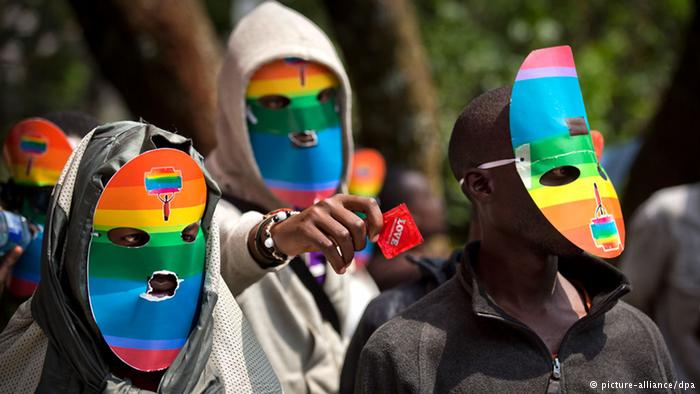
LGBT Visibility in Africa Also Brings Backlash

homosexuality.jpg4

Eighteen-year-old Gift Makau enjoyed playing and refereeing football games in her neighbourhood in the North West Province of South Africa. She had come out to her parents as a lesbian and had never been heckled by her community, according to her cousin.


On Aug. 15 she was found by her mother in a back alley, where she had been raped, tortured and killed.

Shehnilla Mohamed, Africa director for the International Gay and Lesbian Human Rights Commission (IGHLRC), said that Gift’s murder was part of a disturbing trend in which gender-nonconforming individuals are targeted for so-called corrective rape.


“Corrective rape is really the attempt of the society to try to punish the person for acting outside the norm,” Mohamed said.


In the past 10 years in South Africa, 31 lesbians have been reported killed as the result of corrective rape, she said.  A charity called Luleki Sizwe estimates that 10 lesbians are raped or gang raped a week in Cape Town alone.


Transgender, gay or effeminate men are also the subject of corrective rape, but they are less likely to be murdered and are less likely to report it.

If this is happening in South Africa, the only mainland African country to allow legal same-sex marriage, what is it like to be lesbian, gay, bisexual or transgender (LGBT) elsewhere on the continent?


“The type of brutality that you see happening to lesbians and to homosexuals in parts of Africa is just beyond comprehension,” Mohamed told IPS. “It’s like your worst horror movie, and even worse than that.”


More than two-thirds of African countries have laws criminalising consensual same-sex acts, according to IGLHRC.


“Overall what we’ve seen is a fairly bleak picture that’s emerging,” said Graeme Reid, director of the LGBT Program at Human Rights Watch (HRW).


Africa is seeing “an intensification of the political use of homophobia,” he said.


Nigeria and Uganda made headlines in early 2014 when they signed anti-homosexuality bills that handed out long prison sentences for being homosexual or for refusing to turn in a known homosexual.


On Aug. 1, Uganda’s law was declared unconstitutional on procedural grounds by its supreme court, but Shehnilla Mohamed expects that it will be back on the table again once international attention shifts away.


Long-time African leaders who wish to extend their stay in office often try to whip up anti-homosexuality sentiment.


“Homophobia becomes both a ruse and a distraction from other real substantive issues, whether those are economic or political,” Graeme Reid said.

Chalwe Mwansa, a Zambian activist and IGHLRC fellow, told IPS that in his country, politicians equate cases of pedophilia and incest with homosexuality, fabricating sensational stories to inflame the public. This strategy diverts attention away from problems with unemployment, poverty, health and education.


Some leaders also claim that homosexuality is an un-African, Western imposition. Mohamed believes it is the exact opposite.


Homosexuality “existed in a lot of the African cultures and a lot of the African traditions,” she told IPS. “It was quite an accepted pattern.”


Same-sex relationships did not begin to develop a negative connotation until after colonisation brought Western religion, she said.


In an environment of antipathy, LGBT individuals have few places to turn to for help. The police station is often not a sanctuary for those who have been raped.


Mohamed recently spoke to a transgender man in South Africa who was accosted in the lobby of his block of apartments by a group of men who thought he was a woman. When they found out he was a man they raped and “beat him so badly that he was totally unrecognisable,” she said.


The man ended up contracting HIV/AIDS.


In South Africa, after being raped, a person is supposed to report it to the police and receive a free post-exposure prophylaxis within 72 hours to minimise the risk of transmission. However, this man was too afraid to go into the station, knowing that the police would most likely feel that he had deserved it.


The problem is even worse in countries like Nigeria that have criminalised homosexuality. According to Michael Ighodaro, a fellow at IGLHRC from Nigeria, after its anti-homosexuality bill was passed in January, 90 percent of gay men who were on medications stopped going to clinics to receive them, out of fear that they would be arrested.


Even at home, LGBT individuals in Africa face an uphill struggle. Anti-homosexuality laws do have a current of support throughout society. LGBT people often fear ostracisation by their families, so hide their sexual or gender identity.


The increased prominence of LGBT issues in national debates in Africa in the past decade has inspired a bit of a backlash.


Njeri Gateru, a legal officer at the National Gay and Lesbian Human Rights Commission of Kenya, says that Kenya lies in a tricky balance. Society does not actively persecute LGBT individuals if they outwardly conform to sexual and gender norms, but “problems would arise if people marched in the streets or there was an article in the press.”


“We cannot continue to live in a balance where we are muzzled and we are comfortable being muzzled,” Gateru said at a HRW event in New York.


Religion plays a significant role in the lack of acceptance of gender non-conforming groups in Africa.


IGLHRC’s Mohamed said that even “people with master’s degrees, who are highly educated, who work in white collar jobs will say ‘God does not like this.’”


“I think pointing out that LGBTI people are human beings, are God’s creation just like everybody else is really something that we’ll keep on pushing,” she said.


According to Gateru, even when churches open their doors to LGBT groups, they sometimes do it for the wrong reasons.


A year or so ago, a group of Kenyan evangelical leaders announced that they were going to stop turning LGBT individuals away from churches because, in their words, ‘Jesus came for the sinners, not the righteous.’


The churches are “welcoming you to change you or to pray for you so you can change, which is really not what we want,” said Gateru. “But I think it’s a very tiny step.”


Archbishop Desmond Tutu has repeatedly and consistently criticised discrimination against LGBT groups and condemned new anti-homosexuality laws.


Activist groups welcome the support of prominent religious leaders such as Tutu, and are planning a conference in February to bring together pastors, imams and rabbis to discuss LGBT issues and religion in Africa.


In general, LGBT activist organisations have their work cut out for them.


LGBT advocacy groups “most of the time are working undercover, are working underground, or if they are registered and are working as an NGO, are constantly being harassed by the authorities or by society,” Mohamed said.


IGLHRC was founded in 1990, and helps local LGBT advocacy groups around the world fight for their rights through grant making and work on the ground.


“What we really need is to mainstream homosexual rights, LGBTI rights into the basic human rights discourse,” said Mohamed.


During August’s U.S.-Africa summit in Washington, IGLHRC urged the U.S. to hold African leaders to account.


Depending on the country, the U.S. does have an ability to advance human rights through external pressure. Mohamed speculated that the striking down of Uganda’s anti-homosexuality bill just days before the summit was a public relations stunt by Ugandan President Yoweri Museveni, since he wanted a warm reception by the White House.


Nigeria, the other country to introduce a new law in 2014, is more difficult to influence than Uganda, according to Michael Ighodaro. Because of its oil wealth, the Nigerian government would not care if the United States were to pull funding.


The U.S.-African summit, since it was focused on business, offered an opportunity for LGBT advocacy groups to point out the economic costs of sidelining an entire sector of the population.


Mohamed said that LGBT individuals are often “too scared to apply for certain jobs because of how they would be treated. If they did apply they probably would never get the jobs because of the stigmas attached.”


Despite the difficult journey to come, supporters of LGBT rights in Africa can look back to see that some progress has been made.


HRW’s Reid said that the LGBT movement was practically invisible in Africa just 20 years ago.


“In a sense this very vocal reaction against LGBT visibility can also be seen as a measure of the strength and growth of a movement over the last two decades,” he said.


Things may get a little tougher before they get better, Njeri Gateru told IPS, but “history is on our side.”

UNITED NATIONS, Sep 9 2014 (IPS) 

Edited by Kitty Stapp

By Joel Jaeger

10 Septermber 2014

Source: http://www.ipsnews.net/2014/09/lgbt-visibility-in-africa-also-brings-backlash/

Premature School Resumption Involving Up to 80 million Children, Adolescents, Students & Teachers is High-Risk Strategy – For Children, Parents, Nigeria & ECOWAS.

Ebola

Has the Nigerian Ministry of Education taken a high-risk decision to bring forward re-opening of primary and secondary schools before the country’s Ebola outbreak is certifiably over?

The evidence indicates that this may be so.

Two full incubation periods (21 days x 2 / 42 days) without cases is the global health standard for declaring an Ebola outbreak over in a particular location.

Going by the official Ministry of Health Ebola update (of 1st September) – “the total number of cases of EVD in Nigeria stands at sixteen (16); the number of contacts under surveillance in Lagos stands at 72 while in Port Harcourt, the total number of contacts under surveillance stands at 199” – i.e. for a minimum of 21 days.  The update further confirmed that “No contact in Port Harcourt has completed the 21 day observation period”. The Ministry of Health has also warned that it is likely there will be more confirmed cases of Ebola

Yet – on the 5th of September, the Ministry of Education announced that it has reversed its earlier decision (of 26th August) to postpone schools resumption till the 13th of October – and announced that schools would now re-open sooner – on the 22nd of September.

This negated a key pillar of the 26 August announcement that the Minister of Education and Commissioners of Education from the 36 states of the federation “will meet on 23rd September to review the situation in all states”.

What has prompted this apparently hasty review?

Would it not have been much safer – to wait for some time after the outcomes of the minimum 21 day incubation period covering the last batch of persons placed under surveillance – before reviewing the date for school resumption?

There Is Far Too Much At Stake For Questions Not To Be Asked.

Moving millions of children and adolescents within and across 36 states before the Ebola outbreak is fully under control may turn out to be an unwise decision.

The percentage of Nigerian population under 15 years of age is estimated at 44.23%, and although not every child is in school, this reflects in the country’s school population.

The total population of students in Nigeria surpasses the combined population of Guinea, Liberia and Sierra Leone where the current Ebola epidemic has been declared by experts as out of control:  Pre-primary (ages 3 to 5) – population of Nigerian students is estimated at 15.9 million; Primary (ages 6 to 11) 27.04 million; Secondary (ages 12 to 17) 21.8 million; and Tertiary (ages 18 years and above) 15.3 million.

The populations of Guinea, Liberia and Sierra Leone are: 11.4 million; 4.1 million; and 5.9 million respectively.

Throwing about 80 million Nigerian children, adolescents, and young adults – (across an estimated 100,000 or more schools) into a potential Ebola mix, at a time when an abundance of caution is crucial – can hardly be described as a low, or even medium risk strategy.

If the Ministry of Education strategy goes horribly wrong – all the hard work of the Lagos, Rivers State and Federal Ministry of Health in containing the outbreak could be undone, with serious consequences for Nigeria, ECOWAS and all of Africa.

Is the Call for Caution Misplaced?

The evidence from Liberia and Sierra Leone where there have been riots, disruption to food production, manufacturing, mining, education, retail; and announcements of nationwide lock downs suggests not.

To quote the Deputy director of US Centre for Disease Controls National Centre for Emerging Zoonotic and Infectious Diseases:

“If there was no cases identified after today, we would still be committed to waiting 42 days from today to declare the outbreak fully over.  The concern is that the outbreak can be reseeded much like a forest fire, with sparks from one tree reseeding it.  That is clearly what happened in Liberia".

Liberia was a situation they did not have any new cases for more than 21 days in the first wave of the outbreak and they were reseeded by cases coming across the border.  Until we can identify and interrupt every chain of transmission, we will not be able to control the outbreak.”

Some Luck, Courage, Sacrifice and Efforts of Health Officials Have So Far Contained the Ebola Outbreak in Nigeria

In Nigeria, all 18 cases (so far) in the transmission chain are linked to a single person who travelled from Liberia to Lagos on 20 July. A combination of circumstances, incredible courage by two brave women – a doctor and nurse (now dead from Ebola) –  that identified the index case and restrained him – and round the clock work by health officials and partners has so far ensured that – the transmission chain has been traceable and contained.

Among the contacts of the index case, one person knowingly evaded surveillance and travelled to Port Harcourt (to seek private treatment) triggering another chain of transmission, which killed the doctor that treated him. The doctor in turn infected his wife (also a doctor) and she helped alert the authorities. The involvement of health workers affected, and their ability to recognise the situation, has so far been key to halting a disaster in the making.

If there is an Ebola outbreak in Nigeria’s massive 80 million strong school population after the 22nd of September, can the health system cope with tracing, containment and treatment?  The evidence indicates that the answer is a resounding NO. To put this in context Nigeria has only 4.1 doctors per 10,000 of the population (an estimated 58,363 doctors) – way below the 23 per 10,000 required for successful primary health care interventions.

And if schools shut down again after a new outbreak involving children and adolescents – and millions of students are reshuffled back home including across 36 states – what happens?

The Question Then Has To Be Asked – Why Has the Ministry of Education Reversed Its Earlier Decision Re-Open Schools In October?

Even basic disease prevention in Nigerian schools is a challenge as majority of schools are notorious for their lack of water and sanitation facilities, including lack of personal hygiene facilities for female students

The Ministry of Education directive that – “at least two (2) staff in each school, both Public and Private, are trained by appropriate health workers on how to handle any suspected case of Ebola” by 15th September – is ill informed. Even doctors with 6 – 7 years of training cannot identify Ebola just by looking at patients with early symptoms that could be anything from Malaria to Typhoid fever. (See appendix to Editorial for questions about the precautionary measures directed by the Ministry of Education)

The WHO listed Ebola symptoms include: fever, intense weakness, muscle pain, headache and sore throat – followed by vomiting, diarrhoea, rash, impaired kidney and liver function. To these the Nigerian Ministry of Information Facebook page has ominously added “red eyes, cold, depression and confusion” – as symptoms of Ebola.  The potential for chaos when schools resume can only be imagined.

Importantly, the WHO underlines that other diseases to be ruled out before a diagnosis of Ebola can be made include: malaria, typhoid fever, cholera, plague, rickettsiosis, relapsing fever, meningitis, and hepatitis to mention a few. How can a teacher with 3 weeks ‘Ebola training’ and no diagnostic equipment on site manage this? And if they suspect it is Ebola what do they do? There is no effective states or national ambulance service to call.

Even without Ebola, a look at some annual and cumulative health indicators for children, adolescents and young adults in Nigeria demonstrates the country's healthcare system is already inadequate, with successive Ministers of Health struggling to perform miracles with insufficient resources

  • Distribution of causes of death in children under 5 years include: Malaria – 20%; Acute Respiratory Infections – 16%; Diarrhoea – 10%; HIV/AIDS – 3%; Measles – 1%.
  • Only 31% of children under 5 years with Acute Respiratory Infection (ARI) symptoms are taken to health facilities.
  • Only 38.1% of children under 5 years with diarrhoea receive oral rehydration therapy (ORT).
  • Only 41.9% of children under 5 years with fever received treatment with any anti malarial.
  • Only 18% of pregnant women living with HIV received antiretroviral for preventing mother to child transmission.
  • Number of children living with HIV – 400,000.
  • Polio vaccination coverage – 59%
  • Measles cases – 6,447

Some other overall annual or cumulative health indicators for the general population – indicative of capacity to deal with Ebola outbreak:

  • Malaria cases = 2,087,086 (2.08 million) / Malaria Deaths = 7,734
  • People living with TB- 270,000 / TB Deaths, 27,000
  • People living with HIV – 3,200,000 (3.2 million) / Treatment Coverage 20%

Nigeria’s HIV indicators are especially significant given that men who have recovered from Ebola can still transmit the virus through their semen for up to 7 weeks after recovery from illness.  As immune systems are  critical to survival of Ebola; sexual and reproductive health education and commodities are crucial for adolescents and young adults .

If the health care system is unable to cope as illustrated above in ‘normal times’, how can teachers be expected to manage an Ebola outbreak?

The federal government and the Ministry of Education need to re-consider the announcement to re-open schools on the 22nd of September – and to do this before the 22nd – especially if more cases of Ebola are detected.

No one hopes for the worst – but even as we hope for the best – we must make every effort, and take every precaution to prevent the worst. Ebola is currently a disease with no treatment and no vaccine.

If the Ministry of Education and government maintain the decision to re-open schools by the 22nd of September especially if there are more confirmed Ebola cases – the 21 days (Ebola incubation period) following September 22nd 2014 will be the most tension soaked and longest 21 days in Nigeria’s health and education history.

While schools cannot remain closed indefinitely, and we cannot rule out a separate Ebola outbreak in the future – The situation in Liberia and Sierra Leone demonstrates that waiting 21 to 42 days could make the difference between complete chaos, and a resolution of the present Ebola outbreak in Nigeria.

Statement Ends: For further information contact kindly contact us through email: media[a]afri-dev.net


Appendix:

Excerpts And Questions Arising – From Initial Ministry Of Education Announcement Postponing Schools Resumption Till 13th Of October

“All Primary and Secondary schools, both Public and Private are to remain closed until Monday 13thOctober, 2014 which is the new school resumption date for all schools throughout the Federation.  This is to ensure that adequate preventive measures are put in place before the students report back to school.”

“All Summer Classes currently being conducted by some private schools should be suspended with immediate effect until 13th October, 2014.”

“All Private Primary and Secondary Schools must comply with the directives given under these preventive measures”

“All Tertiary Institutions are advised to suspend exchange of staff and students programs, visits and major International seminars and workshops until further notice.  They are also to monitor the movement of foreign students in their campuses.  They are to liaise with appropriate Government Health Institutions to organize and ensure effective sensitization program for all their teaching and non-teaching staff”

“The Minister of Education and all State Commissioners of Education will meet again on 23rd September, 2014 to review the situation in all States.”

The New Announcement of 5th September Negating This Previous One and Re-directing Schools to Re-open By 22nd September Raises Many Questions.

  • What changed in the 10 days since the earlier announcement was made?
  • Have all the precautionary conditions announce by the Minister of Education been met?
  • Where those conditions adequate in the first instance?

Key Amongst The Precautionary Conditions Announced Where?

1). “ All State Ministries of Education are to immediately organize and ensure that at least two (2) staff in each school, both Public and Private, are trained by appropriate health workers on how to handle any suspected case of Ebola – and also embark on immediate sensitization of all Teaching and Non-Teaching Staff in all schools on preventive measures. This training of staff must be concluded not later than 15th September, 2014.”

  • Has this training been concluded? Even if concluded is it sufficient?

2). “All State Ministries of Education should establish a Working and Monitoring Team for effective supervision of school activities before and after opening of schools.”

  • Have these monitoring teams been put in place?
  • What is the composition of these teams?
  • What is their mandate and how will the monitoring be carried out?
  • Are they empowered to make recommendations for school closure?

3). “Each State Ministry of Education should appoint a designated [Ebola] Desk Officer not later than 1st September, 2014, who should also receive appropriate training and who must report on daily basis to the Honourable Commissioner on situation in the schools.  The names of such Desk Officers, their phone numbers and e-mail addresses should be communicated to the Headquarters of the Federal Ministry of Education not later than 1st September, 2014.”

  • Have these desk officers been appointed?
  • Who has been designated to train them?
  • What is the composition of this training?
  • Has the training been accomplished?
  • Could any such training have been done in 6 days (between 26th August and 1st September)?
  • Have their details been forwarded to the Federal Ministry of Education as of the 1st of September?

4). “All Primary and Secondary schools, both Public and Private should be provided with a minimum of two (2) appropriate/recommended Temperature Measuring Equipment by the State Ministries of Education.  The State Ministries should determine the number of such equipment required and forward same to the Federal Ministry of Education not later than 1st September, 2014.  The Federal Ministry of Education will liaise with the Federal Ministry of Health to ensure that appropriate equipment are procured.”

  • Have all the 36 state Ministries of education determined the number of temperature measuring equipment to be procured in each state?
  • Have the requests been forwarded to Federal Ministry of Education by the 1st of September?
  • Has the order for them been placed? Will these be supplied and be in place by the 22nd of September?
  • What about protective clothing?

i.e. WHO recommendation is that – “When in close contact (within 1 metre) of patients with Ebola, health-care workers should wear face protection (a face shield or a medical mask and goggles), a clean, non-sterile long-sleeved gown, and gloves (sterile gloves for some procedures).” Will these be provided in schools?

If the answer to any of these questions is No – then the Ministry of Education has failed even by the precautionary standards it set for itself.

Why take the risk of daily movement of a combined school population of about 80 million children, adolescents and young adults – including secondary school and higher education students that will travel within and between the 36 states of the country.

But Two Even Bigger And More Important Questions Should Be Answered.

  • Why has the government and the Ministry of Education decided that it is not necessary to wait for the two full incubation periods (21 days x 2 / 42 days) without cases – which is the global health standard for declaring an Ebola outbreak over in a particular location?
  • Is the decision to convert teachers to emergency health workers conditions appropriate?

Teachers are trained to teach, not be health workers. Should teaching staff be placed in the trenches to fight Ebola, or should health workers have been designated to assist schools?

The House of Representatives, the teaching unions and health workers unions and associations need to be brought into this discussion and unravel how and why this decision was taken, and if it should stand.

By Afri-Dev

Source: http://www.afri-dev.info/content/special-afri-devinfo-editorial

New study highlights the need for evidence-based sexual and reproductive health education

big

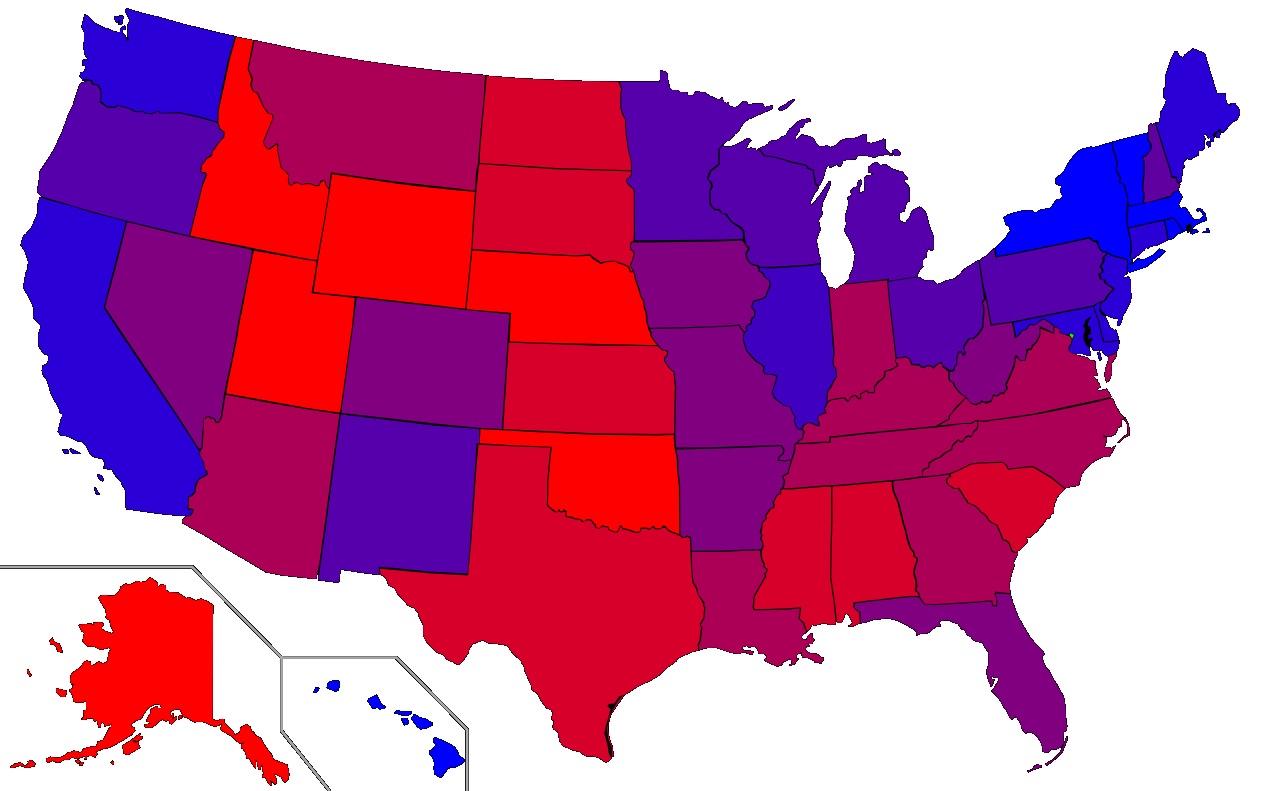
A new national survey reveals that the political divide among red-versus-blue states does not support the hypothesis that knowledge about abortion and health is shaped by the state in which one lives.


August 19, 2014


Research led by Danielle Bessett, a University of Cincinnati assistant professor of sociology, was presented at the 109th Meeting of the American Sociological Association in San Francisco.


Bessett says that regardless of political viewpoints, only 13 percent of the 569 people polled in the national survey demonstrated high knowledge of abortion, correctly answering four or five questions. Seven percent mistakenly thought that abortion until 12 weeks gestation was illegal (another 11 percent didn't know if it was illegal or not).


More than half the sample (53 percent) reported living in a blue (considered liberal) state; 26 percent reported living in a red (considered conservative) state and 20 percent reported living in a "purple" state – swing states such as Ohio, in which Democrats and Republicans have strong support.


Although initial results showed some support for the red-versus-blue state divide when it came to abortion health knowledge (but not legal knowledge), this difference between states disappeared when researchers took into account individual-level characteristics, including respondents' political beliefs, their beliefs about whether abortion should be permitted and whether or not they knew someone who had an abortion.


"Because the issue of abortion is an exemplar of polarization, it provides a useful way to test the red states v. blue states hypothesis," write the authors. Bessett says she and her co-researchers found that their "data does not support the red-versus-blue state hypothesis: geography does not dictate the world views of Americans. Some individuals in all settings do have accurate information about abortion, regardless of political context."


An online questionnaire was administered to 586 randomly selected men and women ages 18 to 44 via SurveyMonkey Audience. The findings focused on answers from 569 respondents (91.7 percent of the sample) who were born in the U.S. Participants responded to five survey items related to knowledge about abortion health and one exploring legal knowledge about abortion:


Survey Questions

·         What percentage of women in the U.S. will have an abortion by age 45?

Correct answer: 33 percent

Percentage of respondents with correct answer: 41 percent

·         Which has a greater health risk: An abortion in the first three months of pregnancy or giving birth?

Correct answer: giving birth

Percentage of respondents with correct answer: 31 percent

·         A woman who has an abortion in the first three months of pregnancy is more likely to have breast cancer than if she were to continue the pregnancy.

Correct answer: disagree somewhat/disagree strongly

Percentage of respondents with correct answer: 37 percent

·         A woman who has an abortion in the first three months of pregnancy is more at risk of a serious mental health problem than if she were to continue that pregnancy.

Correct answer: disagree somewhat/disagree strongly

Percentage of respondents with correct answer: 31 percent

·         A woman having an abortion in the first three months of pregnancy is more likely to have difficulty getting pregnant in the future.

Correct answer: disagree somewhat/disagree strongly

Percentage of respondents with correct answer: 35 percent

·         Abortion during the first three months of pregnancy is legal in the U.S.

Correct answer: true

Percentage of respondents with correct answer: 83 percent


Based on their findings, the researchers conclude that men and women making sexual and reproductive health decisions may not be well informed about the relative safety and consequences of their choices, highlighting a need for the provision of better, more comprehensive and evidence-based sexual and reproductive health education.


Survey Demographics


Fifty-three percent (313) of the respondents were male; 47 percent (273) female; 49 percent reported an age between 18-29 and 51 percent reported being between 30-44; the majority of the respondents (78 percent) identified as white; 11 percent Hispanic; four percent black and seven percent identified as "other" race or ethnicity.


Thirty-seven percent described themselves as very or somewhat liberal, 38 percent felt they were moderate and 25 percent identified as somewhat or very conservative.


Forty-one percent did not affiliate with any religion, 16 percent identified as Catholic and 35 percent identified as Protestant. Twelve percent reported they had a personal experience with abortion and 65 percent reported knowing someone who had an abortion. Eighty-seven percent believed that in most instances, abortion should not be restricted.


Additional authors on the paper are Caitlin Gerdts, an epidemiologist at University of California, San Francisco; Lisa Littman, an adjunct professor of preventative medicine at the Icahn School of Medicine at Mount Sinai Hospital; Megan Kavanaugh, Guttmacher Institute; and Alison Norris, MD, assistant professor, College of Public Health, The Ohio State University.


Source: University of Cincinnati 

http://www.news-medical.net/news/20140819/New-study-highlights-the-need-for-evidence-based-sexual-and-reproductive-health-education.aspx

Fluid identities: hijab to bike helmet

zainabgraffiti

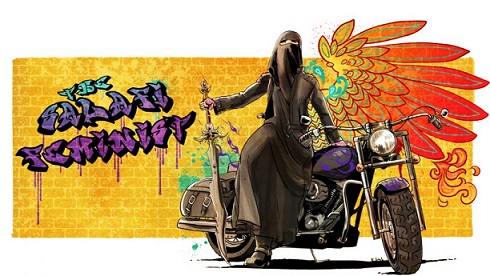
Identities are fluid, and often difficult to map on a straight line between "traditional" and "modern." Or between "hijab" and "helmet," in the case of author Zainab bint Younus's short story about a gang of "Hooris," deeply religious Muslim women turned vigilante biker chicks. 


HOOR AL-'AYN, Zainab bint Younus, Canada.


#EqualityIs 


Muslim women being seen as agents of their own fates, able and active in fighting for their own causes – not as helpless victims.


"Hoor al-‘Ayn" is a short story centered around the idea of a group of young Muslim women who, on one hand, would be considered not just religious, but conservative (their leader wears niqab, the face-veil); and who, on the other hand, break the very idea of what "conservative" means by forming a vigilante biker gang in a semi-fictionalized Californian inner city.


These young women embody many of the emotions and experiences of Muslim women around the world. They are devoted to their faith, and it is their faith which empowers them, even as they turn the idea of a “pious Muslim woman” on its head. They reclaim and redefine what it means to be a Muslimah, as is reflected in the name they chose for themselves: “Hoor al-‘Ayn.” In Islamic belief, Hoor al-'Ayn is the name given to the otherworldly handmaidens in Paradise. The young women in this story challenge Muslims and non-Muslims alike in how they choose to present themselves to the world.


These Hoor al-‘Ayn are dedicated to a higher cause: the pleasure of God in the pursuit of justice for all. In the inner city, just as in rural villages, women tend to be amongst the most vulnerable members of the population, and the Hoor al-‘Ayn are willing to take drastic measures to ensure that the women around them are able to feel safe and fight back for their rights. They have the added challenge of facing cultural norms of gender-based injustice found within the Muslim community. Although the issues are the same as those faced by women in other religious and ethnic communities – domestic violence, alas, is a global phenomenon and not unique to Muslims – it is the cultural justifications and normalization of these problems which are most difficult to eradicate.


In short, the Hoor al-‘Ayn of this story are a force of faith, power, and justice to be reckoned with.


_______________________________________________________________________________


At 5 feet 3-and-a-half inches exactly, 20 year old Sameera’s petite form was unremarkable. Swathed in a flowing black abayah and matching shayla, she was just another young Muslim woman from a conservative Muslim community in the inner city. Perhaps the only thing that made her stand out was the niqaab she wore in addition to the abayah and hijab, a sight not often seen in her neighborhood.  


Sameera smiled grimly in the mirror as she pulled down her niqab and whipped off the length of chiffon away from her face, revealing a shock of rainbow-colored hair, multiple ear piercings, and a henna tribal tattoo on her neck. There was absolutely nothing conservative about her appearance now. The truth was, she loathed being "normal," hated being "just another Muslimah." The only time she felt free, that she felt truly herself, was when she was on-duty. Luckily for her, she had patrol tonight. 


Shrugging off her abayah, Sameera exchanged it for a floor-length leather duster that hung on a mannequin’s torso in her bedroom. The soft, simple shayla was replaced with one of sturdier material, designed not to flutter or slip as much as the chiffon was wont to do. Wrapping it around her face, the hair, tattoo, and piercings disappeared again, although Sameera pinned this hijab in place with a dagger-shaped pin. A pair of fingerless leather gloves, adorned with a strip of small metal spikes, and matching knee-length boots with steel-tipped toes completed her ensemble.


Sameera’s reflection stared back at her, a slow smug smile conveying her satisfaction at this wardrobe adjustment. Tugging her niqab up to cover the smile, Sameera’s back straightened and her muscles flexed in anticipation.


She was ready to prowl. 


The Hoor al-‘Ayn, as they had named themselves, or “those Muslim biker chicks,” as they were known by the rest of the city, believed themselves to be nothing more than a product of their environment.


Several of them came from Muslim homes, often conservative, but living in the inner city meant that every day was a survival of the fittest. And usually, the fittest carried around a pair of brass knuckles and steel-toed boots; a speedy ride was helpful, too. 


All cultures adapted to Islam – or was it the other way around? Either way, the Hooris were a reflection of both their faith and their neighborhood. The seven or eight girls all observed hijab; their abayas were suited for the concrete jungle they lived in – slashed at the sides for ease of movement, particularly jumping onto and climbing off their motorcycles. Many sported fingerless gloves, mostly leather and accessorized with metal studs or spikes. Matching jackets – emblazoned with the gang’s logo, a veiled woman holding aloft a machine gun – and riding boots completed their practical ensemble. Of course, each girl sported her own custom bike, choice of concealed weaponry, and personalized accessories. 


They were all still young, and ranged in age from their mid-teens to early 20s, but growing up in the middle of a battlefield had taken its toll. Though their eyes sparkled and many still had puppy fat clinging to their cheeks, jaded cynicism tipped their smiles like jagged arrowheads and their shoulders were tense with the constant wariness of those who are both predator and prey. 


At the moment, the Hooris were milling about the masjid parking lot, a motley crew of bikes, hijabs, and helmets. This evening, they were on-duty: the masjid had a neighborhood watch program that they took part in regularly. 


After 9/11, the existing tensions of the inner city turned into an inferno of hate, violence, and fury. When the men of the Muslim community decided to form a protective force, the women refused to be left out. Sameera had been the first to storm into the Imam’s office and demand that she and her friends be allowed to join the nightly patrol. 


After much debate (between the Imam and Sameera), argument (between the men of the community and Sameera), and threats (from Sameera to the men in the community), it was finally agreed that the newly-formed Hoor al-‘Ayn would assist the as-yet-unnamed group of Muslim men in monitoring the neighborhood’s activities. Their main focus was to protect the Muslim homes located near and around the masjid, but their overall goal was to serve the cause of justice and strike fear in the heart of the scum who lurked the streets. 


And today, they had a mission to carry out.


About the Author


Zainab bint Younus (also known as The Salafi Feminist) is a young Canadian niqaabi and a Goth, (Steam)Punk, zombie-loving, wannabe-biker niqaabi feminist who may or may not be a Salafi according to your definition thereof. Her dream is to become a classically-trained orthodox Islamic scholar, and possibly a superhero. In the meantime, she is a writer dedicated to learning and sharing stories of powerful Muslim women throughout Islamic history; a proponent of grassroots da'wah and activism; and an absent-minded mother to a pretty awesome toddler (mashaAllah). She writes for SISTERS Magazine, her blog, and can be found on Twitter.


– See more at: http://imaginingequality.imow.org/content/hoor-al-ayn#sthash.psEjyea2.dpuf

Three sex workers stage protest at Festival of Dangerous Ideas

AIDS Accountability International Sex workers

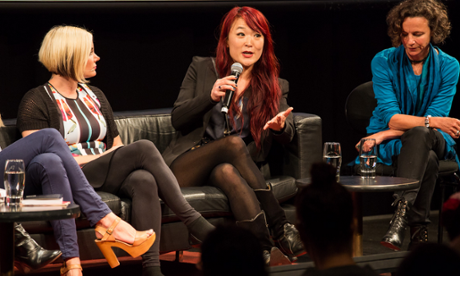
Three Sydney sex workers have staged a protest at the Festival of Dangerous Ideas over the representation of their profession in a panel discussion on the global sex industry called Women For Sale.

During a session that also discussed pornography, IVF and surrogacy, they handed out pamphlets to festival goers and posed with an A3 sign that read: “I am a sex worker. I am not for sale”.

This year’s festival has been beset with controversy, including the cancellation of a talk on “honour” killings and calls for a boycott over links to the government’s asylum seeker policy.

“This is a festival of dangerous ideology,” one of the workers, Jules Kim, told Guardian Australia. “Sex workers are not ‘women for sale’. The panel discusses sex workers, but the festival did not invite sex workers to be on the panel even though they are the experts in this field.”

Kim, who is the acting chief executive of the Australian sex workers’ organisation Scarlet Alliance, applied to festival organisers St James Ethics Centre to be included on the panel which featured four writers and journalists, but had her request denied.

However, at the beginning of the discussion journalist Elizabeth Pisani invited Kim to replace her on stage and she was allowed to take part.

Kim said of the festival organisers: “You would think they’d want an actual sex worker [on the panel], but somehow that’s not important because we’re seen as victims; voiceless and having no agency.”

The co-founder and co-curator of the festival, Simon Longstaff of the St James Ethics Centre, said the intention of the sex workers to contribute to the discussion was “entirely appropriate”.

“However, I think that their cause could have been advanced in a stronger direction if they had used slightly different means. For example, taking the opportunity to express their opinion and then withdrawing back into the audience would have made a clear statement without seeking to dominate an agenda which was always intended to cover a broader range of issues.

“That said, a festival of dangerous ideas is always going to have interesting an exciting moments for which no one could have possibly planned.

“In my opinion what needed to be represented was a broad spectrum of opinion, which included the opinions of sex workers in Elizabeth Pisani,who was able to articulate the opinions that sex workers hold.

“One of the conscious designs of the festival is that … there is opportunity for people to contribute in the Q&A and in that senses there was always an opportunity for sex workers or parents of sex workers or any part of the community to contribute to this discussion.”

The two other protesters, Zahra Stardust and Cameron Cox, said they were allowed to enter the panel only as audience members on condition they leave a bag carrying their sign and pamphlets at the entrance. Stardust said the festival was part of a “historical, structural, systemic problem”.

The advocate said lack of representation inevitably meant myths and misinformation harmful to the lives of sex workers would be reproduced. Those ideas would be used to justify the criminalisation of their work, and increase stigma and institutional discrimination.

She said among such myths were that all sex work is exploitation, all sex work is a result of human trafficking, sex work is an inherent form of violence against women, all sex workers are young, female and coerced, all clients are male, and that the criminalisation of sex work would end the sex industry.

The protesters said the panel – which overall was highly critical of sex work, emphasising its links to sexual slavery and human trafficking, and calling for the criminalisation of both sex work and its clients – failed to acknowledge the legitimacy of sex work.

Source:http://www.theguardian.com/culture/2014/aug/31/three-sex-workers-stage-protest-at-festival-of-dangerous-ideas